EmployTest Logo

Mechanical Reasoning Test

The Mechanical Reasoning Test for Applicants gives you objective, scored data on how well a candidate understands physical systems, gears, spatial layouts, and basic mechanical concepts before you make an offer.

Some candidates look great on paper. But can they actually work with tools, read a measurement, or reason through a mechanical system on Day 1?

This mechanical aptitude test for employment is built for hiring managers and HR teams at small and mid-size companies who need fast, reliable screening for technical and industrial roles.

EmployTest offers flexible pricing for low to medium hiring volume, with no annual license or expensive contracts required.

What the Mechanical Reasoning Test Covers

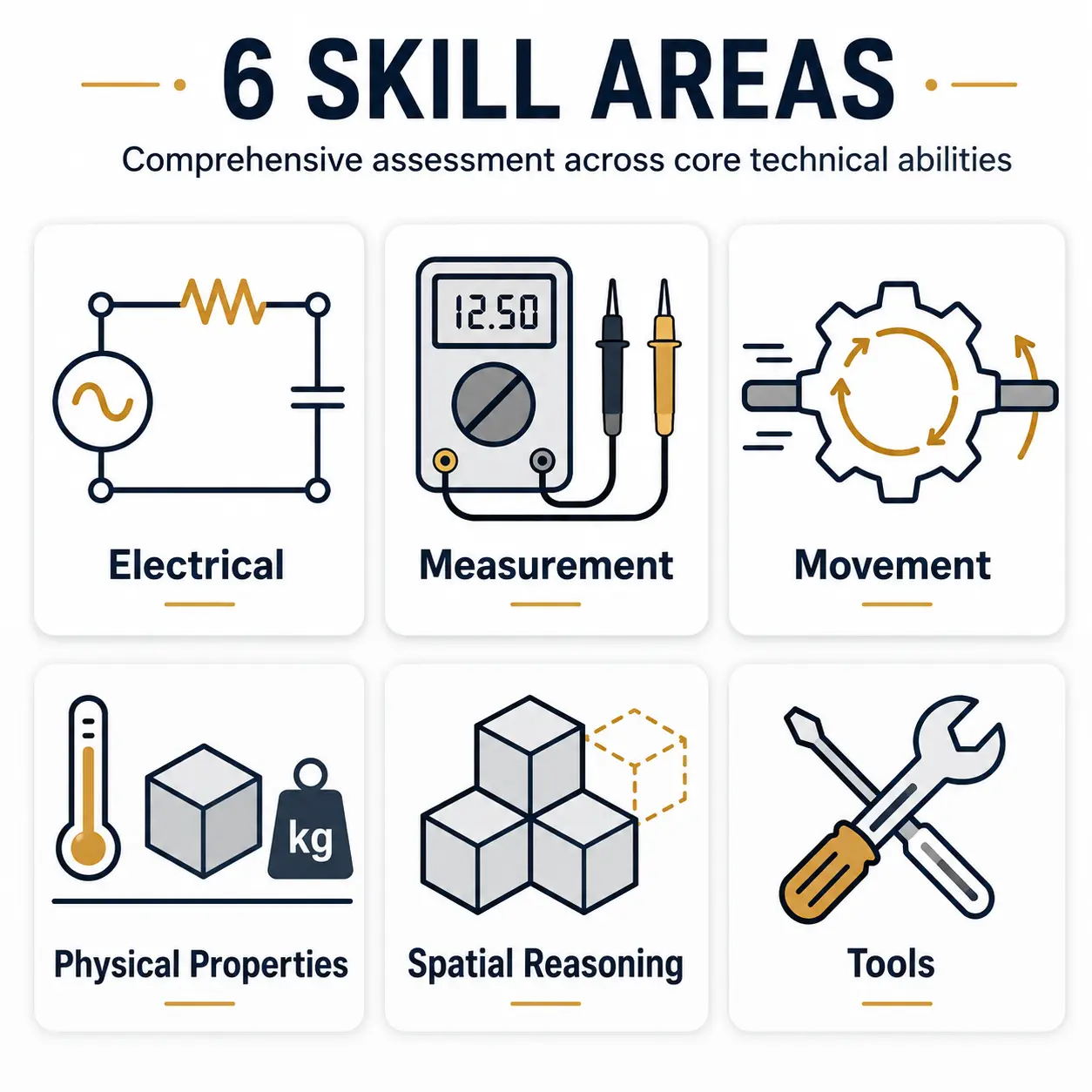
This mechanical comprehension test for hiring covers six skill areas that come up every day in technical roles. Every question is scenario-based and multiple-choice.

Electrical Concepts: Current, circuits, and basic electrical setups

Measurement: Reading scales, rulers, units, and fractions

Mechanical Movement: How gears, pulleys, and levers transfer motion

Physical Properties: Forces, weight, and load distribution

Spatial Reasoning: Visualizing objects in 3D and how parts fit together

Tool Knowledge: Identifying and applying common industrial tools

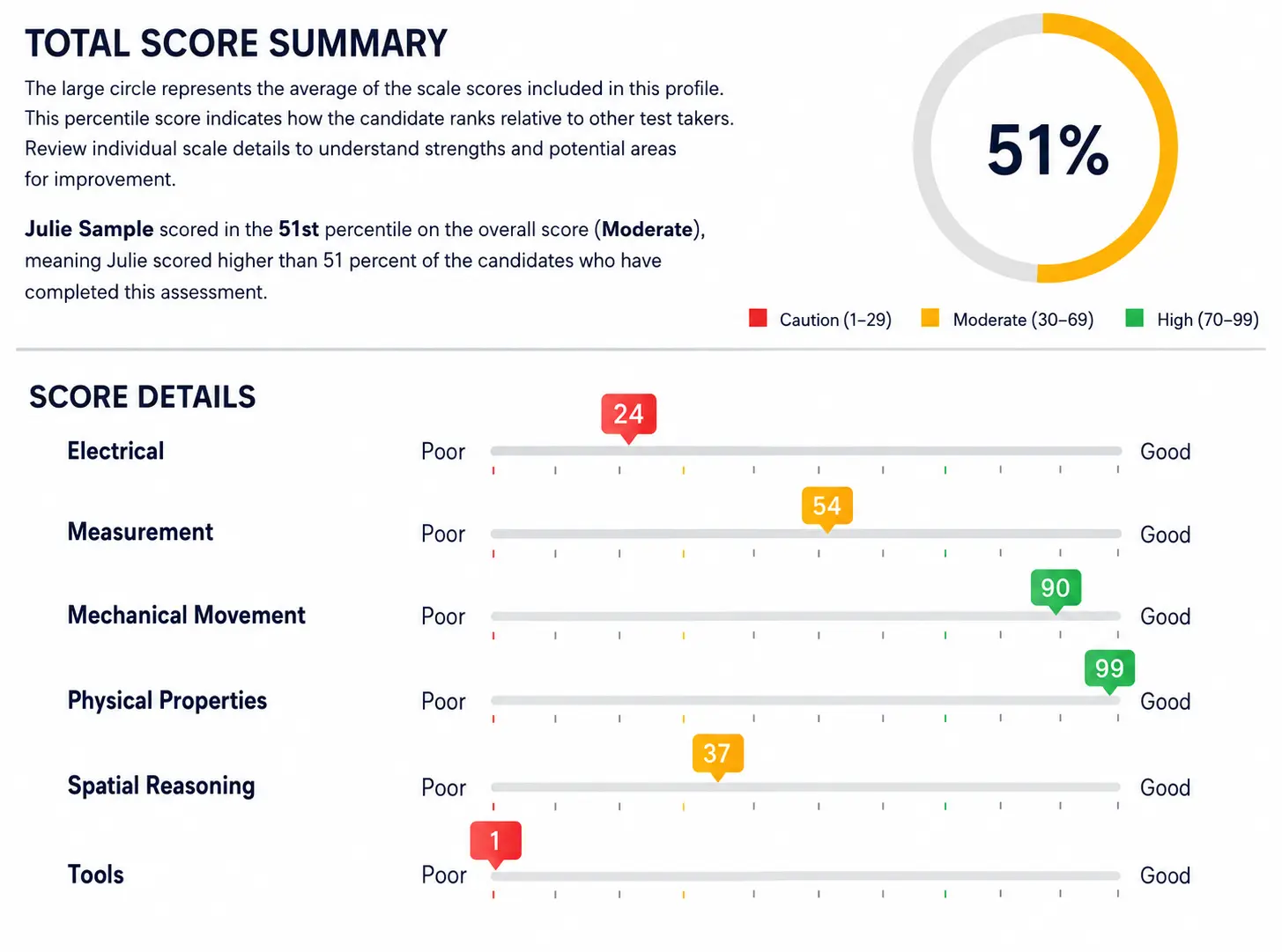
Each area scores separately, so you can see exactly where a candidate is strong and where they need support.

Six skill areas covered by the Mechanical Reasoning Test for applicants including electrical, measurement, spatial reasoning, and tools

Why Use a Mechanical Aptitude Test for Employment

Resumes can say anything. A candidate can list “maintenance experience” and still struggle with basic tool use or spatial reasoning on the job.

A pre-employment mechanical test gives you scored, objective data before the interview. You see each candidate’s strengths and weak spots across all six skill areas, ranked against everyone who has taken the same test.

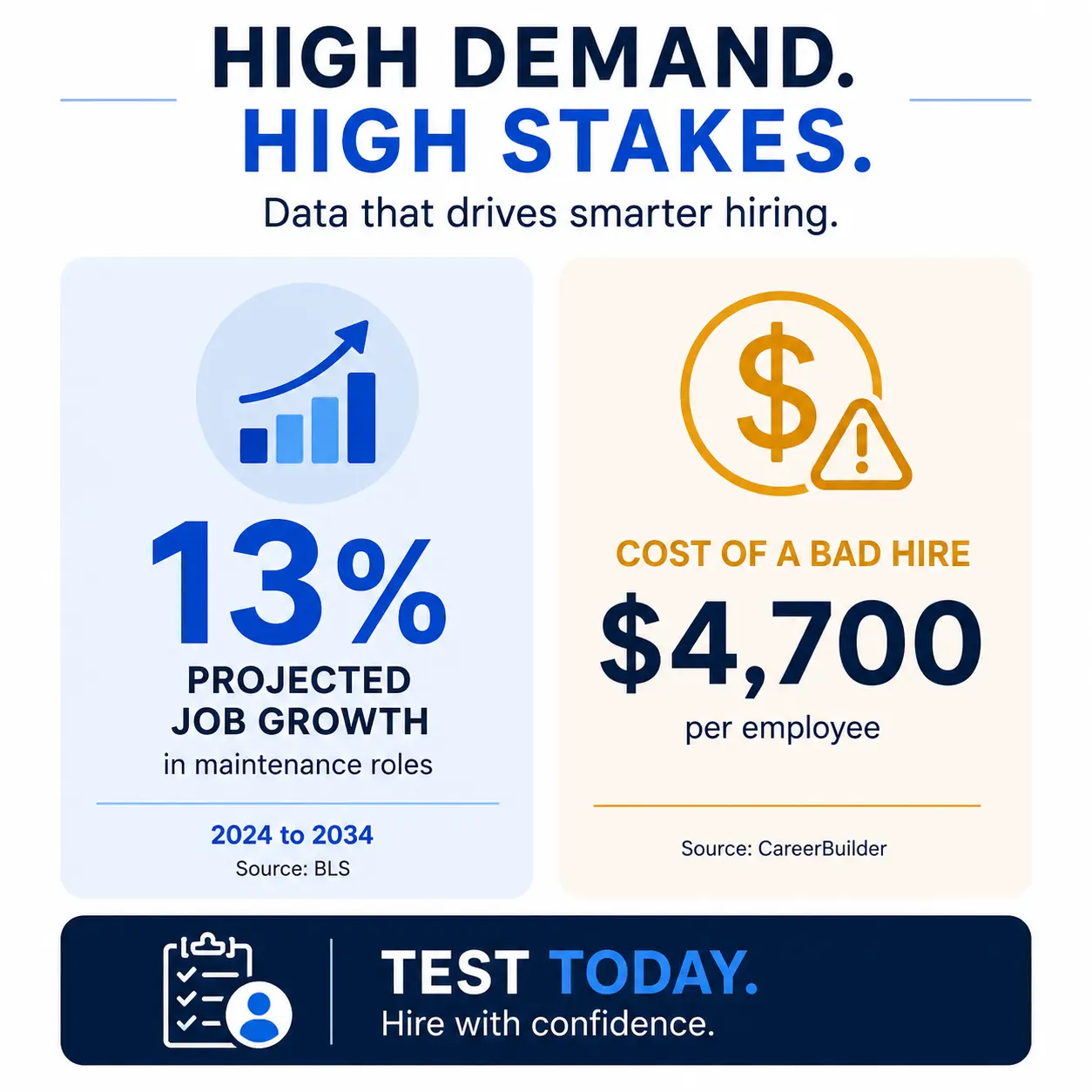
According to the U.S. Bureau of Labor Statistics, employment for industrial machinery mechanics and maintenance workers is projected to grow 13% from 2024 to 2034, much faster than average. That means more open roles and more candidates to screen quickly and accurately.

For a closer look at how structured testing reduces costly mis-hires in technical roles, read: Hire with Pre-Employment Testing for Manufacturing

Stat callout showing BLS 13% growth in maintenance roles and average cost of a bad hire, supporting use of mechanical aptitude testing for employment

What Your Score Report Includes

Every completed mechanical skills test for job applicants generates an instant report. It goes straight to your inbox the moment the candidate finishes. No waiting.

Overall Percentile Score — How this candidate ranks against all test takers in the database

Section Scores (Caution / Moderate / High) — Each of the six skill areas rated separately so you can spot specific gaps

Correct vs. Incorrect Breakdown — Full question-by-question detail, with time spent per question

Management Strategies — Practical onboarding and supervision guidance based on the candidate’s results

Interview Guide — Scored follow-up questions targeting each low-scoring area, with a 1-7 response rating scale

The Interview Guide is a distinct advantage. You walk into every conversation with targeted questions already matched to that candidate’s weak areas.

Which Roles Need This Test

Use this test any time mechanical errors create real risk or downtime. If a wrong reading, a missed measurement, or a misunderstood diagram could slow your team down, this test belongs in your screening process.

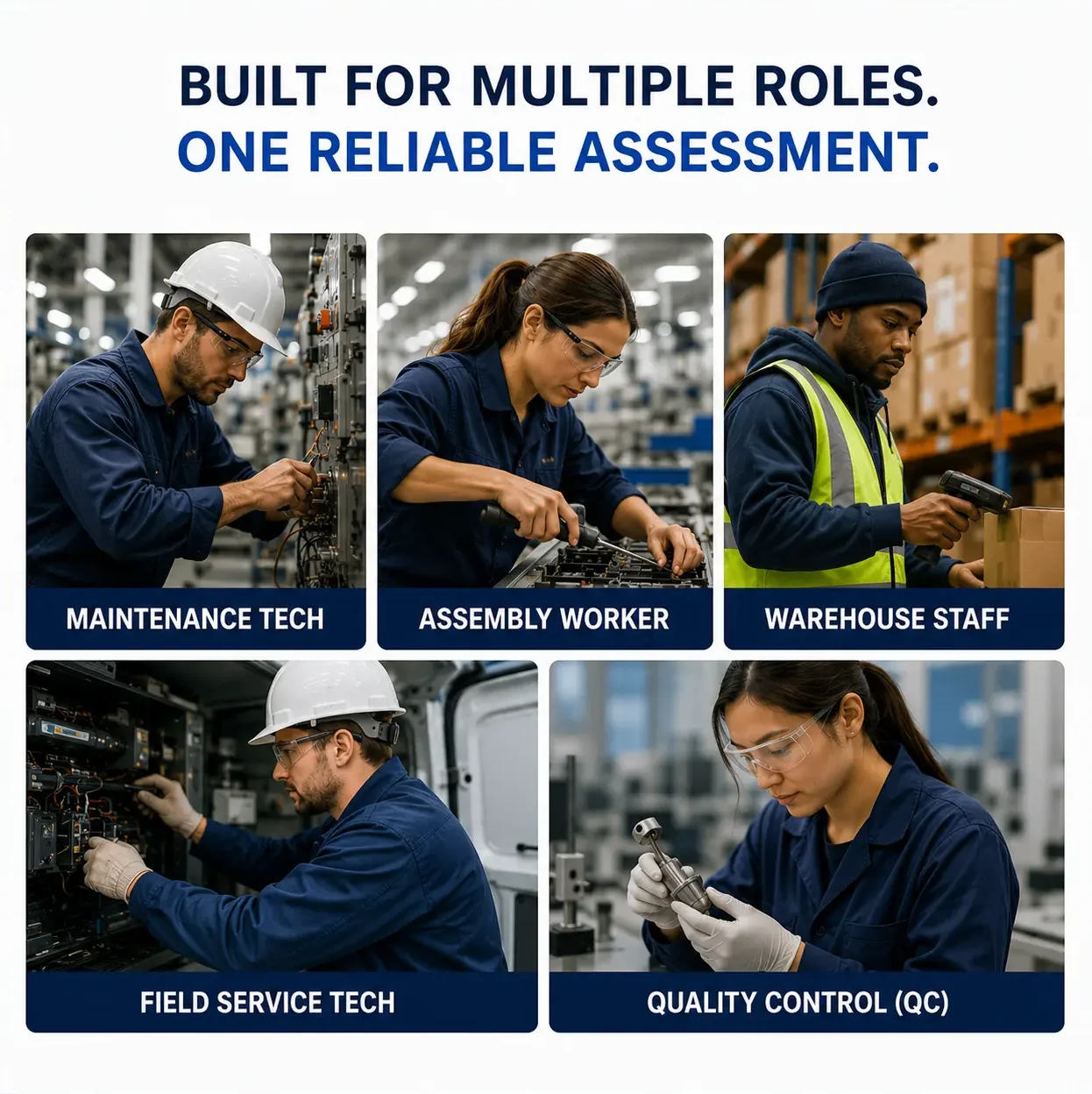
It works across a wide range of settings, including:

  1. Maintenance and repair technicians
  2. Assembly and production line workers
  3. Warehouse and logistics operations staff
  4. Field service and equipment technicians
  5. Manufacturing quality control roles

This manufacturing pre-employment test is especially effective when combined with a Cognitive Ability Test for roles that also require problem-solving and learning speed.

Not sure how pre-employment testing fits into your hiring workflow? This overview of the 6 Best Pre-Employment Assessment Tests to Hire Top Talent shows how to sequence tests at each stage.

Role icons showing maintenance technicians, assembly workers, warehouse staff, field service technicians, and quality control roles that benefit from a mechanical aptitude test for employment

How the Mechanical Reasoning Test Works

For You

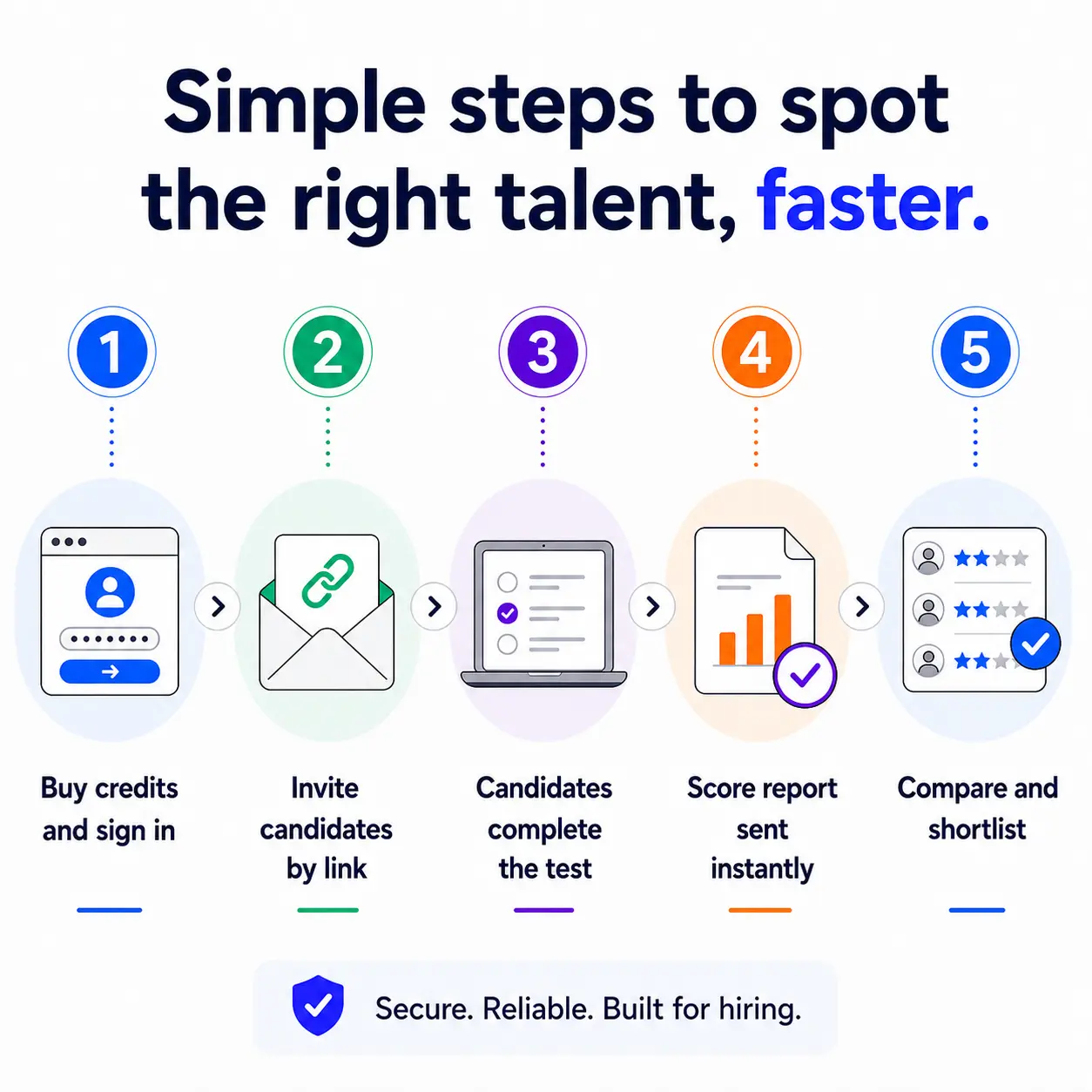
  1. Sign in to your dashboard and send the test link to any candidate
  2. Get the full score report the moment they finish, no waiting
  3. Compare applicants side by side using percentile rankings
  4. Reports are saved in your dashboard for future review

For the Candidate

  1. Clear instructions from the start, no surprises
  2. Done in 20 to 25 minutes
  3. Results go straight to you, not them, keeping the process objective and defensible

Candidates never see their own scores. Results are delivered directly to your account, so the process stays fair and unbiased.


Step-by-step flow graphic: 5 icons in sequence showing Buy Credits, Sign In, Choose Test, Email Candidate, then final step is Get Score Report.

Why Scored Testing Beats Self-Reported Skills

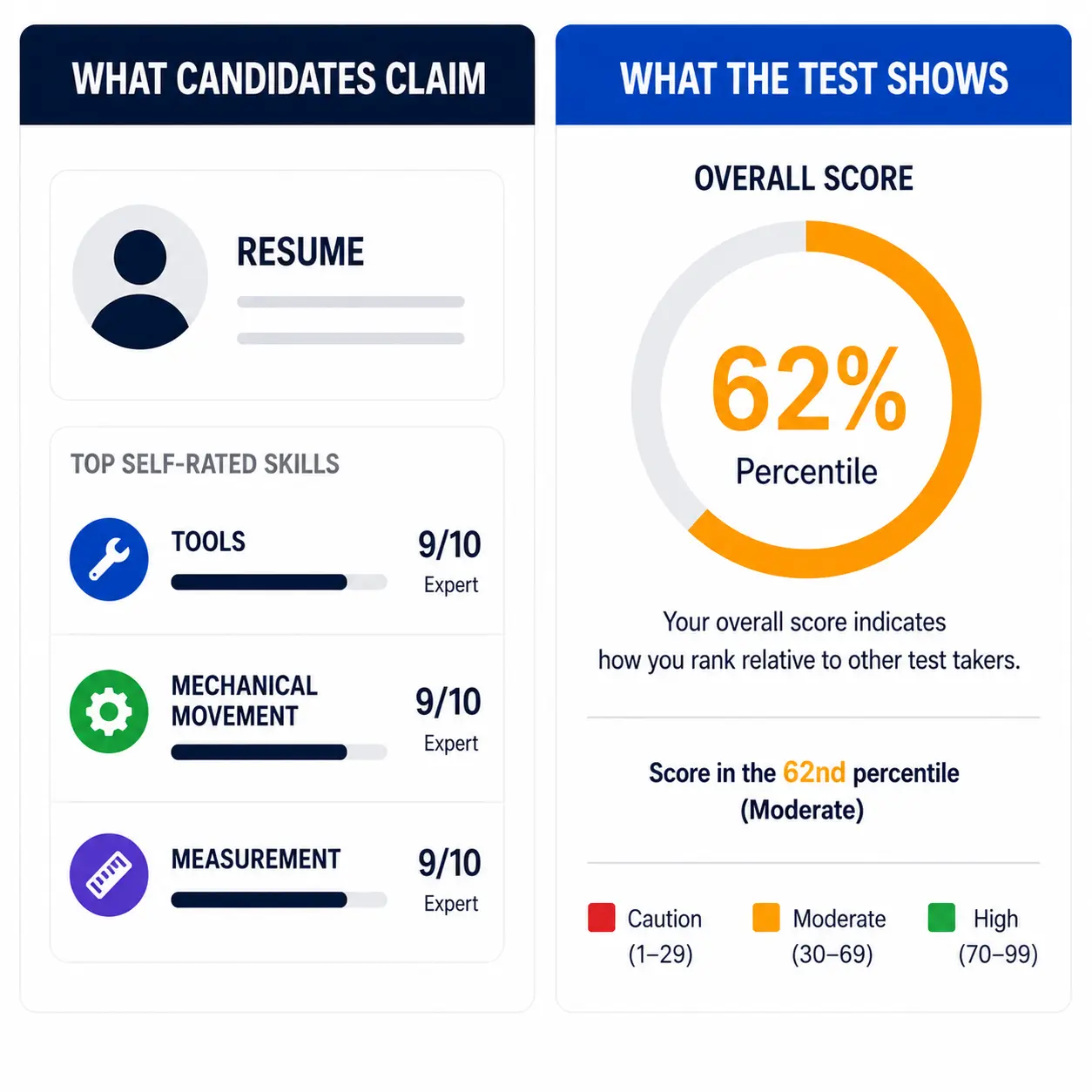
Almost every applicant claims to have mechanical skills. But “familiar with tools” and “can accurately read a measurement under pressure” are very different things.

A scored mechanical skills test for job applicants puts every candidate on equal footing. Same questions, same time limit, objective results. You compare candidates on performance, not how well they describe themselves.

Research published by the SHRM Foundation’s Selection Assessment Methods guide confirms that cognitive and mechanical aptitude tests are among the strongest predictors of job performance in production and technical roles.

A resume shows work history. An interview shows communication style. This test shows how a candidate actually applies mechanical reasoning when the stakes are real.

Comparison graphic showing self-reported mechanical skills on a resume versus objective scored results from a pre-employment mechanical aptitude test

4.7/5 | 137 reviews on Capterra

“Not only is the product of great quality, but the level of customer service and partnership I receive from my rep at Employ Test is of the highest standard.”
Amy B., HR Recruiter
EmployTest Is A Top Rate Tool Based On 2025 Capterra Shortlist

Frequently Asked Questions

What is a mechanical reasoning test for job applicants?

A mechanical reasoning test measures how well a candidate understands physical systems, tools, and mechanical concepts. It covers gears, pulleys, electrical circuits, measurement, spatial reasoning, and tool identification.

It’s one of the strongest predictors of performance in technical and industrial roles. You get a scored report the moment the candidate finishes. No waiting, no guesswork.

How is the Mechanical Reasoning Test different from a general aptitude test?

A general aptitude test measures broad thinking skills like logic and abstract reasoning. The Mechanical Reasoning Test goes deeper into job-specific knowledge: how forces work, how to read a measurement tool, how parts fit together in three dimensions.

If someone will work with equipment, machinery, or technical systems, this test gives you data a general aptitude test can’t provide.

How long does the Mechanical Reasoning Test take?

Most applicants finish in 20 to 25 minutes. It’s short enough to use as a pre-screen before interviews, but detailed enough to show exactly where each candidate is strong and where they’re not.

Candidates get a direct link, complete the test at their convenience, and you receive the full score report instantly.

Can I pair this test with other assessments?

Yes. The Mechanical Reasoning Test works well alongside a Cognitive Ability Test for roles that require both mechanical knowledge and problem-solving speed.

For a complete picture of how to sequence multiple tests in your hiring process, this guide on the 6 Best Pre-Employment Assessment Tests covers what to use and when.

What industries use mechanical aptitude testing most?

Manufacturing, warehousing, utilities, field service, and facilities maintenance are the most common. Any industry where equipment failure, measurement accuracy, or tool competency directly affects output quality or team safety.

For a broader look at how testing fits into manufacturing hiring specifically, read: Hire with Pre-Employment Testing for Manufacturing.

How much does this cost?

Pricing is simple and flexible as your needs change. Each test completed uses one test credit. (See pricing for credits)

Can I get a free sample before I purchase?

Yes, just visit Try for Free to provide your information and we’ll send a free sample of the test you request.

How it Works

Wicon 1
BUY TEST CREDITS
Wicon 2
SIGN INTO DASHBOARD
Wicon 3
CHOOSE TESTS
Wicon 4
EMAIL TEST SESSIONS