
Interviews Are Overrated? What Hiring Data Really Shows
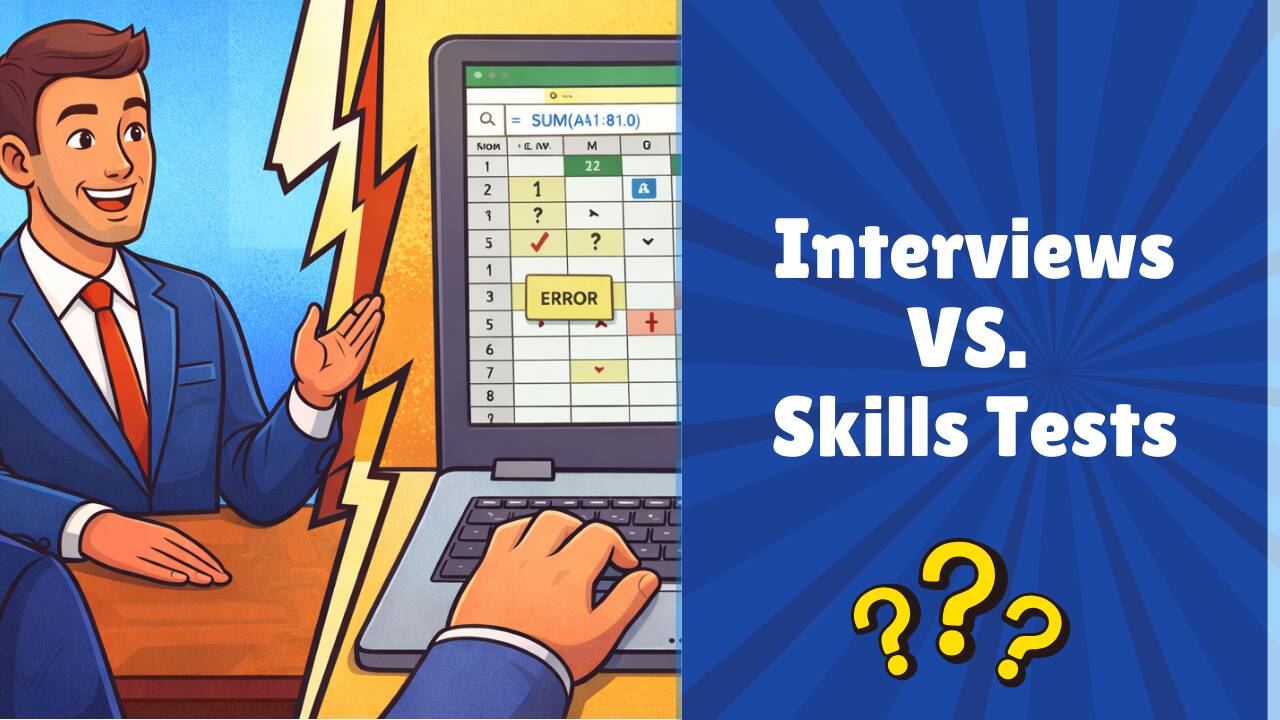
Most companies hire the same way they did in 1999. Resume. Phone screen. Interview. Offer.
And most companies wonder why so many hires don’t work out.
What Interviews Really Measure
Interviews test one thing: how good you are at interviews.
Confident? Polished? Good storyteller? You’ll crush it.
Actually great at the job? That’s a completely different question.
The biggest study ever done on hiring methods looked at 85 years of data. Here’s what it found:
“Work samples are 40% better at finding the right person for the job.”
Most companies run the weakest option. Then act surprised when new hires underperform.
What Skills Testing Measures
Skills testing does one simple thing that interviews don’t. They make people do the job.
- If it requires attention to detail, they find errors.
- If reasoning matters, they solve problems.
- If Excel matters, they work in Excel.
No storytelling. No framing. No “let me explain how I would…” Just performance.
Companies are Shifting Fast
- McKinsey reports that skills-based hiring is 5x more predictive of job performance than hiring based on education. More than 2x better than hiring based on experience alone.
- Google found the same thing internally. Their famous puzzle interviews predicted almost nothing. Structured questions tied to real competencies actually worked.
- And according to SHRM, 81% of U.S. employers are now using skills-based hiring in some form. The ones going all in are seeing the biggest results.
Interviews aren’t dead. They’re just third. They still matter, especially for roles where communication is the whole job.
So What Should You Change, Starting Today?
You don’t need to scrap interviews. You need to rearrange the order. Here’s a cleaner approach:
1. Identify the one or two skills that truly drive performance.
Not five. Not ten. The core drivers.
2. Add a short, relevant skills test before final interviews.
If Excel matters, test Excel. If reasoning matters, test reasoning.
3. Look at the test results before discussing “fit.”
Make capability non-negotiable.
4. Use interviews to assess communication, judgment, and alignment.
Not core competence.
Now you’re not asking, “Do we think they can do the job?” You already know they can.
You’re asking, “Do we want to work with them?”
And if you want to explore what skills testing looks like in real hiring workflows, you can review EmployTest’s pre-employment assessments here.