A Manufacturing Pre-Employment Test shows you which applicants can inspect parts and read measurements accurately before you hire. You get that answer before the first interview.
Our Manufacturing Skills Test scores five separate abilities used on the production floor:
Every applicant answers the same questions and is scored the same way, so you can line candidates up side by side.
EmployTest offers flexible pay-per-test pack pricing for low to medium hiring volumes, with no annual license fees or long-term contracts.
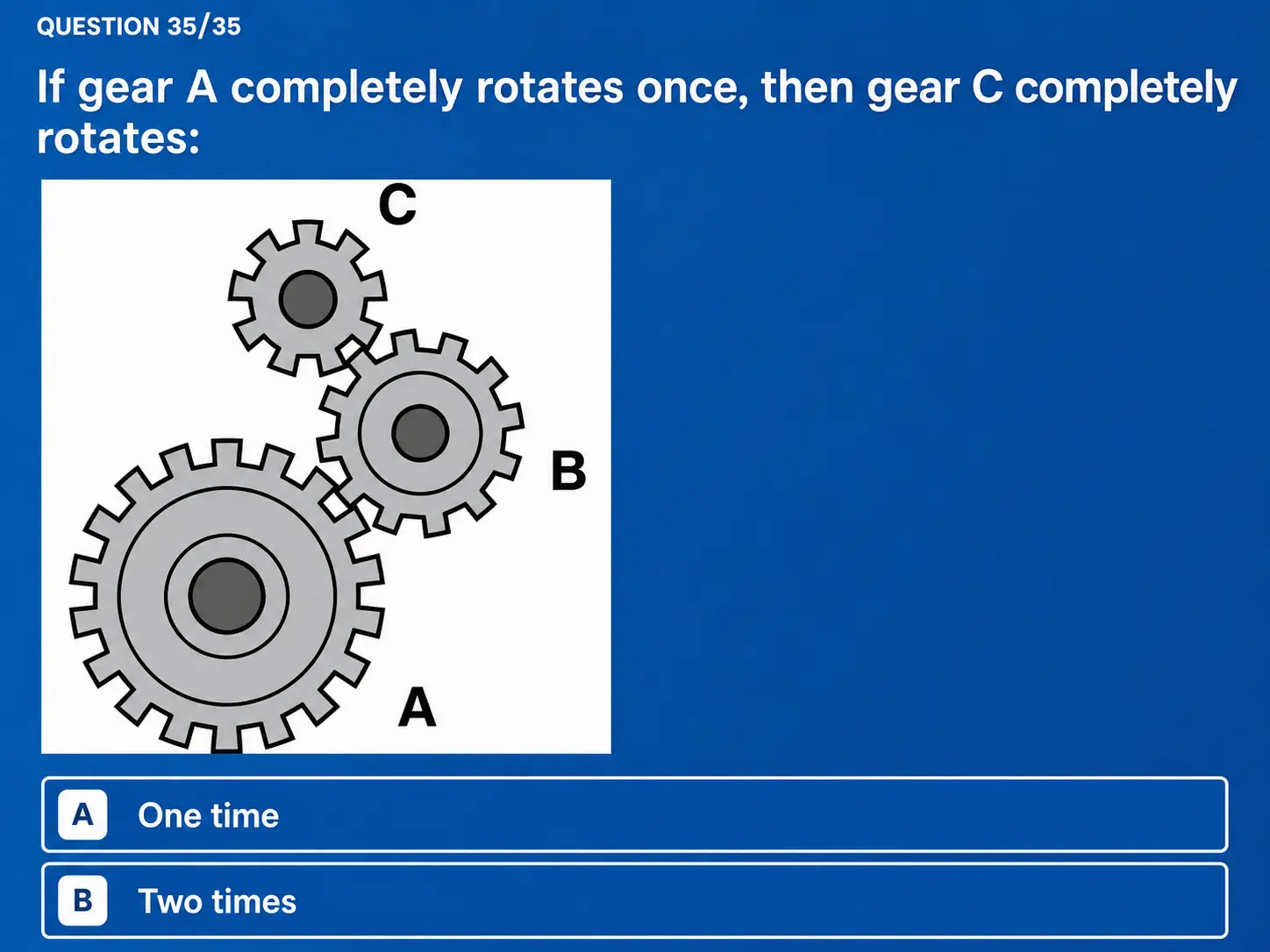








This manufacturing skills test reports five abilities on five separate scales. Each one gets its own score.
Inspection: how fast and how accurately someone finds errors, defects, or differences when comparing two or more objects.
Measurement: knowledge of basic measurement and math concepts.
Mechanical Movement: how well someone pictures the way one moving object affects another.
Physical Properties: understanding of how weight distribution affects effort and safety, which is the thinking behind safe materials handling on your floor.
Spatial Reasoning: mentally turning objects to work out how they fit together or assemble.
Together these cover the judgment behind quality checks, machine setup, and material movement.
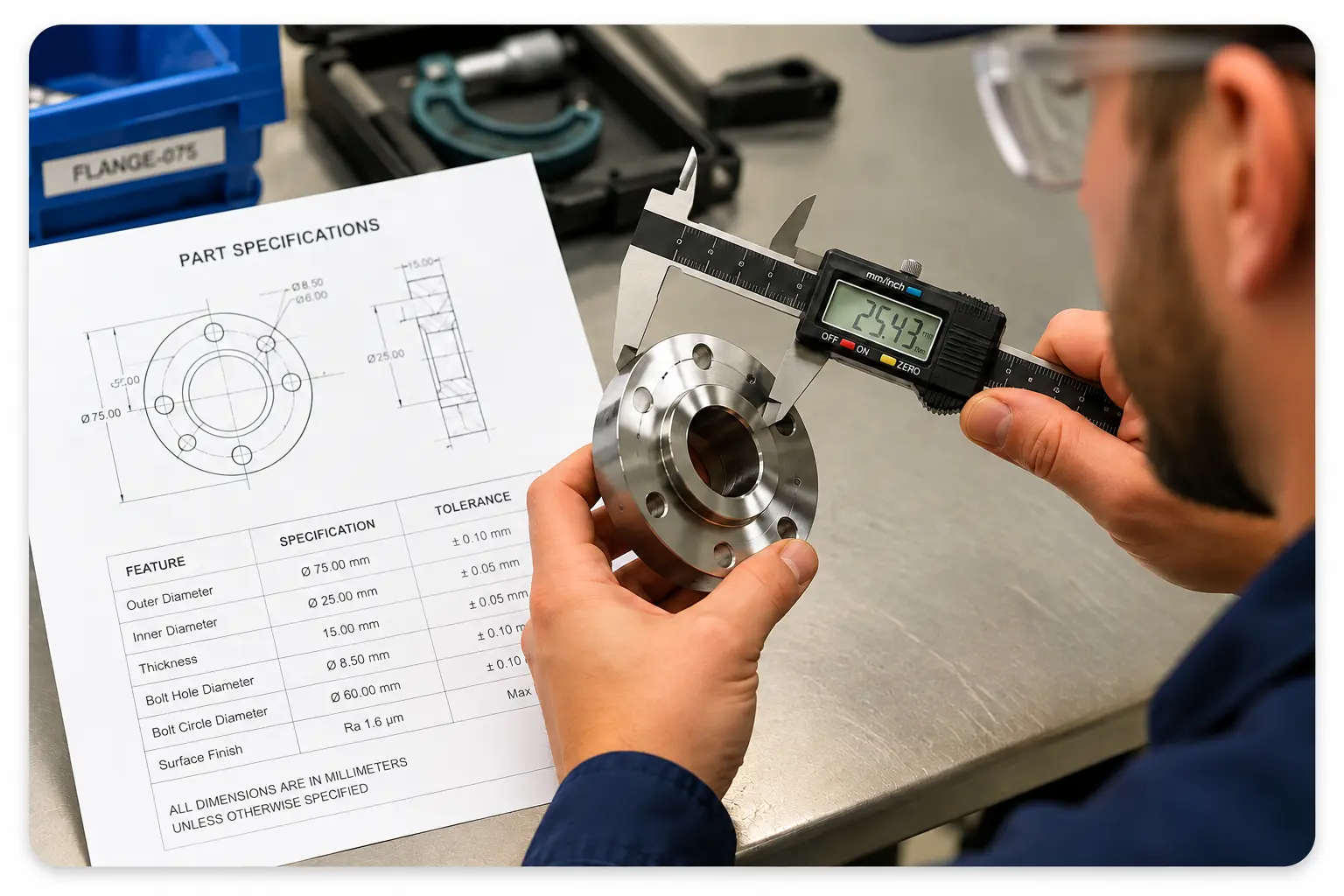
A basic manufacturing skills test fits entry-level and light industrial hiring, where applicants show up with uneven work histories and hard-to-verify claims.
It scores ability directly. An applicant who has never touched your equipment may still read a gauge correctly and follow an assembly diagram without help.
Hiring pressure makes that worth knowing. The Manufacturing Institute and Deloitte project as many as 1.9 million manufacturing jobs could sit unfilled by 2033. Testing for ability widens the pool you can hire from with confidence.
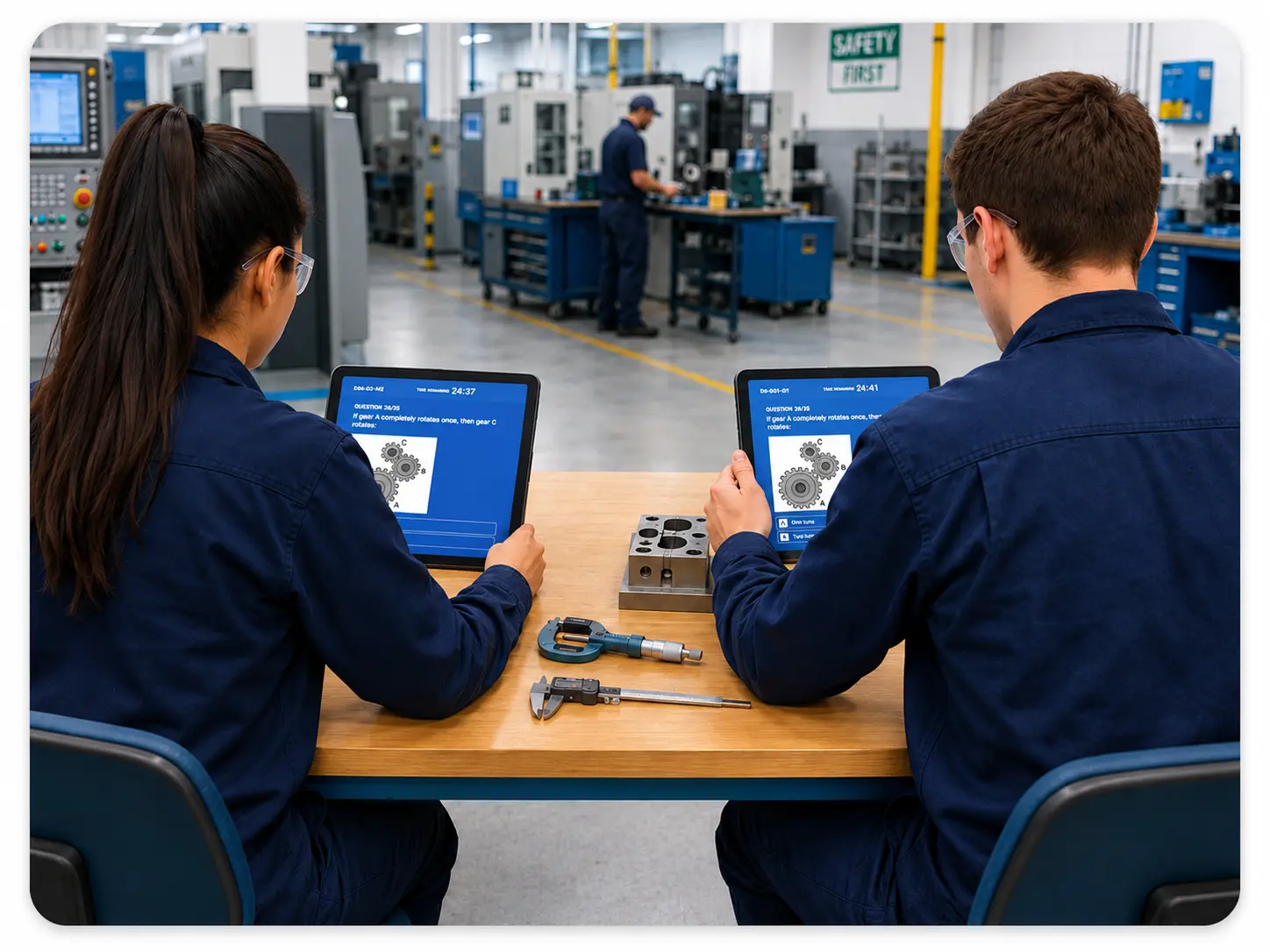
The score report reaches your inbox as soon as the candidate finishes.
It opens with a total score summary. That number is the average of the five scale scores, shown as a percentile against everyone who has completed the assessment.
Each scale is then banded by color: Caution (1-29), Moderate (30-69), or High (70-99).
Under every scale, you get a plain description of what it measures. You also get a skill level chart of correct versus incorrect answers, the average time spent per question, and the population average for that scale.
Expected job behavior notes then translate the number into what it looks like at work.
The report keeps going after the scores.
A low Mechanical Movement score comes with advice to monitor equipment work closely and train on mechanical tasks before handing them over.
The report also builds an Interview Guide with Scored Follow-Up Questions. Questions target the areas where the candidate looks weakest, with a 1 to 7 rating scale and space for notes on each answer.
When someone scores High on a scale, the report skips the generated question and leaves room for your own.
Ratings total at the bottom, so two hiring managers can rate the same interview and compare numbers instead of impressions.

Use this manufacturing assessment test for hands-on production and warehouse hiring. It fits jobs such as:
Most of these jobs open to applicants with a high school diploma who learn the rest on the job, according to the Bureau of Labor Statistics. That is exactly why an aptitude test for manufacturing jobs gives you something a work history cannot.
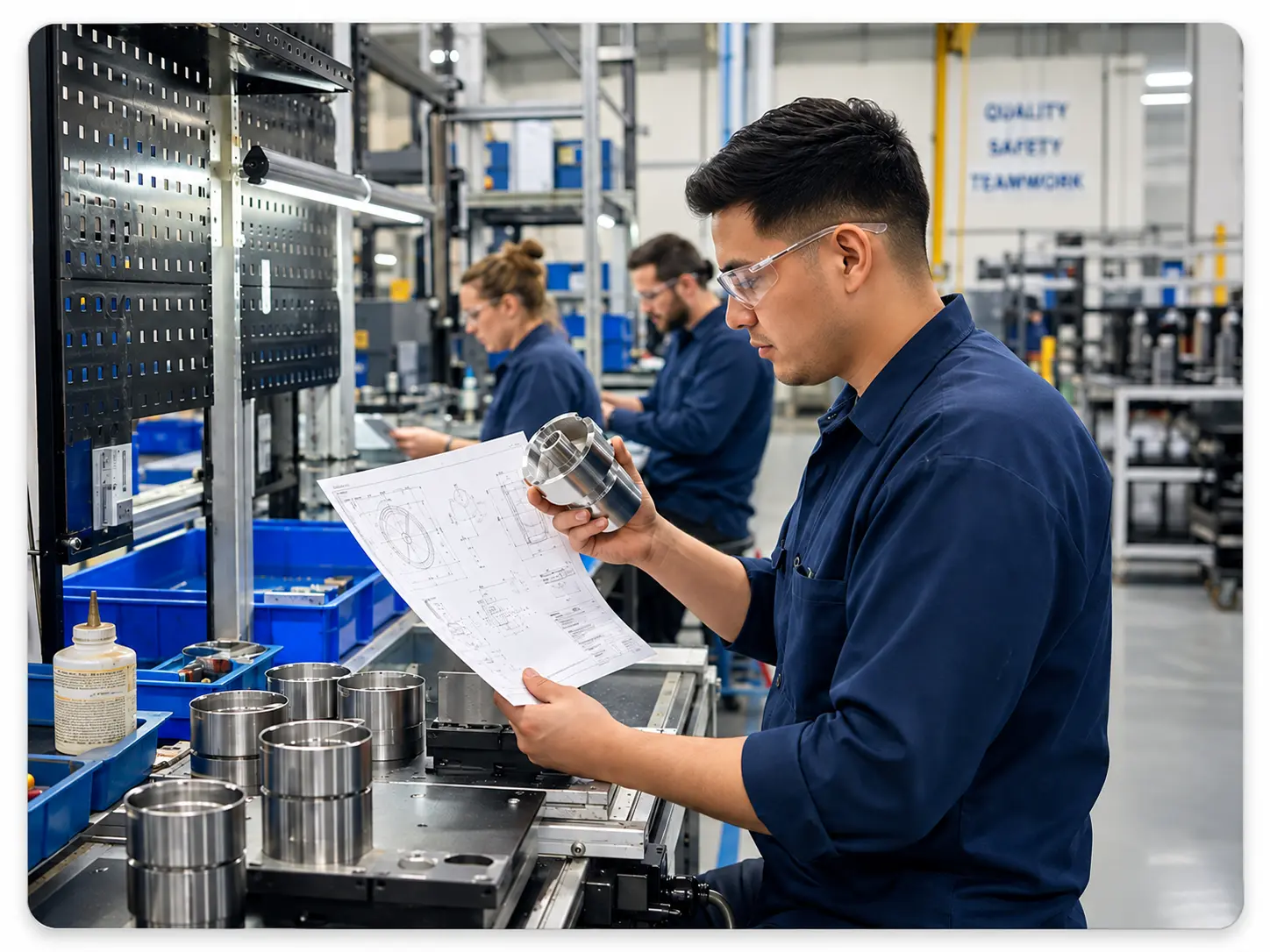
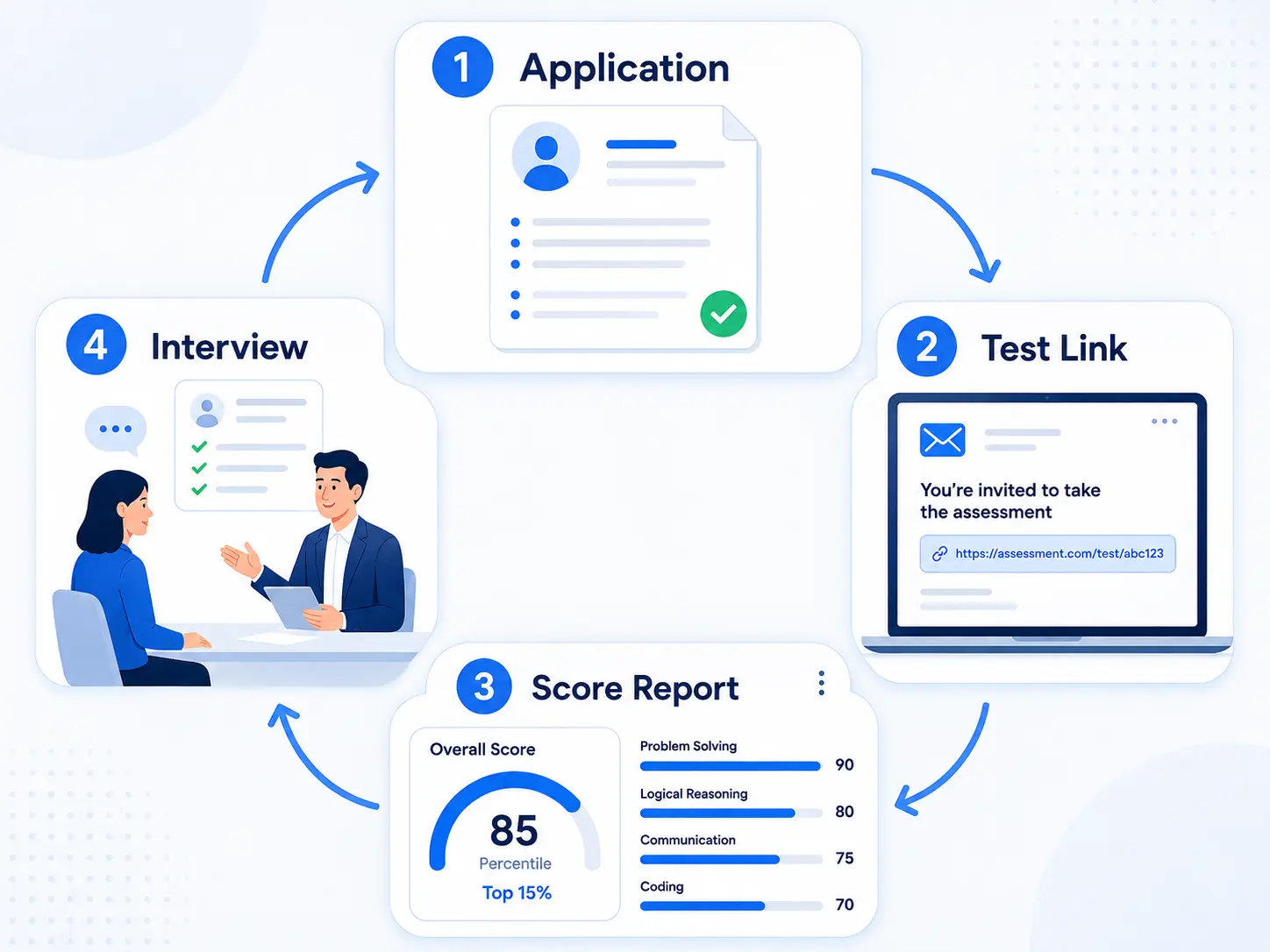
Send the manufacturing hiring test right after the application comes in, before phone screens eat up your week. A workable order:
Pre-employment testing for manufacturing works best when everyone at the same stage takes the same test. Our guide to pre-employment testing for manufacturing companies covers how to set that up across shifts and locations.
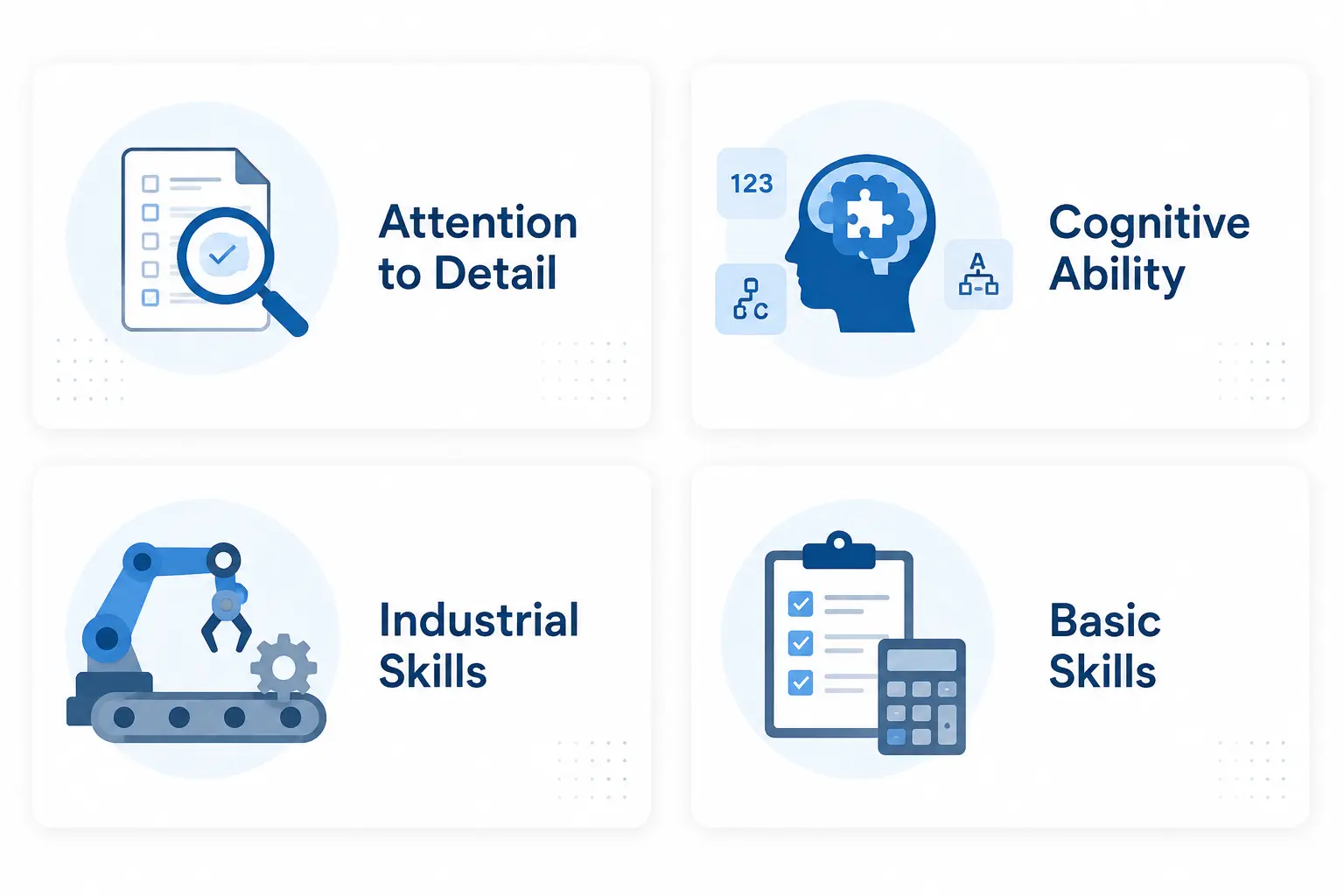
One test rarely covers a whole job. Common pairings:
Pick the two that match the job in front of you. Stacking on more tests than the work calls for pushes good applicants to drop out partway through.
“We have had a great experience with EmployTest and use it frequently. The range of tests available for candidates to fit every need, web based and very easy to use.”



Five separate abilities: Inspection, Measurement, Mechanical Movement, Physical Properties, and Spatial Reasoning. Each one is scored on its own scale and shown as a percentile against other test takers, so you can see exactly where a candidate is strong and where they will need support.
The questions are multiple choice. Several include images of parts and assembly diagrams, since scales like Inspection and Spatial Reasoning depend on what the candidate can see and compare.
No. The test measures underlying abilities used across production work rather than knowledge of one company’s equipment. That makes it useful for entry-level and light industrial hiring, where work histories vary widely.
Look at the five scale scores, not only the total. Two applicants can land at the same overall percentile with very different strengths. Each scale is banded as Caution, Moderate, or High, which makes those differences quick to spot.
Yes. Every report includes an Interview Guide with Scored Follow-Up Questions aimed at the candidate’s weaker areas, with a 1 to 7 rating scale and space for notes. When a candidate scores High on a scale, the report leaves room for a question of your own.
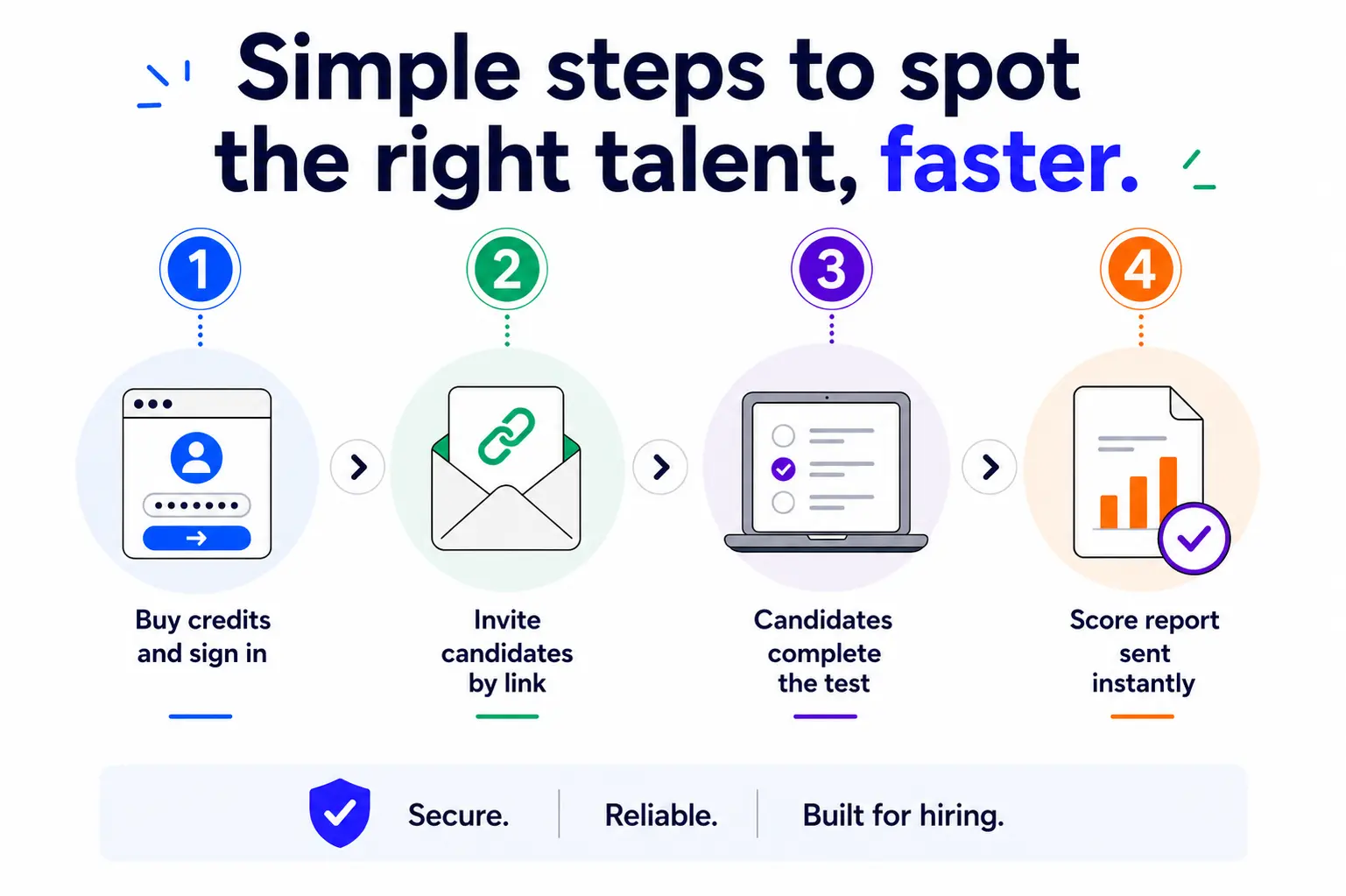
Pricing is simple and flexible as your needs change. Each test completed uses one test credit. (See pricing for credits)
Yes, just visit Try for Free to provide your information and we’ll send a free sample of the test you request.


