The Customer Service Reliability Test shows you which new hire will show up on time and stay steady when a customer gets difficult.
It also scores how likely a new hire is to quit early, so turnover risk is on the table before hiring.
Known in the report as the Profile – Customer Service Success + Turnover Risk, it measures six work behaviors that drive front-line performance.
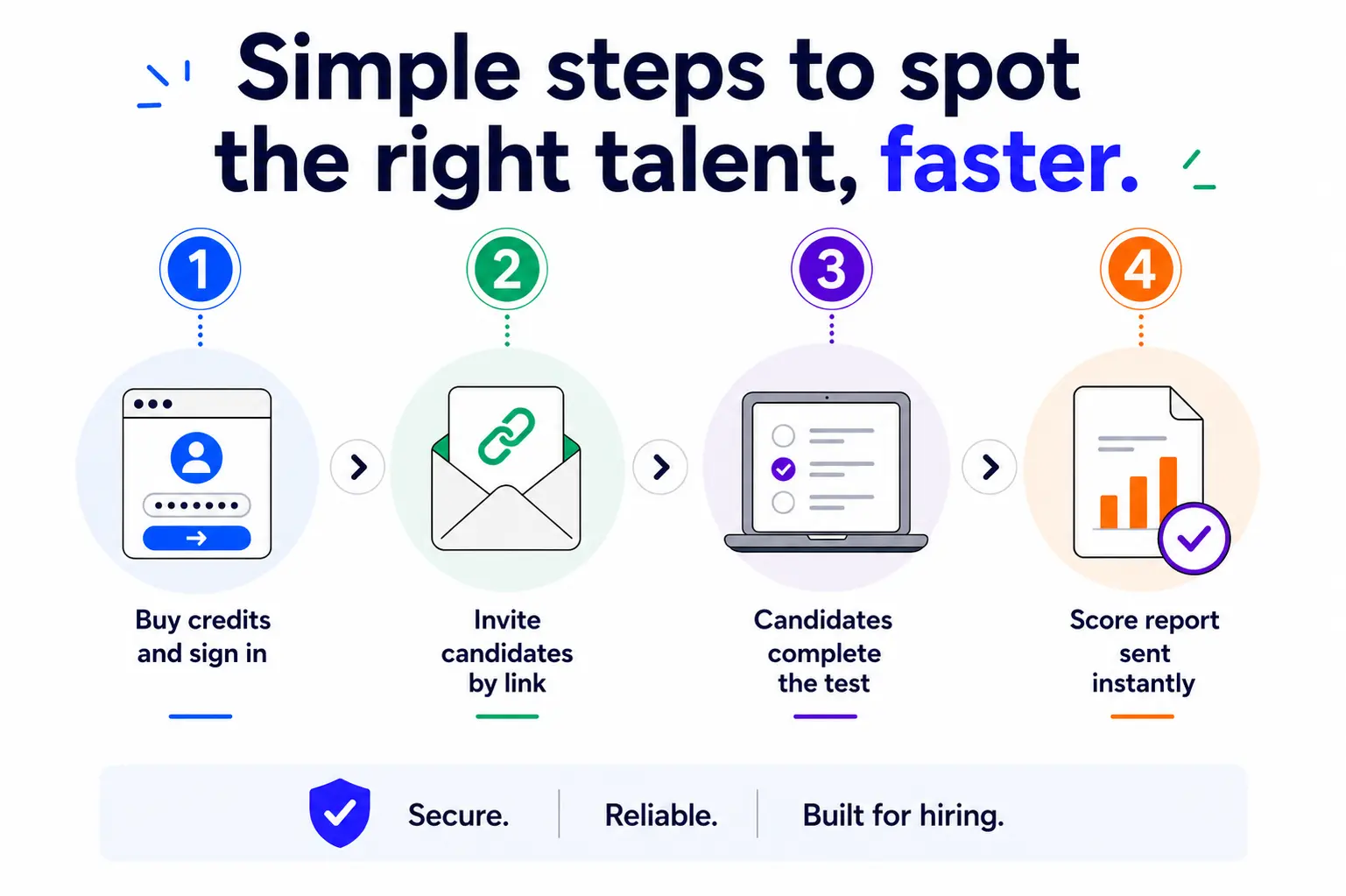
EmployTest helps you scale hiring at your own pace with pay-per-test block pricing and no long-term contracts.







This behavioral assessment scores six competencies. Each is reported as a percentile against everyone else who has taken the test.
Attendance and Turnover Risk looks at dependability, fit for the job, and whether the person plans to stay.
Conscientiousness measures work ethic, initiative, integrity, and rules adherence.
Demonstrates Respect rates sensitivity to others, steady working relationships, and care for coworkers and company property.
Maintains Composure scores even temper, stress tolerance, and staying positive during hard moments.
Self-Management reflects confidence, working without close supervision, and making decisions alone.
Service Orientation captures willingness to help, concern for others, and reading how people react.
Our guide to behavioral testing and key personality traits explains how these behaviors connect to performance on the job.

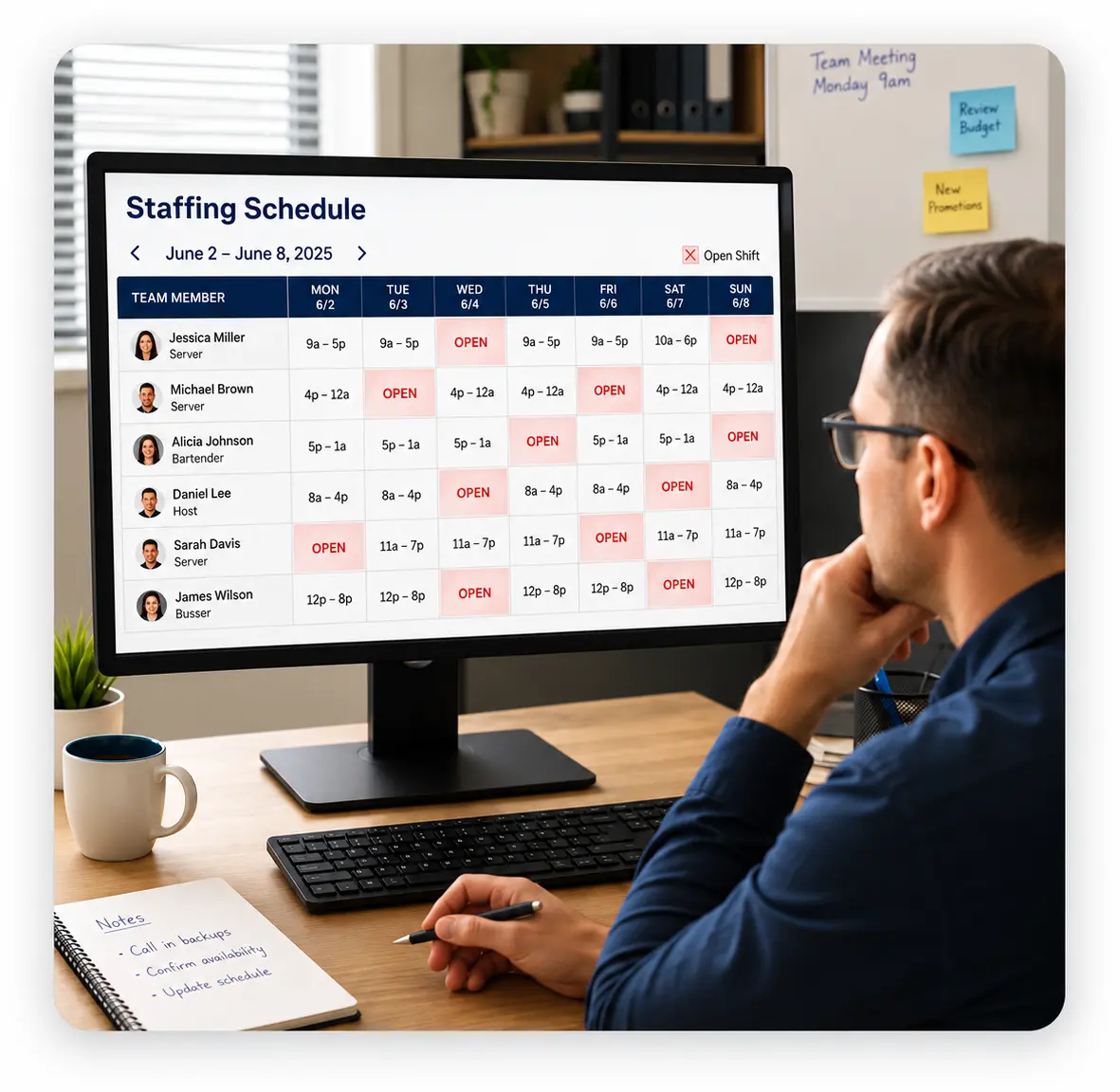
Front-line hiring rarely slows down. The Bureau of Labor Statistics projects about 289,500 openings for customer service representatives each year over the decade, and every one of them comes from replacing workers who move to another occupation or leave the workforce.
That churn lands on your team and your customers. Open seats mean longer waits and heavier workloads for the people who stayed.
The Attendance and Turnover Risk scale scores five things: dependability, career and organization integration, perceived fit, intent to stay, and how the candidate weighs the risk of switching jobs.
Higher scores mean lower risk. Read the true cost of poor customer service for what happens when front-line staffing keeps breaking down.
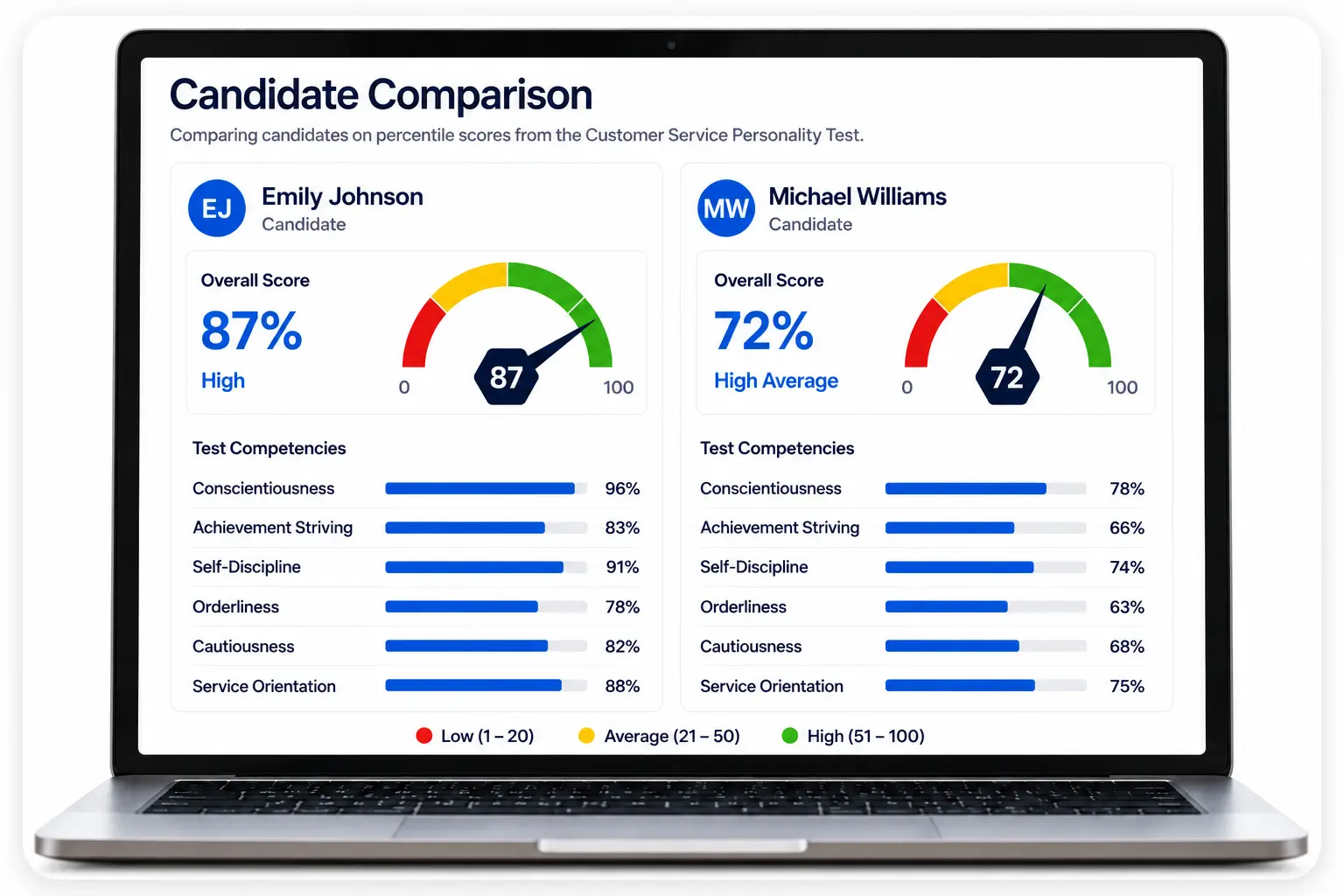
The report opens with a Performance Overview gauge. The overall score combines every competency scale and lands in one of three bands: Low (1 to 20), Average (21 to 50), or High (51 to 100).
Performance Analysis comes next. It charts each competency as a percentile compared to other test takers.
Five scales share the same wording. Substantial Strength sits above 50, Adequate Strength runs 21 to 50, and Not a Strength runs 1 to 20.
Attendance and Turnover Risk reads in reverse. It uses Low Risk above 50, Moderate Risk from 21 to 50, and High Risk from 1 to 20.
The report defines every competency and lists the facets inside it, so you know what each number actually covers.
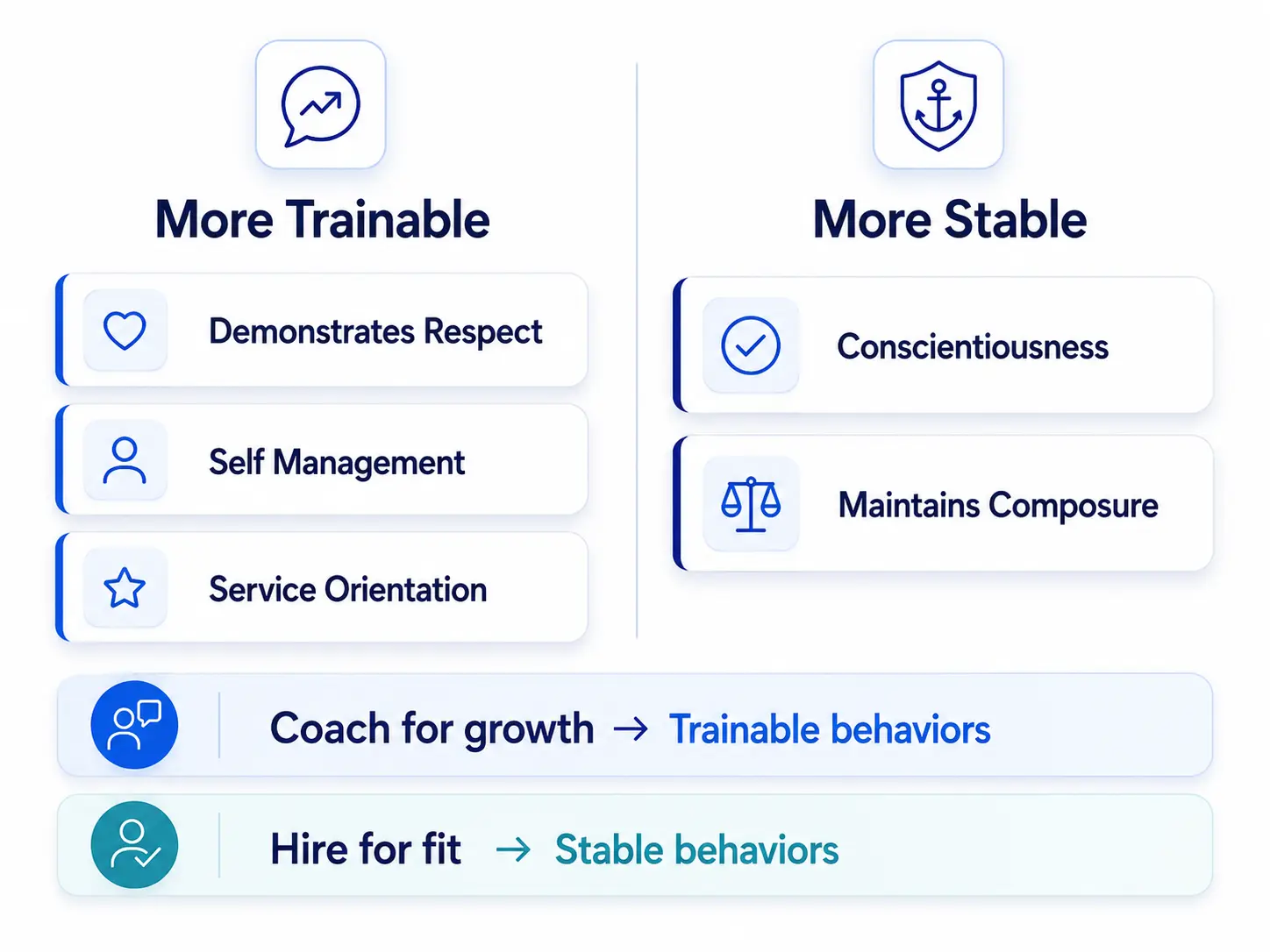
Five competencies also carry a Trainability Factor note. That note tells you whether the behavior responds to coaching or tends to hold steady over time.
Demonstrates Respect, Self Management, and Service Orientation are described as open to change through feedback and training.
Conscientiousness and Maintains Composure are described as stable and slow to shift, needing real personal commitment to move.
Use those notes to decide where onboarding time will pay off and where you should hire for the behavior up front.
Every report closes with Interview Follow-Up Suggestions. These are behavioral questions tied to the competencies on the profile.
The sample report carries questions for Demonstrates Respect, Conscientiousness, Maintains Composure, Service Orientation, and Attendance/Turnover Risk.
Each question asks for a real situation, what the candidate did about it, and how it turned out. One asks the candidate to describe a time a customer was disrespectful to them or a coworker.
Your interviewer walks in with questions that match what the test found. The conversation stays on behavior that already happened.

Use this assessment for any position where a customer sees the work.
O*NET lists Self-Control, Dependability, Cooperation, and Social Orientation among the work styles for customer service representatives. Those four map directly onto what this profile scores.

A 2023 study in Personality and Individual Differences followed 1,009 job applicants for three to five years. Personality scores taken during selection predicted both job performance and voluntary turnover, adding to what cognitive tests and structured interviews showed. Conscientiousness was the strongest predictor, and it is one of the six competencies this profile scores.
This profile scores those work behaviors before the interview happens.
Every applicant answers the same questions and gets scored the same way, so two people are easy to compare on paper.
Add a skills or aptitude test when the job also depends on what a person can produce.
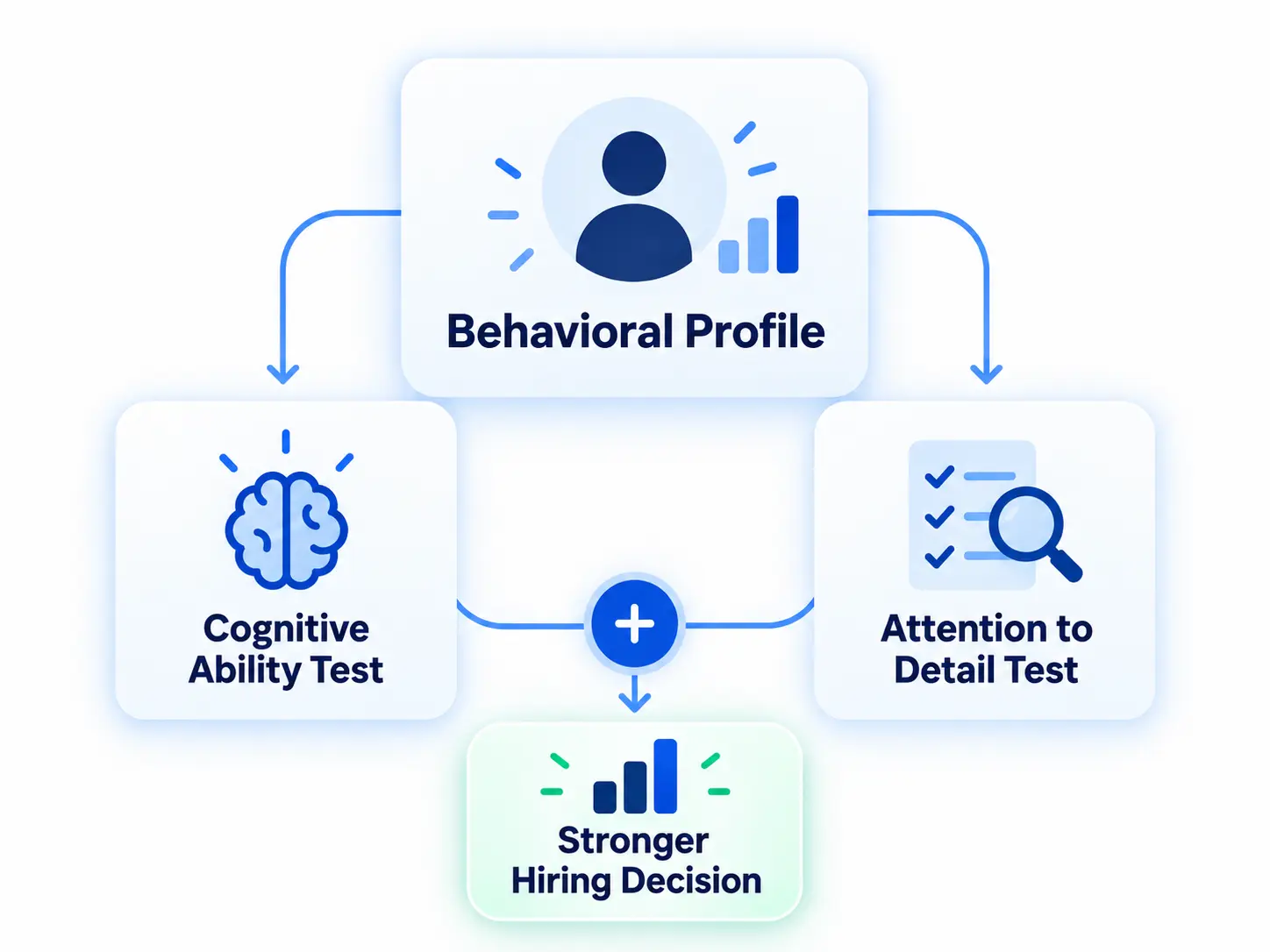
Many hiring teams run the Cognitive Ability Test alongside this profile when the job means learning systems fast or solving problems live.
The Attention to Detail Test fits when accuracy carries weight, like order entry or claims work.
The Emotional Intelligence Profile adds more on how a candidate reads and manages emotions during hard conversations.
The Customer Service Aptitude Test measures aptitude for client-facing work, which pairs well when you want aptitude and reliability in one screen.
Pick two or three that match the job. Testing everything slows your process down without telling you much more.




Use it for any position where a customer sees the work. That covers call center agents, retail associates, front desk staff, hospitality teams, patient access workers, and bank tellers.
It fits best when attendance and attitude matter every single shift, which is most front-line hiring.
Higher is better on this scale. A candidate scoring above the 50th percentile falls into the Low Risk band.
The report describes those people as more dependable, more connected to the work, and more likely to stay with your company longer.
Every competency is scored as a percentile against other test takers, so the numbers line up directly.
Start with the overall Performance Overview score, then look at the individual scales that matter most for the job you are filling.
Yes. Each report ends with Interview Follow-Up Suggestions tied to the competencies on the profile.
Those questions ask the candidate to walk through a real situation and the outcome, which keeps your interview on behavior instead of general conversation.
Yes, and most teams do. Pair it with the Cognitive Ability Test or the Attention to Detail Test when the job needs both behavior and skill.
Candidates receive one test session, and you get a report for each assessment you included.
Pricing is simple and flexible as your needs change. Each test completed uses one test credit. (See pricing for credits)
Yes, just visit Try for Free to provide your information and we’ll send a free sample of the test you request.


