Anyone can say they type fast. This typing test shows you exactly how fast and how accurately.
A single data entry error can mean a wrong order, a billing mistake, or a customer complaint. That adds up quickly in admin, customer service, and operations roles.
Our typing and data entry tests measure real keyboarding speed and accuracy before you hire. Use it as a quick wpm test for job applicants before your first interview.
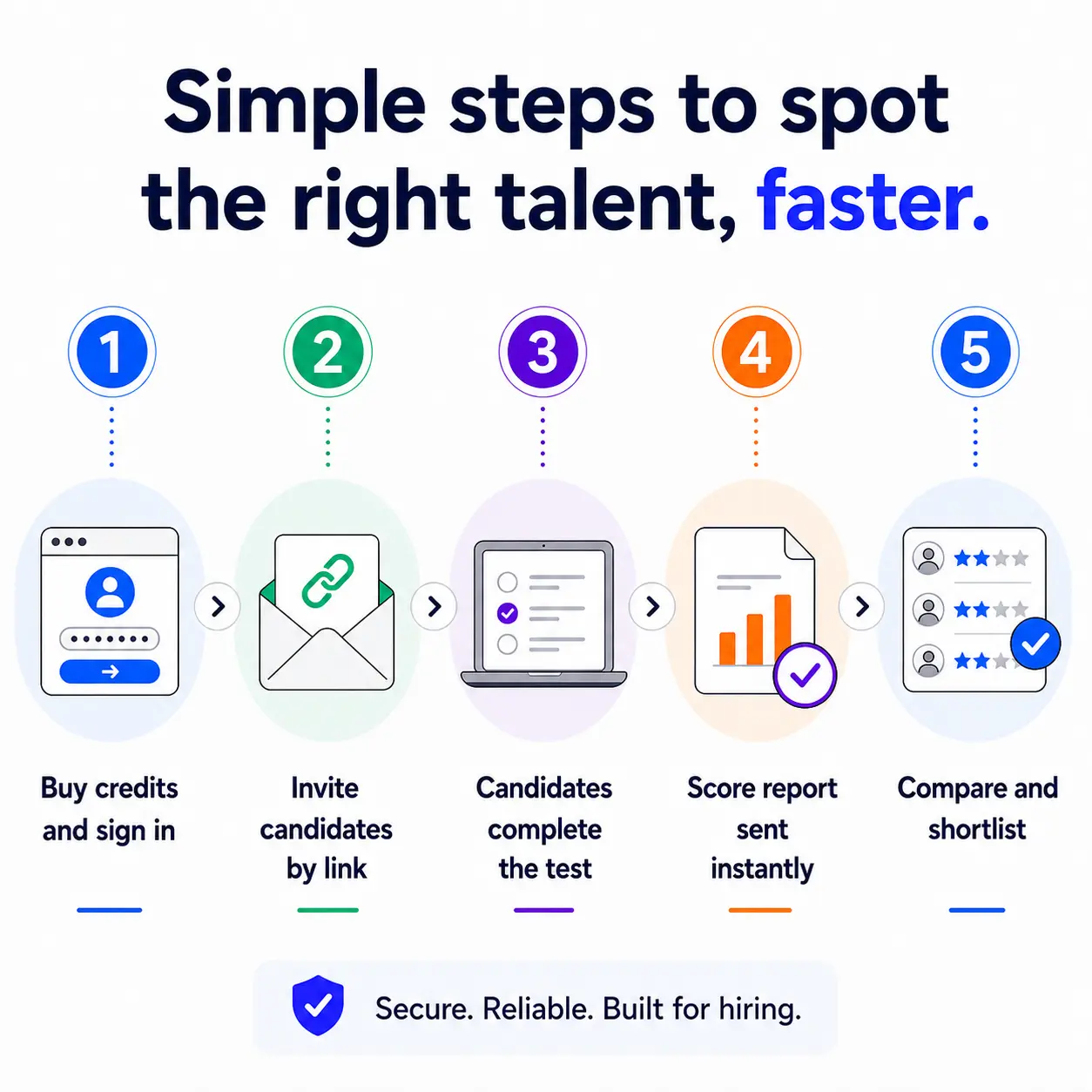
With EmployTest, you only pay for the tests you need, with flexible pricing and no annual commitments or costly contracts.








Slow or inaccurate typing costs your team more than you think. Errors slow down workflows. They delay customers. They create rework.
The Bureau of Labor Statistics reports that office and administrative support roles make up one of the largest job sectors in the U.S. These are roles where typing speed and accuracy directly affect daily output.
A typing accuracy test for employment gives you real data before someone is on your payroll. You see exactly how a candidate performs under timed conditions, the same conditions they will face on the job.
Start using a typing test in your hiring process, and you stop relying on resumes that say ‘proficient typist’ with no proof to back it up.
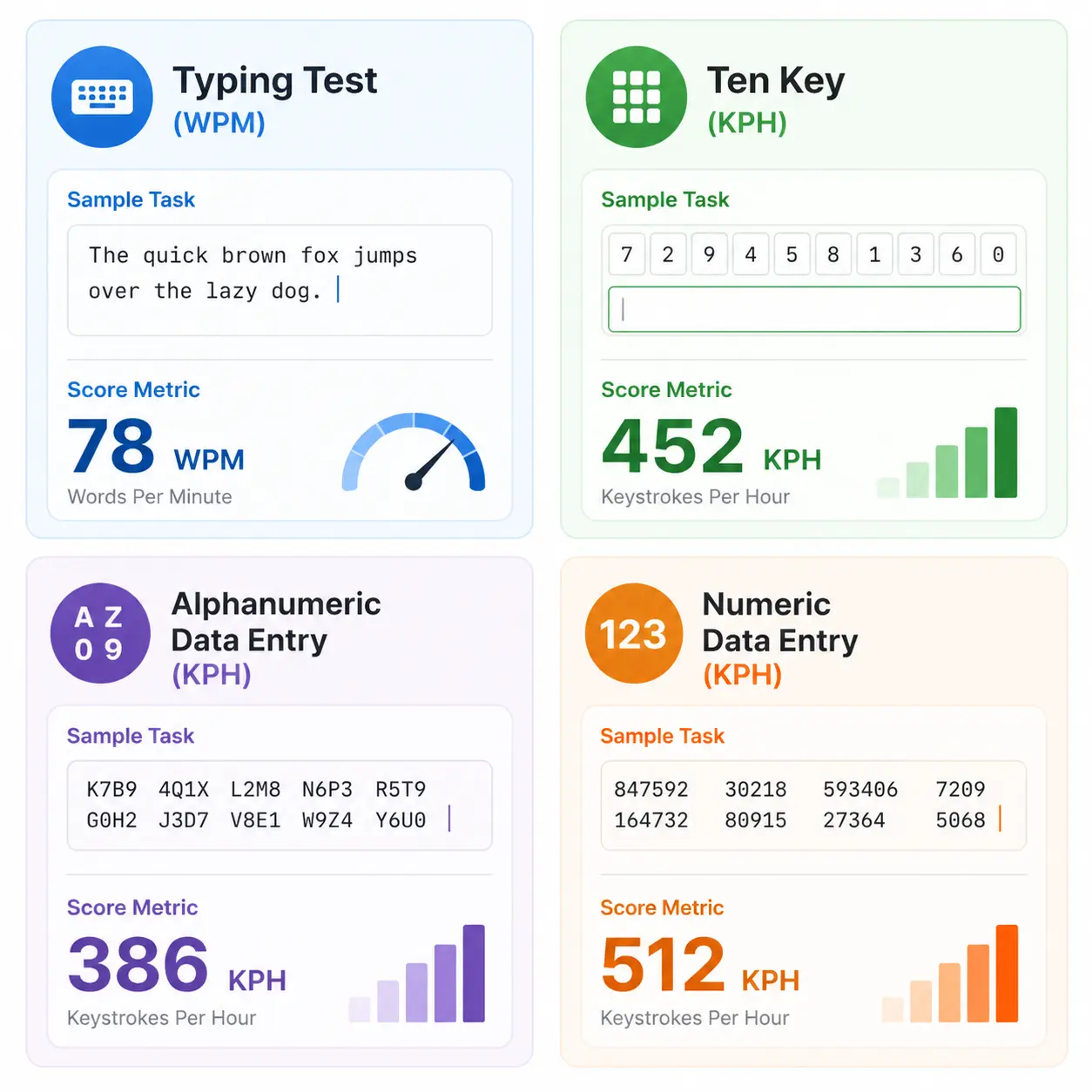
We offer four separate tests. Each measures a different keyboard skill. Choose the one that fits the role, or run more than one.
Typing Test (WPM)
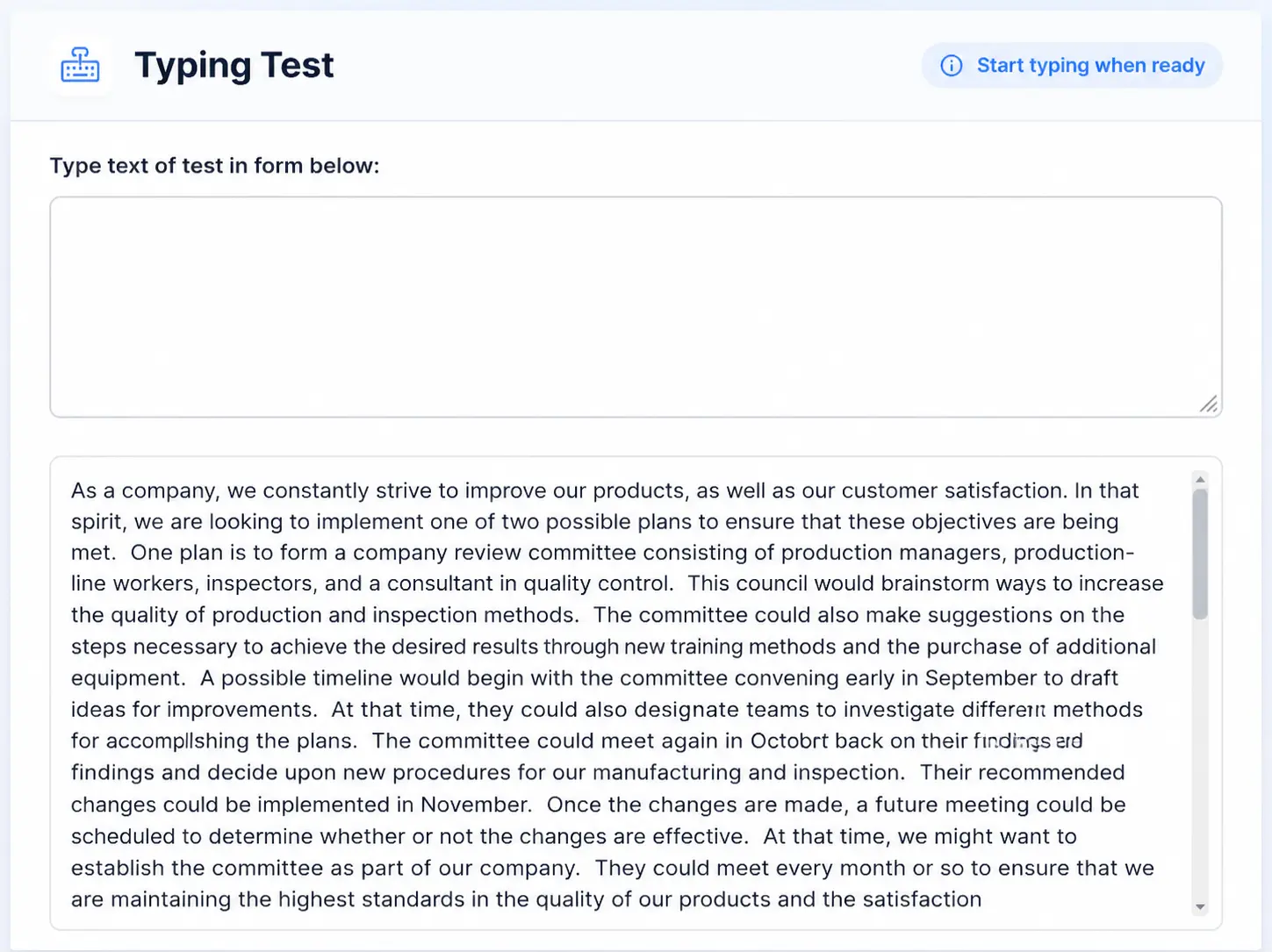
Candidates type a paragraph of text on screen. They are scored on gross and net words per minute and total error count. Timed options: 1, 3, or 5 minutes.
Ten Key Test (KPH)
Candidates enter columns of numbers using the number keypad. This keystrokes per hour test is built for roles that handle invoices, inventory, or any high-volume numeric entry.
Data Entry Test — Alphanumeric (KPH)
Candidates type contact records such as names, addresses, and phone numbers, just like a real order entry or customer service task. Scored in keystrokes per hour.
Data Entry Test — Numeric (KPH)
Candidates type rows of numbers to simulate accounting, payroll, or data entry work. Another keystrokes per hour test focused on speed and precision under pressure.
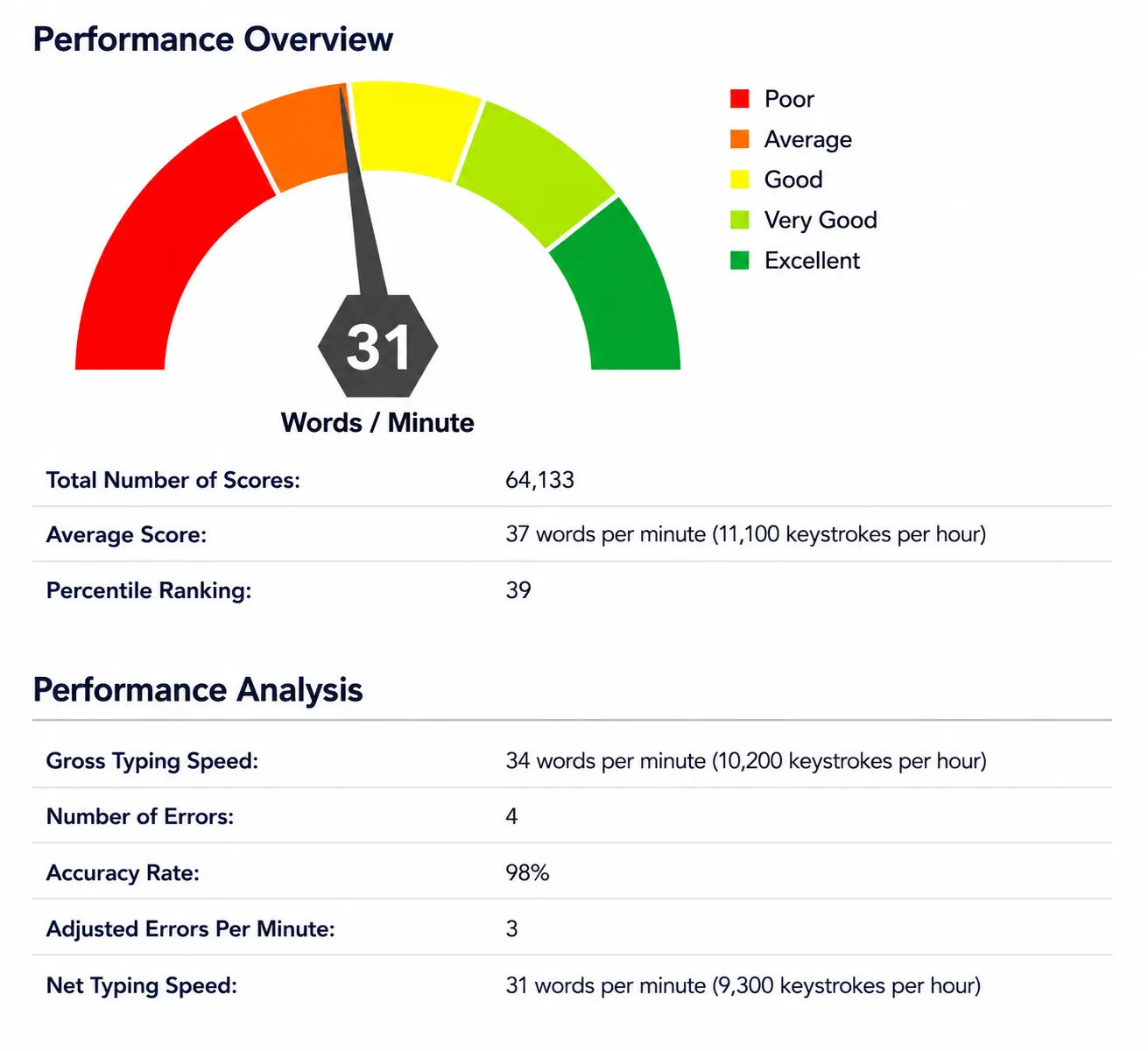
Every completed data entry speed test sends a clean report straight to your inbox the moment your candidate finishes. No sign-in required to view it. Here is what the score report includes:
Overall score rating: Excellent, Very Good, Average, or Poor
Gross speed: raw WPM or KPH before error adjustment
Net speed: adjusted score that accounts for mistakes made
Error count: exact number of errors flagged during the test
Percentile ranking: how this candidate compares to others in the test pool
You do not need to interpret the numbers yourself. The rating and percentile tell you exactly where the candidate stands. Results are saved to your dashboard so you can compare candidates side by side.
According to SHRM, the average cost of a bad hire can reach $4,700 or more. A five-minute data entry speed test is one of the lowest-cost ways to avoid that.
These are not the same test. Each measures a different job skill. Here is how to choose.
Typing Test
Data Entry Test
Not sure which test fits your role? Read key data entry skills to screen for before hire to see which skills matter most for different positions.
Use these tests any time typing speed or data accuracy is a real part of the daily job. That includes:
According to NACE’s Job Outlook research, computer proficiency and attention to detail consistently rank among the top attributes employers want in new hires.
A typing accuracy test for employment gives you a concrete, objective measure of both.

For You
For the Candidate



A typing test for employment measures how fast and accurately a candidate can type under timed conditions. The result is reported in words per minute (WPM). It is one of the most direct ways to screen for keyboarding skills before hire.
A data entry speed test measures how quickly and accurately a candidate can enter structured information, like numbers, names, or contact records, into a system. Scores are reported in keystrokes per hour (KPH). It is a more job-realistic measure than a standard WPM typing test for roles that handle high-volume data input.
For most office and admin roles, a net typing speed of 40 WPM or higher is a reasonable starting benchmark. Customer service and data entry roles often require 45 to 60 WPM. Roles with heavy document work may need 65 WPM or more. Use EmployTest’s percentile ranking to compare candidates against real test takers rather than relying on a single number.
A keystrokes per hour test (KPH) measures the raw volume of keystrokes a candidate can produce in an hour. It is more useful than WPM for numeric data entry roles because it accounts for short entries, numbers, and symbols that WPM calculations handle inconsistently. Use a KPH test for accounting assistants, order entry staff, and any role that processes large volumes of structured data.
A ten key data entry test measures how fast and accurately a candidate can enter numeric data using a number pad. It is scored in keystrokes per hour (KPH) and is built for roles in accounting, finance, payroll, and inventory management, where numeric entry is a daily task.
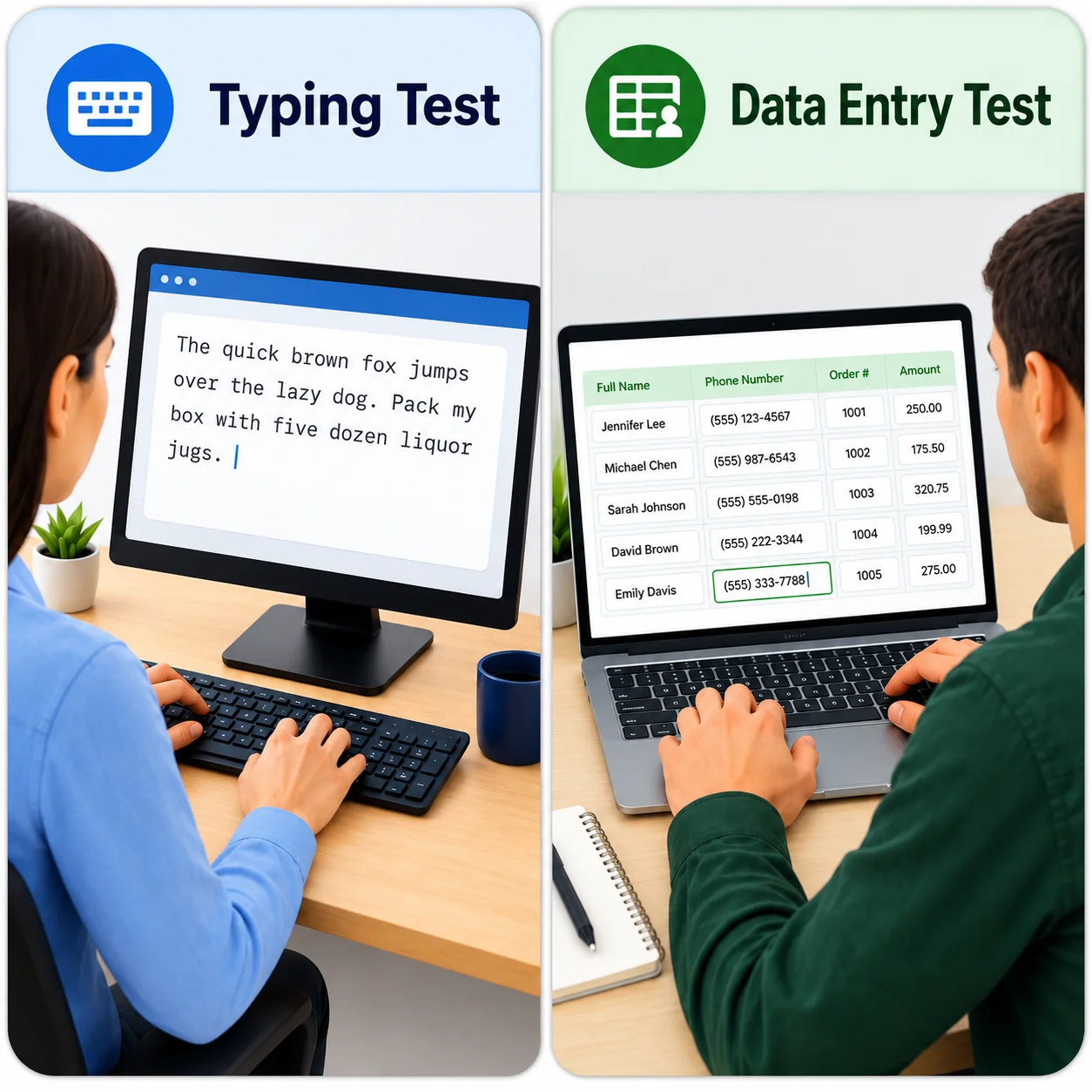
A typing test measures how well someone can reproduce text, typically a paragraph, at speed. A data entry test simulates a real work task like entering contact records or rows of numbers. Typing tests score in WPM. Data entry tests score in KPH. Choose based on what the job actually requires. Some hiring teams run both.
Typing tests ask candidates to type a passage of paragraph text on screen within a set time. Data entry tests ask candidates to enter numbers, names, addresses, or contact records, tasks that mirror real work scenarios. There are no multiple-choice questions. These are performance-based assessments.
Pricing is simple and flexible as your needs change. Each test completed uses one test credit. (See pricing for credits)
Yes, just visit Try for Free to provide your information and we’ll send a free sample of the test you request.