The Emotional Intelligence Profile Test shows you how a candidate manages their own emotions and responds to the emotions of co-workers, in a work environment. You get scored data across four EQ areas the moment they finish.
Pair it with a skills test to see the full picture: what they can do and how they will work with others.
EmployTest helps you scale hiring at your own pace with pay-per-test in blocks pricing and no long-term contracts.









The Emotional Intelligence Profile Test evaluates candidates across four core areas:
Self-Awareness: How confident the candidate is and how they handle pressure.
Social Awareness: Measures empathy, care for others, and a service-oriented mindset.
Self-Management: Evaluates reliability, organization, and emotional control under stress.
Relationship Management: Looks at how the candidate handles collaboration, resolves friction, and builds trust with coworkers and supervisors.
These four areas reflect what makes someone genuinely easy to work with, not just good at answering interview questions.
You get a detailed EQ report the moment each candidate finishes.
Overall EQ Score: A summary score across all four areas, placed in one of three performance bands: Caution, Moderate, or High.
Topic-by-Topic Breakdown: Separate scores for each EQ area with plain-language interpretation of what the results mean on the job.
Management Strategies: Practical guidance for onboarding and working with this candidate based on their specific profile results.
Interview Guide with Scored Follow-Up Questions: Targeted questions based on the candidate’s lowest-scoring areas. Go into the interview knowing exactly where to probe.
Use this test any time the job involves regular interaction with people. That includes:
Not sure which people skills matter most for your supervisors? Read what makes a good supervisor for a clear breakdown.

Interviews are not reliable for spotting emotional intelligence. Most candidates can say the right things. What the job requires is different.
Research from SHRM confirms that emotional intelligence ranks among the most important behavioral competencies for workplace effectiveness, across levels and industries.
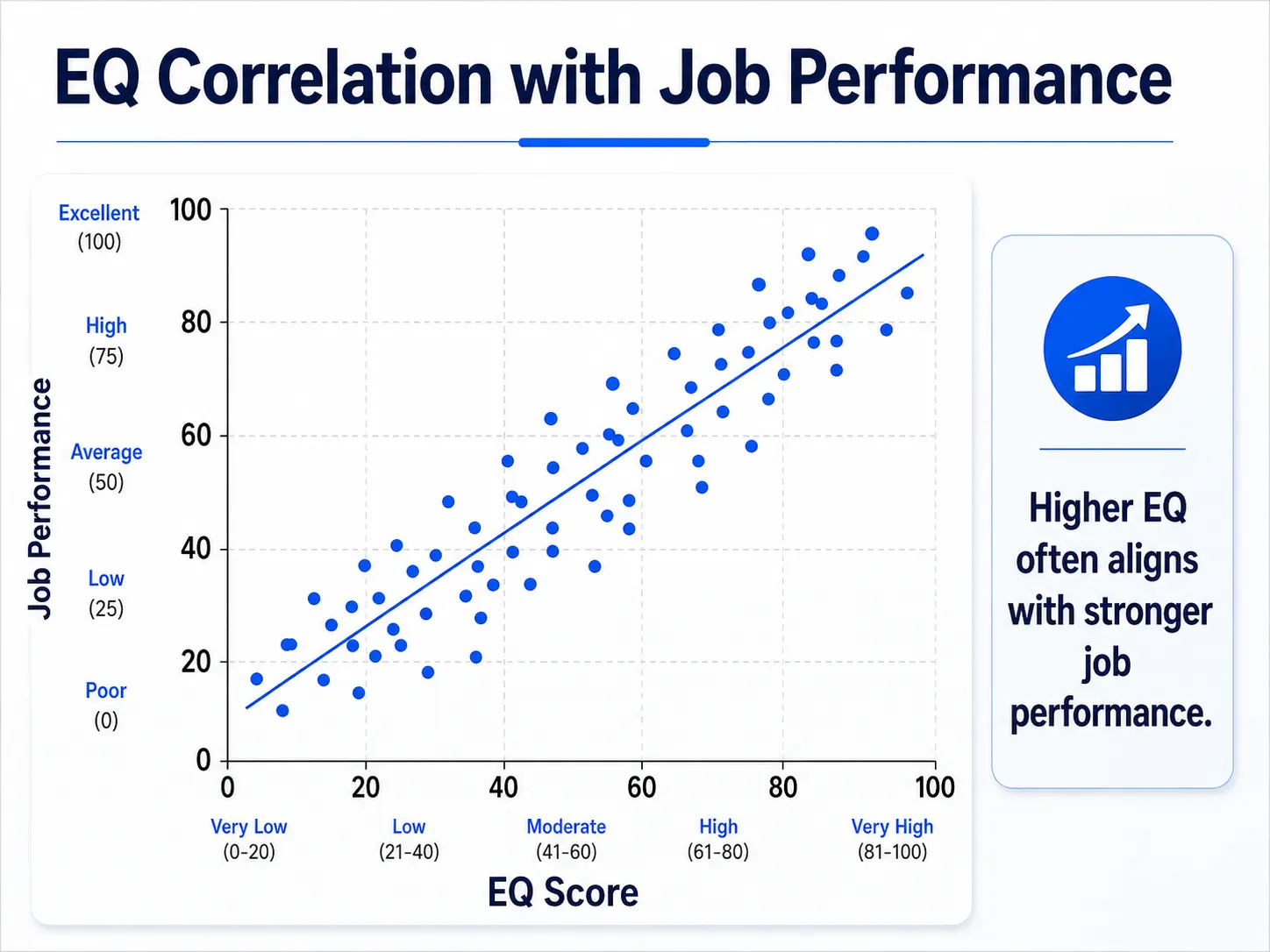
The Consortium for Research on Emotional Intelligence in Organizations found that higher EQ in employees and leaders correlates with lower turnover, better job satisfaction, and stronger on-the-job performance.
A standardized EQ assessment puts every candidate on equal footing. Same questions. Same conditions. Scores you can compare and defend.
Learn how to use this data with distributed teams in our guide on emotional intelligence tests for remote hiring.
Not all EQ assessments are built for hiring. Here is what separates a useful one from a generic personality quiz:
Validated Questions: Developed by subject matter experts who understand behavioral science and workplace performance.
Standardized Scoring: Scores benchmarked against a real applicant pool so you know where each candidate stands relative to others.
Bias-Resistant Design: Built so candidates cannot just select the most favorable-sounding answers.
Instant Score Reports: Results available the moment the candidate finishes. No manual scoring. No wait.
Actionable Output: The report tells you what to do with the data. Management strategies and an Interview Guide with scored follow-up questions are built in.

Customer-facing industries see the biggest return from EQ screening. The data is useful across a wider range of roles:
Healthcare: Clinical and administrative staff deal with patients and families under pressure every day. EQ data tells you how candidates handle those interactions.
Finance and Accounting: Roles involving client contact, team coordination, or sensitive data benefit from higher EQ.
Legal and Compliance: Paralegals, case managers, and compliance officers work with clients and colleagues in high-stakes situations.
Education and Training: Teachers, instructors, and L&D staff rely on empathy and relationship management to be effective.
Government and Nonprofits: Public-facing roles and mission-driven teams perform better when staff can manage their own emotions and read others.

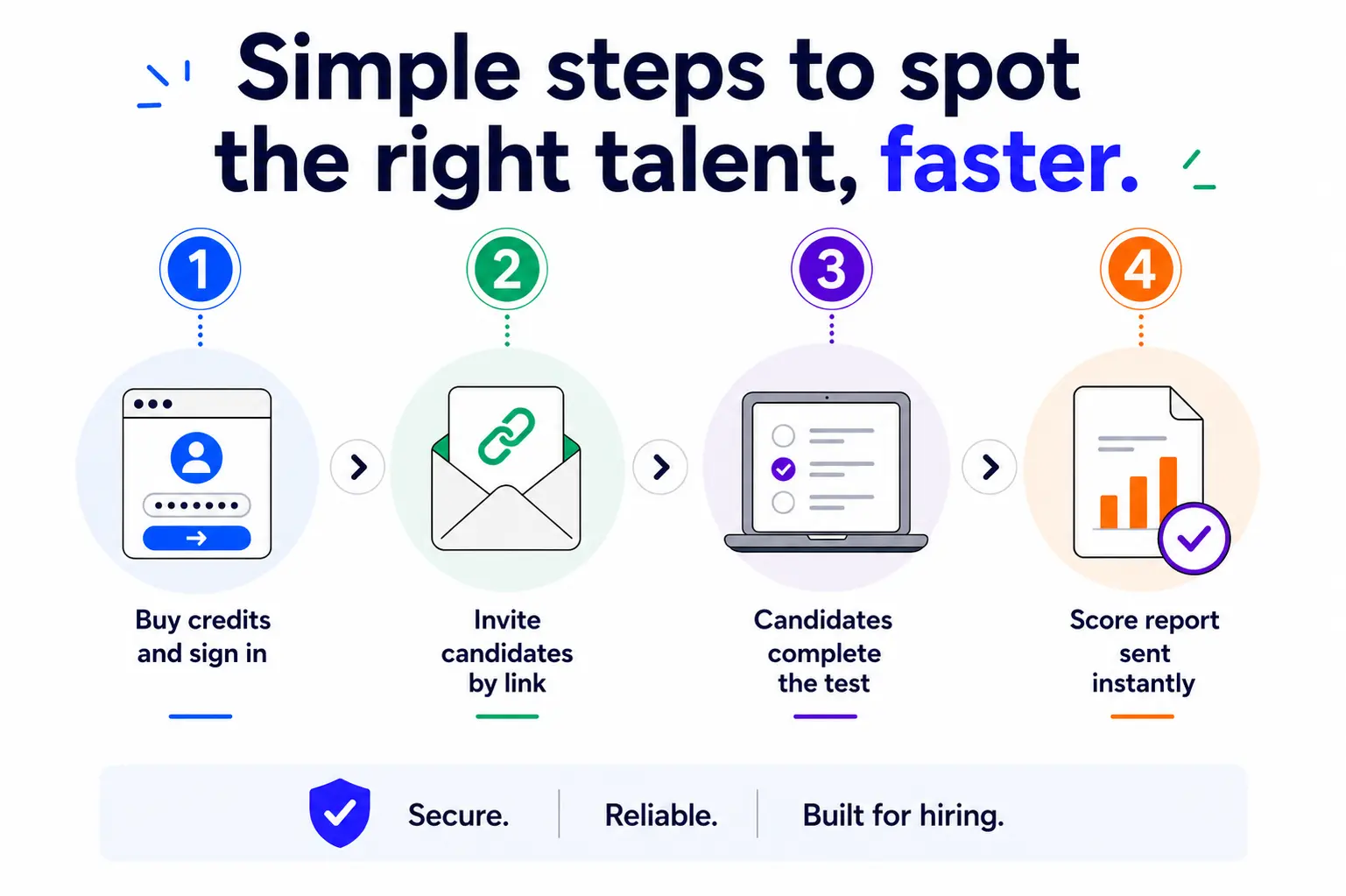
Getting started is fast:
For a more complete applicant picture, pair the EQ Profile with the Cognitive Ability Test. Cognitive data tells you how a candidate thinks. The EQ Profile tells you how they relate to others.



The test measures four core areas of emotional intelligence: Self-Awareness, Social Awareness, Self-Management, and Relationship Management. Each area is scored separately. You get an overall EQ profile plus a topic-by-topic breakdown showing where the candidate is strong and where they may need support. The report also includes an Interview Guide with scored follow-up questions based on areas of concern, so you go into the next conversation prepared.
Most candidates complete the assessment in approximately 20 minutes. They access the test through a direct email link you send from your dashboard. There is nothing to install and no account setup required on the candidate’s end. You receive the score report the moment they finish.
Any role that involves regular interaction with people. The test is most commonly used for customer service positions, supervisors and team leads, healthcare and social services staff, HR and recruiting professionals, and sales roles. If empathy, communication, or conflict resolution are part of the job, this test gives you objective data that a resume and interview cannot provide.
Each candidate is placed in one of three bands: Caution, Moderate, or High. These reflect their performance across the four EQ areas relative to the broader applicant pool. The report includes plain-language interpretation for each band so you can read the results without a background in behavioral science. Management strategies for onboarding and working with each type of candidate are also included.
Yes. The EQ Profile works well alongside the Cognitive Ability Test and the Attention to Detail Test. Together they give you a more complete view of how a candidate thinks, handles accuracy, and relates to others. Most hiring teams start with one or two tests depending on the role and the stage of their screening process.
Pricing is simple and flexible as your needs change. Each test completed uses one test credit. (See pricing for credits)
Yes, just visit Try for Free to provide your information and we’ll send a free sample of the test you request.


