The HR Generalist Knowledge Test shows you whether a candidate really knows how HR works before you hand over your employee files.
Your next HR hire will touch hiring, benefits, and employee questions in week one. Getting that wrong turns costly fast.
This test checks what a candidate knows across six core HR topics. The score report reaches your inbox the moment they finish.
EmployTest helps you keep hiring costs predictable with flexible assessment pricing and no annual license commitments.
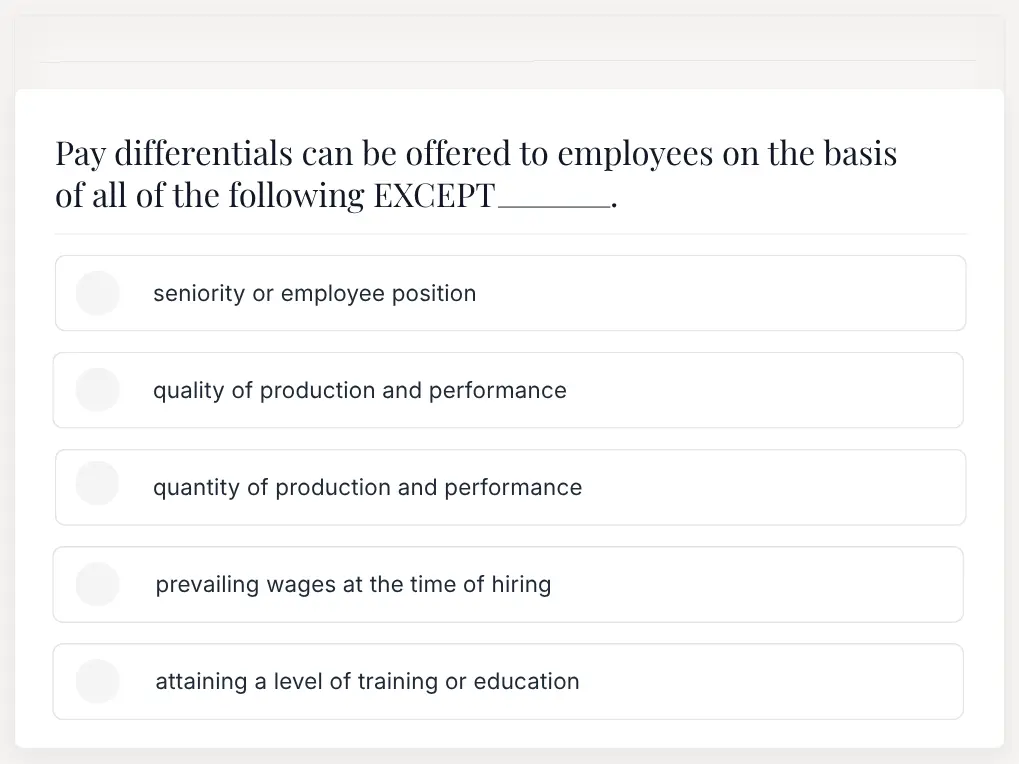








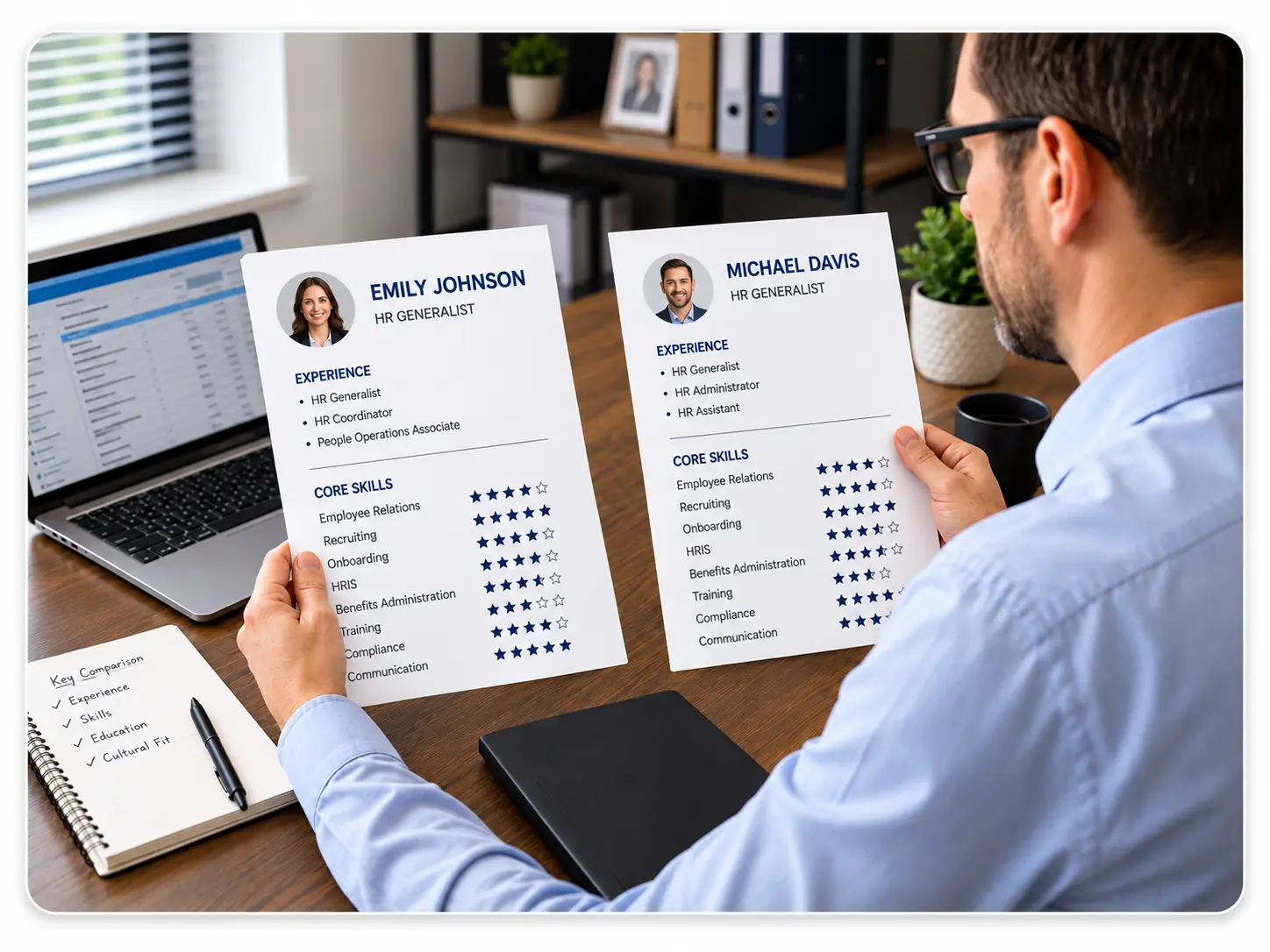
Almost every HR applicant lists the same four things. Recruiting, onboarding, benefits, employee relations.
None of that tells you whether they know what COBRA requires or how to classify an exempt employee. The gap usually turns up later, when a manager asks a question your new hire cannot answer.
O*NET rates interpreting and explaining HR policies, procedures, and laws as the top task for human resources specialists.
An HR generalist skills assessment tells you who can already do that, and a pre-employment test for HR positions gives you that read before you hire.
The test has 49 questions spread across six HR topics. Your score report breaks out how the candidate did on each one.
Questions come at two difficulty levels, Basic and Intermediate. That split shows you who handles routine HR work and who can also take the harder calls.

The report lands in your inbox as soon as the candidate finishes. Here is what you get.
Discrimination Laws is the biggest section on the test at 17 questions. It covers ADA, equal pay, harassment, and BFOQ, the ground an HR generalist is expected to know cold.
Applicant Screening adds 12 more on interview practices, background checks, and adverse impact.
Those two topics are where a wrong answer stops being a training issue and starts being a company problem.
If age discrimination in the hiring process is already on your radar, that piece covers what to watch for.

Use this test when the job carries real HR responsibility. That covers HR generalists, HR coordinators, HR assistants, benefits administrators, and office managers who handle HR on the side.
It works for internal moves too. When you promote someone into HR from another department, the topic breakdown shows you exactly what to train first.
The Bureau of Labor Statistics projects about 73,700 openings a year for human resources specialists. Screening well matters when the hiring never really stops.
Here is a checklist of the skills an HR generalist actually needs.

Topic scores do more than rank people. They tell you what to ask.
Say a candidate scores well on Hiring Processes and lands low on Benefit Programs. Now you know to spend interview time on open enrollment, COBRA, and leave requests instead of general questions.
The question-level detail helps too. Seconds spent per question shows you where a candidate moved with confidence and where they had to work for it.
SHRM research found 79 percent of HR professionals who use prehire assessments rate the scores as equal to or more useful than traditional hiring criteria.

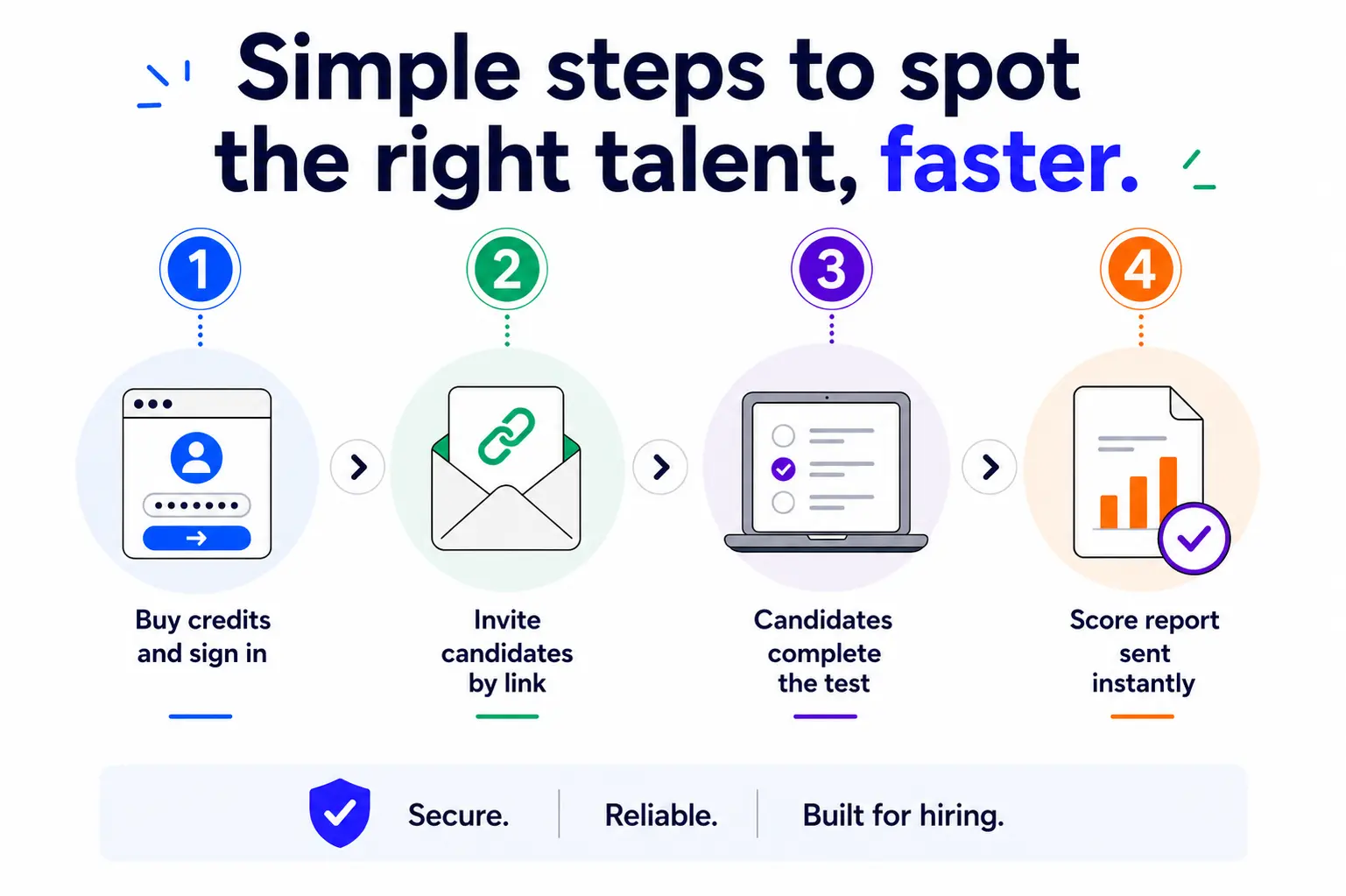
Getting a candidate tested takes minutes.


Six topics: Discrimination Laws, Applicant Screening, Hiring Processes, Benefit Programs, Employment Relationships, and Compensation Management. Discrimination Laws and Applicant Screening carry the most questions, because that is where day-to-day HR decisions get made.
Your score report shows percent correct on every topic, so you can see strengths and soft spots separately instead of one flat number.
The test has 49 questions. They come at two difficulty levels, Basic and Intermediate, and the score report breaks out performance at each level.
That tells you whether a candidate has the routine material down and how far past the basics their HR knowledge actually goes.
Yes. Internal moves are one of the better uses for it. Someone stepping into HR from operations or accounting may know your company well and still have gaps on benefits or employment law.
The topic breakdown shows you exactly where to put training time in their first quarter.
This test measures Basic and Intermediate HR knowledge, so it fits generalist, coordinator, and assistant hiring best.
For a senior HR leadership hire, use it as a knowledge floor and pair it with the Cognitive Ability Test for a fuller read on how the candidate thinks through unfamiliar problems.
Pricing is simple and flexible as your needs change. Each test completed uses one test credit. (See pricing for credits)
Yes, just visit Try for Free to provide your information and we’ll send a free sample of the test you request.


