EmployTest’s pre-employment testing software for healthcare admin shows you how an applicant will treat patients before you put them at the front desk.
Your front desk sets the tone for every visit. Patients notice a warm greeting and a correct appointment time.
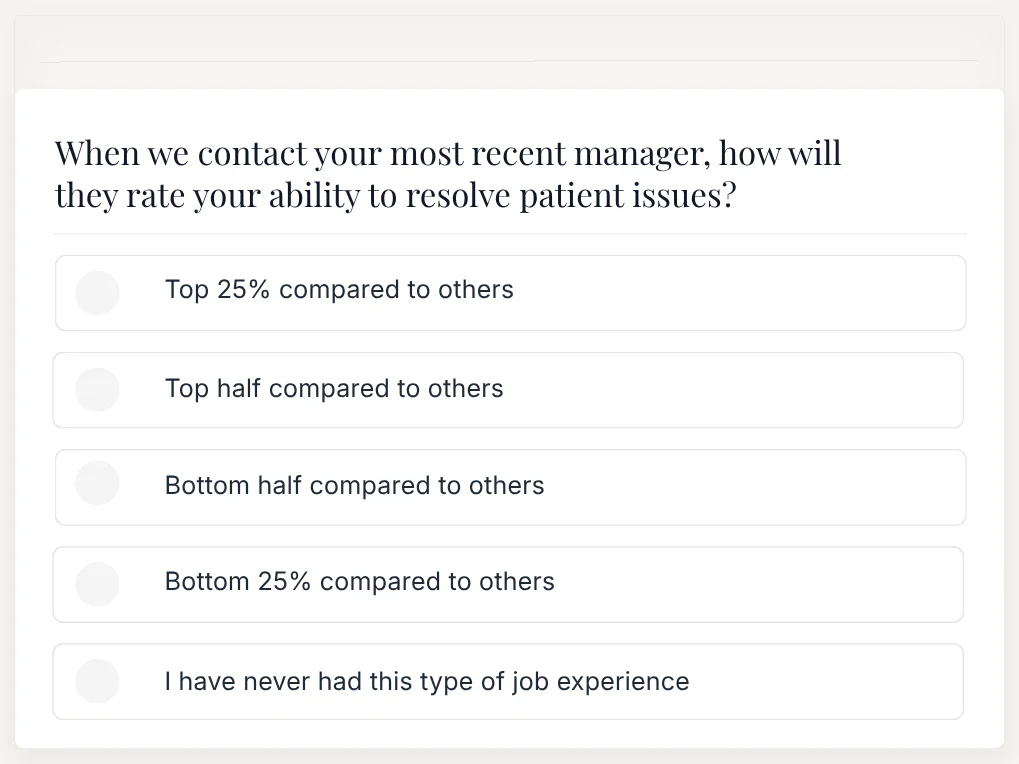
The Healthcare Service Profile for Support scores applicants across five areas:
Use this healthcare admin pre-employment test to spot dependable support applicants before hiring.
Use this healthcare admin pre-employment test to spot dependable support applicants before hiring.
EmployTest is ideal for occasional or ongoing hiring, with flexible pricing and no long-term contracts.








Each area breaks into specific habits you can watch for on the job.
Demonstrates Respect looks at sensitivity to other people and how well someone manages their own reactions under pressure.
Under Interpersonal Communication, the test scores active listening, following spoken direction, and speaking clearly.
Patient Centricity covers building rapport, handling patient requests, and giving accurate answers.
Careful work sits under Quality Orientation, which scores detail focus and doing a task right the first time.
Service Orientation rounds it out with empathy, concern for others, and reading how people react.
O*NET ranks Cooperation, Attention to Detail, and Dependability among the top work styles for medical secretaries and administrative assistants. This profile scores all three.
Patients rate your admin staff whether or not you measure it first.
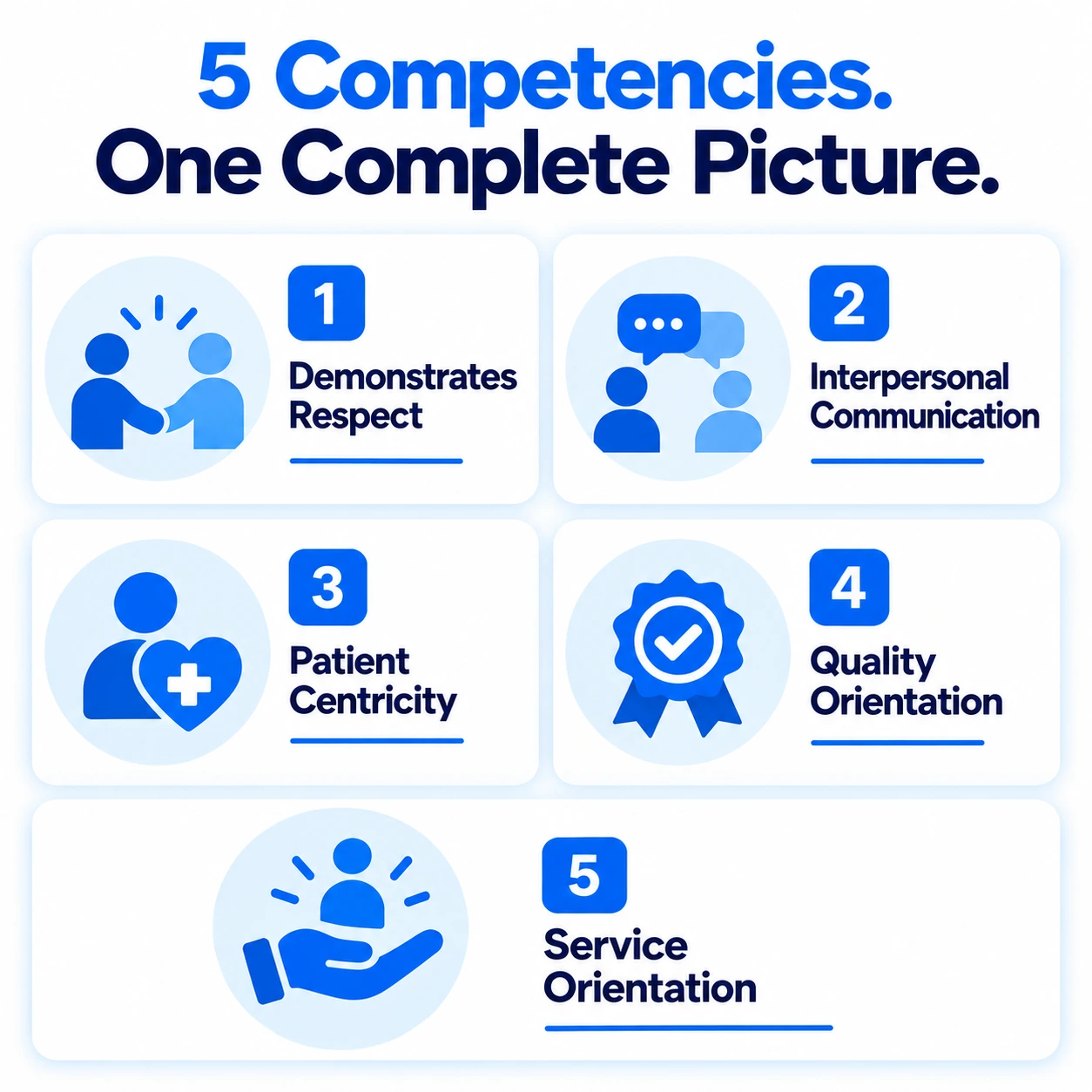
The AHRQ Clinician & Group CAHPS survey includes a dedicated composite measure for office staff. Patients answer how often front desk staff were helpful and treated them with courtesy and respect.
That score sits right alongside how patients rate the provider. One short check-in can move it.
A healthcare customer service assessment gives you a percentile score on respect and service before hiring, so you know what you are working with on day one.
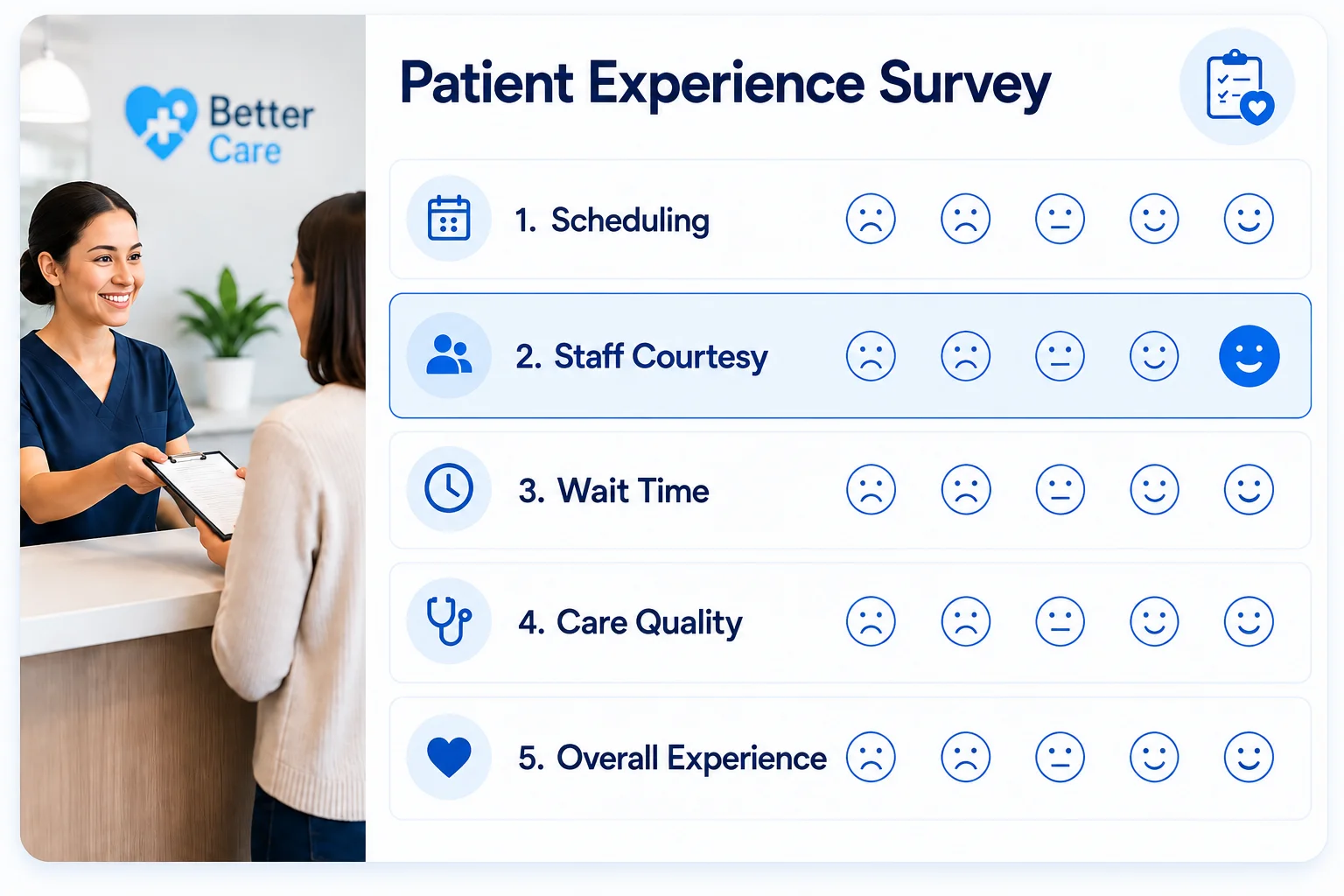
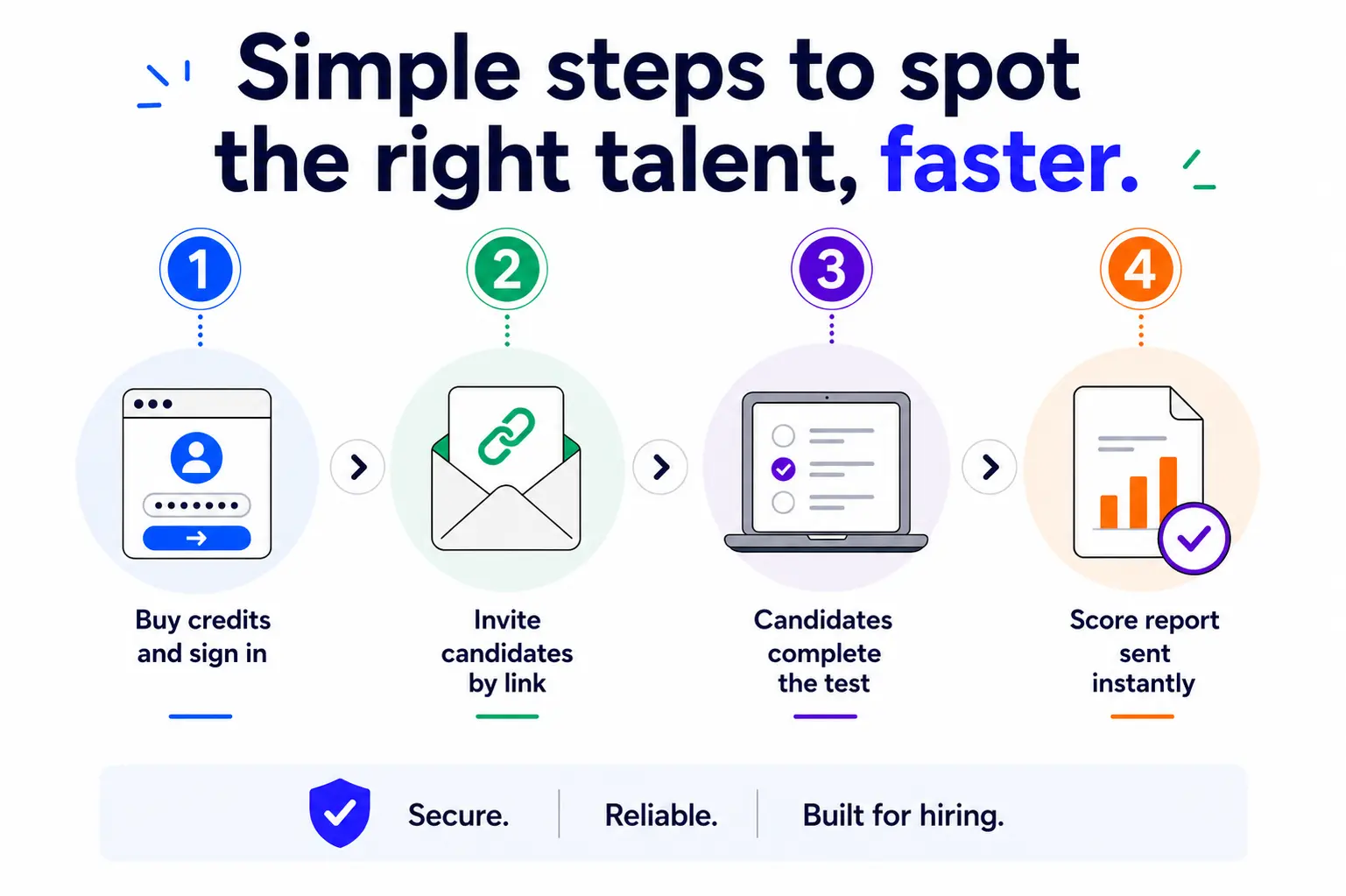
Every completed test produces a report sent to your inbox. Here is what is inside:
The Trainability Factor is the part most hiring managers read first. It tells you how quickly a gap in that area tends to close with feedback or coaching.
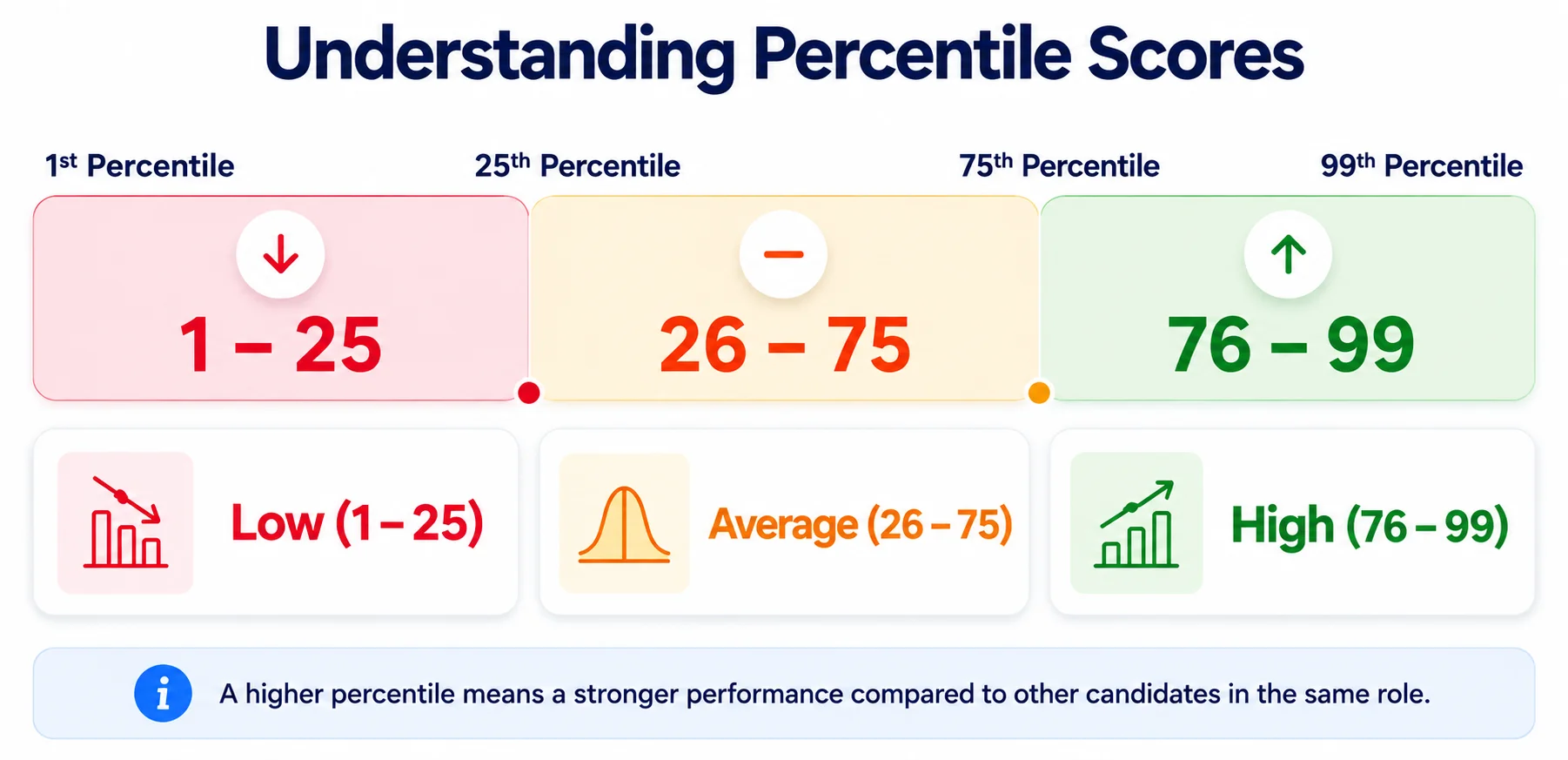
Scores come back as percentiles. A 74 means the applicant scored above 74 percent of past test takers in that area.
Substantial Strength starts at 51. Applicants in that band handle patient contact well with light oversight.
Adequate Strength runs from 21 to 50. These applicants do the work, though busy or stressful shifts can expose gaps.
Not a Strength runs from 1 to 20. Plan on close support in that area.
Set your own bar by the job. A scheduler who lives on the phone needs strong Interpersonal Communication. A records position leans harder on Quality Orientation.
This test fits healthcare support jobs where patient contact is constant. That includes:
The talking is the job. BLS Occupational Requirements Survey data shows external verbal interactions were required constantly, every few minutes, for 68 percent of medical secretaries and administrative assistants in 2025.
Hiring for a job that also handles charts, billing screens, and Office files? Review the technical skills healthcare administrators need to decide what else to measure.
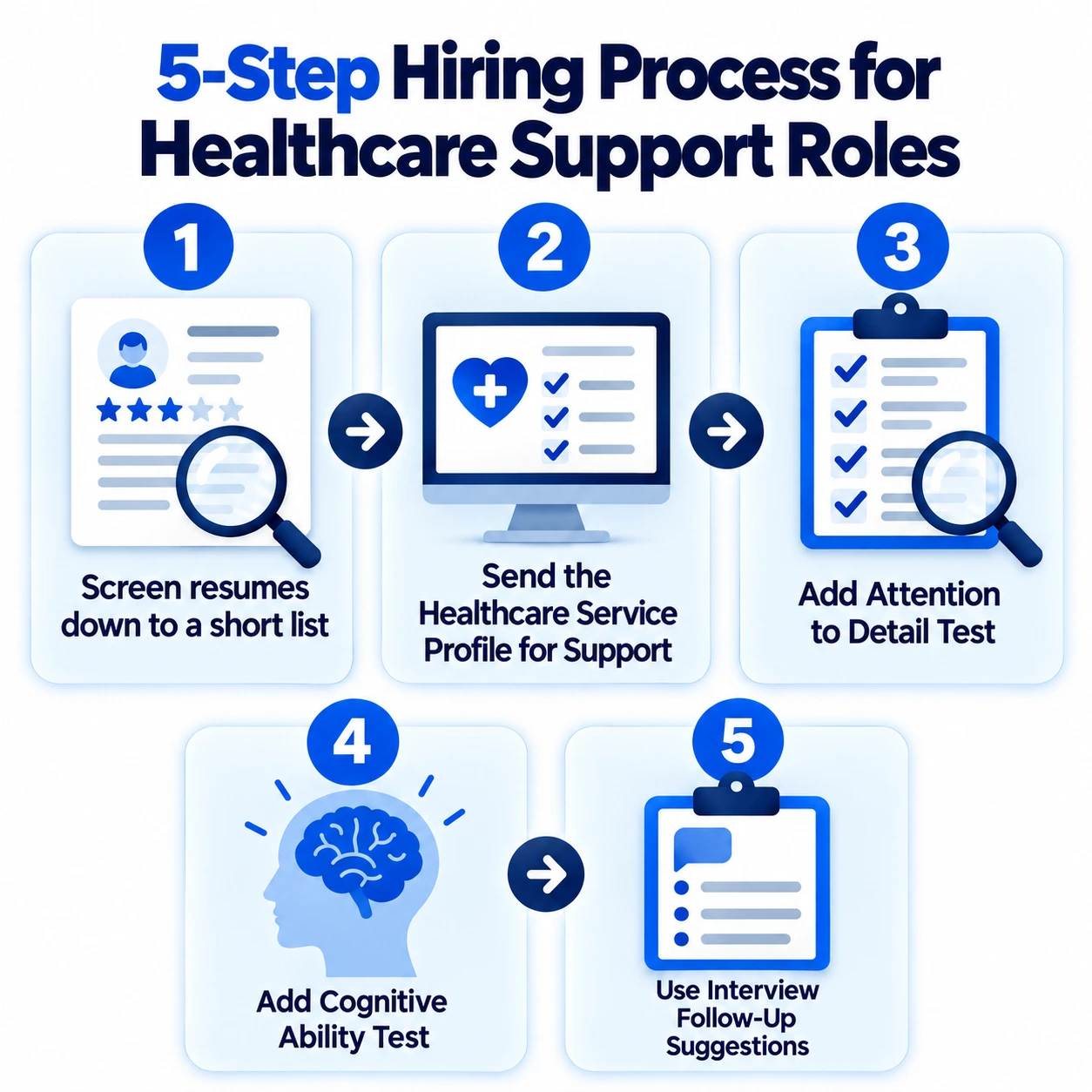
Behavior is one layer. Most healthcare admin hires also need a look at accuracy and thinking speed. An order that works well:
Behavioral testing for key personality traits works best early, so your interview time goes to applicants who already fit patient contact work.



Send it to applicants for medical receptionist, patient access representative, scheduler, medical office assistant, and medical secretary jobs. Any position where someone greets patients, answers the phone, or handles check-in is a good fit.
A percentile shows rank against past test takers. An 82 in Patient Centricity means the applicant scored above 82 percent of people who have taken that scale. The report groups those percentiles into Not a Strength, Adequate Strength, and Substantial Strength so you can read a report quickly.
Every competency in the report carries a Trainability Factor note. It describes how much that behavior tends to shift with feedback, training, or coaching, and how much reinforcement it usually takes to hold. Use it to decide which lower scores you can work with after hiring.
This is a behavioral assessment for healthcare support staff, so it measures how someone works with patients. Pair it with an Attention to Detail Test when the job involves charts, insurance fields, or appointment data, and a Cognitive Ability Test when the job involves learning new systems quickly.
Yes. Every score is a percentile against the same normative group of past test takers, so two applicants who tested weeks apart are still measured on one scale. That makes side-by-side comparison fair across a long search.
Pricing is simple and flexible as your needs change. Each test completed uses one test credit. (See pricing for credits)
Yes, just visit Try for Free to provide your information and we’ll send a free sample of the test you request.


