The Warehouse Pick Pack Test shows you which applicants can pull the correct part and confirm a packing slip before an order leaves your dock.
Almost every warehouse applicant says they’re careful. This warehouse picker test lets you verify it with 35 questions built from real pick and pack paperwork.
Candidates match bar codes, cross reference part lists, read inventory forms, and check shipping logs. Results come back broken out by topic, so you can see where each person is strong before hiring.
EmployTest helps you scale hiring at your own pace with pay-per-test block pricing and no long-term contracts.









“Detail-oriented” shows up on nearly every warehouse resume. It’s easy to write and hard to check in a short interview.
On the floor, it comes down to small moments, like reading part 4471-B correctly or catching a wrong quantity on a packing slip.
Warehouse hiring also repeats often. The Bureau of Labor Statistics projects about 904,200 openings each year for hand laborers and material movers.
A short picking test gives every applicant the same tasks and scoring. To see why accuracy screening works across jobs, read why attention to detail tests matter in hiring.

Every question uses paperwork from a normal shift. The 35 questions cover six topics:
Cross referencing gets the most questions, since pulling the right item is the core of order picking.

Questions are sorted into three levels. The score report shows how each candidate did at every level.
Level scores help you plan training. A candidate who does well on Basic items but misses Intermediate ones can likely handle simple picks and may need coaching on multi-line orders.
Strong Advanced scores point to someone who could check other pickers’ work down the road.

Each completed test produces a score report with:
Time per question adds context. A fast candidate who misses two packing slips needs a different conversation than a slower one who gets them right.
This order picker test fits any job position where people pull and pack orders, including:
The topics line up with the actual job. O*NET lists reading orders for catalog numbers, sizes, and quantities as a core task for stockers and order fillers, along with comparing invoices to the items received.
If a new hire will touch an order before it ships, this test belongs in your process.

Speed gets plenty of attention in warehouse hiring. Accuracy is what keeps orders from coming back.
Workers in the field agree. In O*NET’s survey of stockers and order fillers, 62% rated being exact or accurate as very or extremely important to their job.
Many warehouses add a picker checker step, where a second person reviews orders before they ship. That step runs smoother when your pickers start out making fewer mistakes.
Scores can also guide who you move into a checker or lead position, since the Packing Slip and Shipping Log topics reflect that review work.

Some teams skip testing and run a paid trial shift instead. That ties up a lead for hours and puts an untrained person near equipment on day one.
According to the BLS, new warehouse workers often shadow an experienced coworker for anywhere from a few days to about a month.
A warehouse pre-employment test helps you decide who gets that training time. Use it early, then save trial shifts for your top two or three applicants.
Plants run similar screening for production hires, as covered in this guide to pre-employment testing for manufacturing.

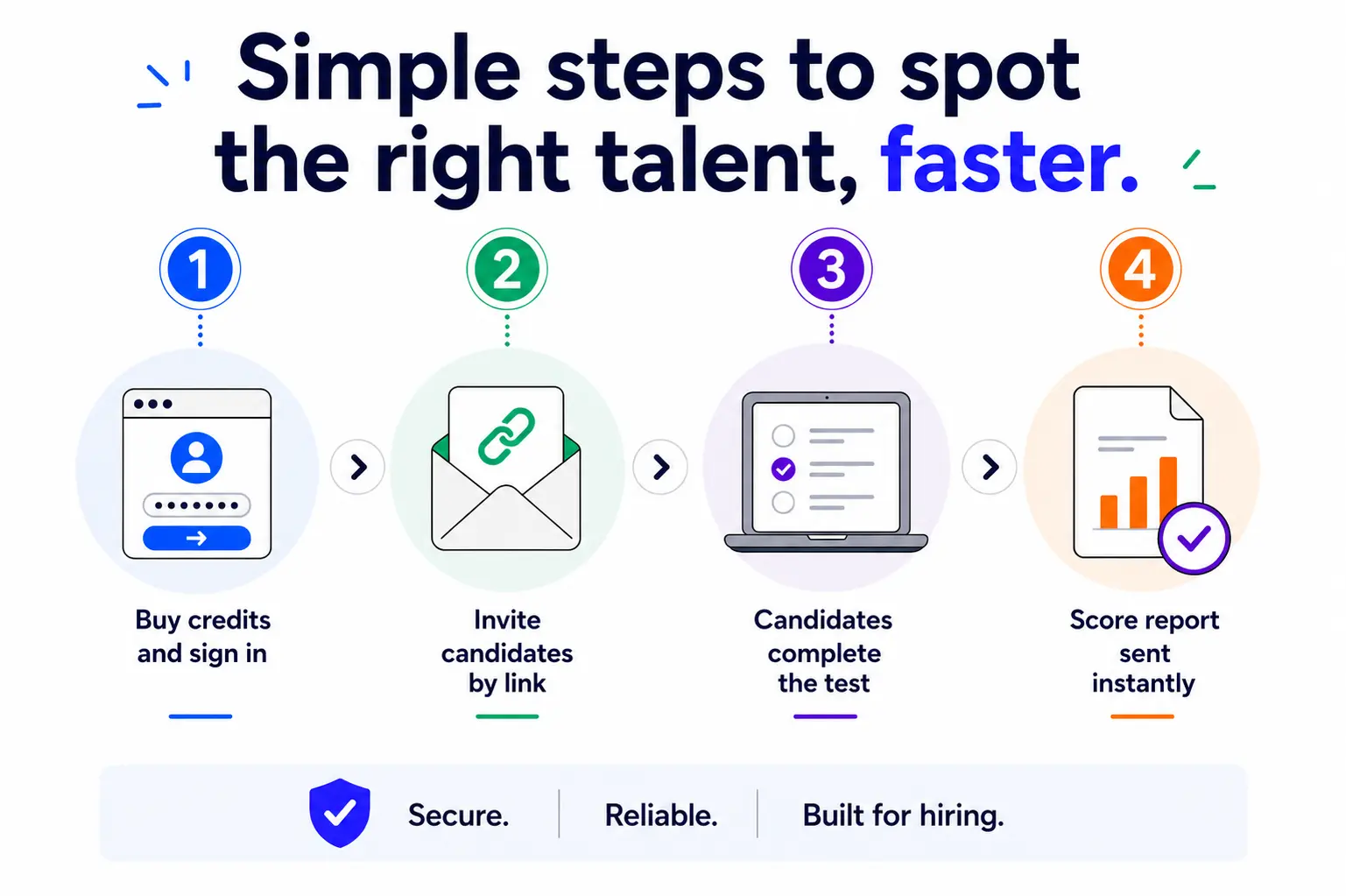
Getting started takes four steps:
Reports stay in your dashboard, so you can compare applicants side by side when it’s time to decide.
Pick and pack skills are one piece of a good warehouse hire. These tests fill in the rest:
For most warehouse openings, start with this test plus the Attention to Detail Test. Add others as the job calls for them.




The test has 35 questions based on everyday warehouse paperwork. Candidates work with part and product lists, inventory forms, bar codes, part number labels, packing slips, and shipping logs.
It fits order pickers, packers, fulfillment associates, shipping and receiving associates, and inventory associates. It also helps when you’re choosing someone to check other pickers’ work.
Start with the Report Score, then look at the topic breakdown for the tasks your job uses most. If your team ships a high volume of orders, give Packing Slip and Shipping Log results extra weight.
Send it after your first resume review and before interviews. You’ll walk into each interview knowing which topics to ask about, and you can save trial shifts for your strongest applicants.
Yes. You can pair it with the Attention to Detail Test, the Cognitive Ability Test, or the Industrial Skills Test. Each test produces its own score report, so you can review results together in your dashboard.
Pricing is simple and flexible as your needs change. Each test completed uses one test credit. (See pricing for credits)
Yes, just visit Try for Free to provide your information and we’ll send a free sample of the test you request.


