







EmployTest Logo

Artificial Intelligence Test for Applicants

The Artificial Intelligence Test for Applicants measures AI prompting skills, data interpretation, logical reasoning, and pattern recognition. These are the skills that matter when AI is part of the daily workflow.

Anyone can say they work well with AI. This test shows whether they actually do.

You get a full score report the moment your candidate finishes. No guesswork about who is ready for an AI-driven role.

EmployTest offers flexible pay-per-test pricing for low to medium hiring volumes, with no annual license fees or long-term contracts.

Why AI Skills Matter in Hiring Now

AI has moved from tech departments into everyday office roles. Marketing teams use it to draft content. Finance staff use it to summarize reports. Operations coordinators use it to schedule and prioritize tasks.

According to SHRM’s 2025 Talent Trends report, 43% of organizations now use AI in HR tasks, up from 26% in 2024. The same research found that 67% have not been proactive in preparing employees to work alongside these tools.

That gap is a hiring risk. Testing for AI skills before the offer goes out is one of the lowest-cost ways to reduce it. For context on which roles are shifting fastest, see this overview of what jobs AI will replace and create.

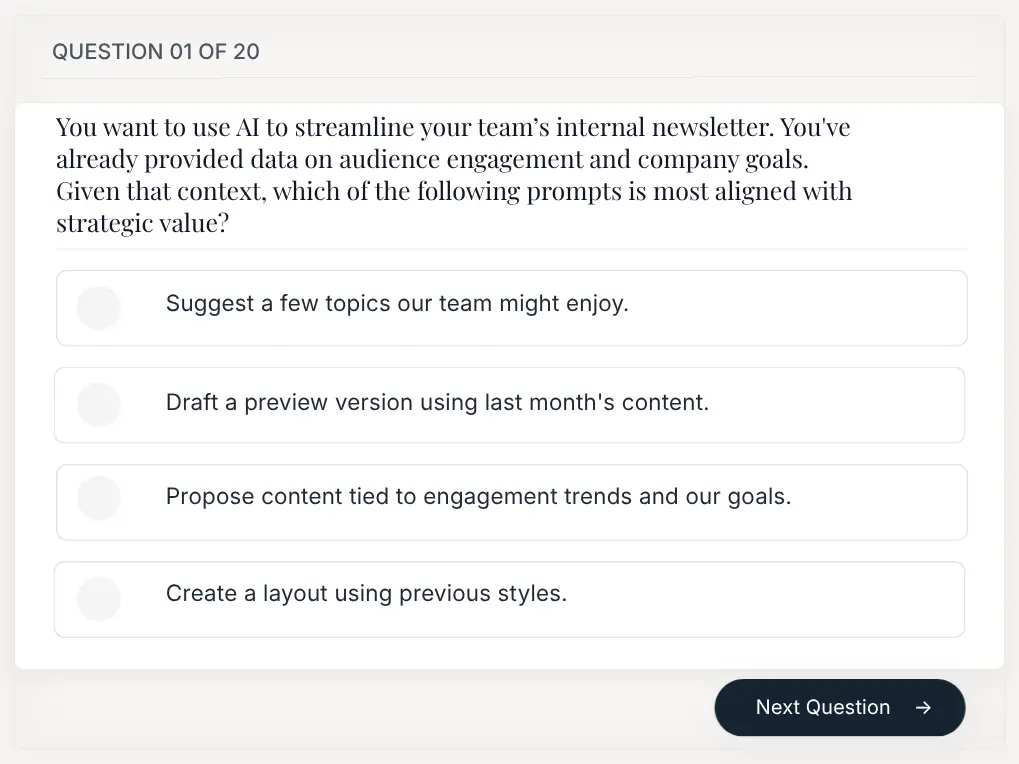
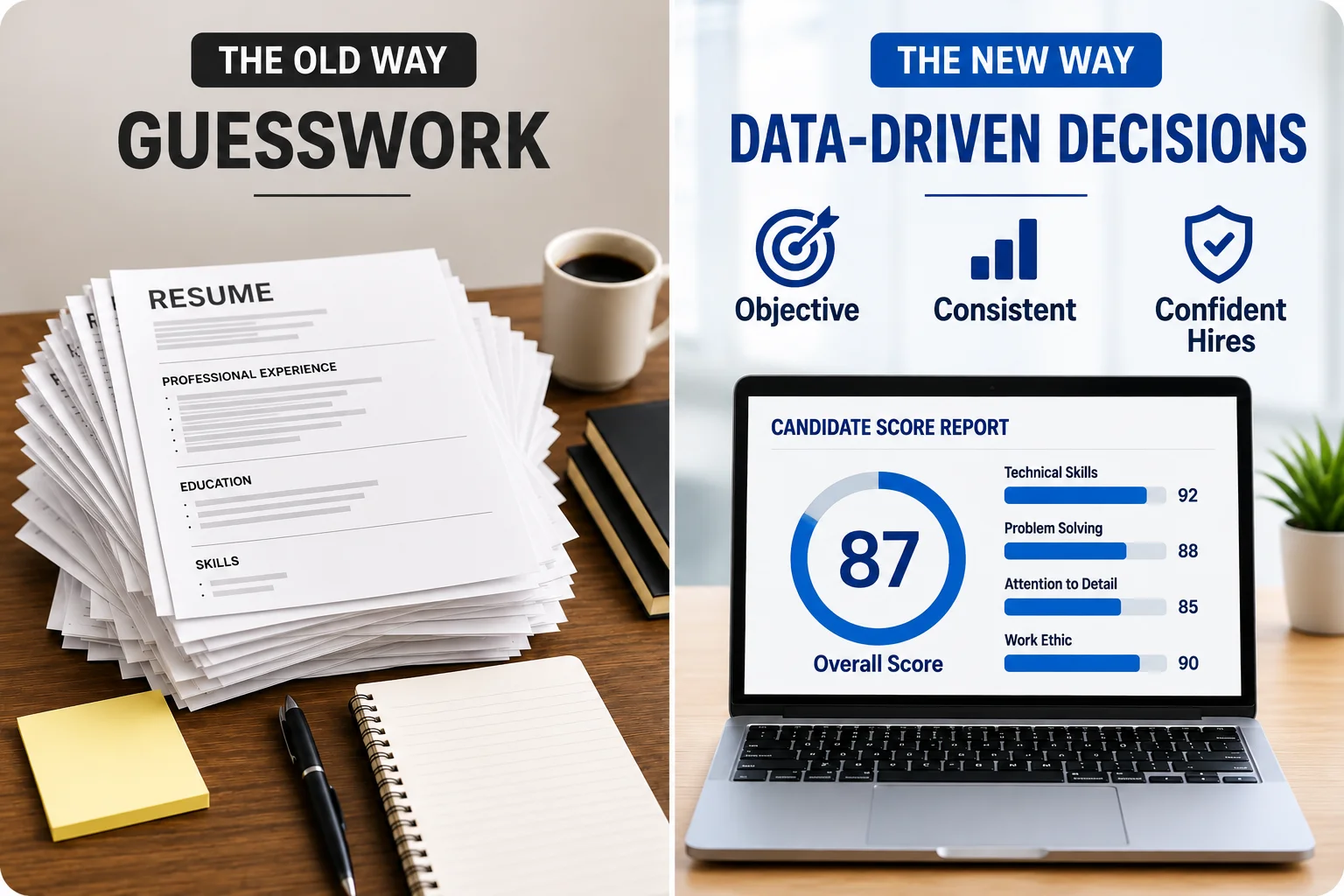
A split image comparing paper resumes to AI skills assessment score report for hiring

What the Artificial Intelligence Test Covers

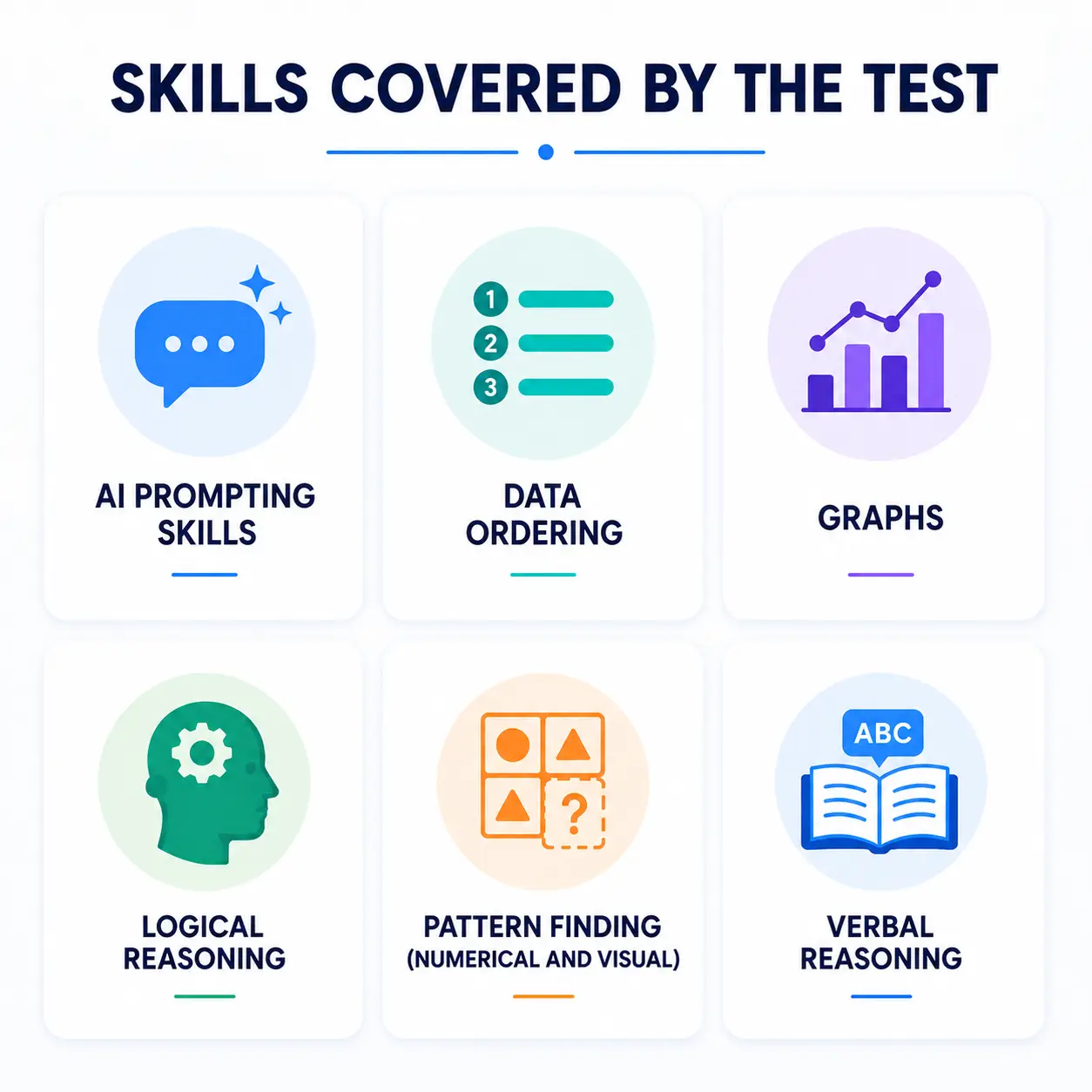
This is a ChatGPT skills test for employees built around six practical skill areas that show up in AI-adjacent work every day:

  1. AI Prompting Skills: Whether candidates can write clear, effective prompts to get accurate, useful output from AI tools
  2. Data Ordering: Whether they can sequence and organize information logically, the way AI-assisted tasks require
  3. Graphs: Whether they can read and interpret visual data output from AI-generated dashboards or reports
  4. Logical Reasoning: Whether they can follow multi-step logic and reach sound conclusions
  5. Pattern Finding (Numerical and Visual): Whether they can spot trends in numbers and visual formats, critical in analytics and operations
  6. Verbal Reasoning: Whether they can read, process, and apply written information, including AI-generated summaries

These areas reflect the thinking skills behind real AI use, not just surface familiarity with tools.

Skills covered by an AI cognitive assessment test, including AI prompting, data ordering, graphs, logical reasoning, pattern finding, and verbal reasoning.

Your Score Report at a Glance

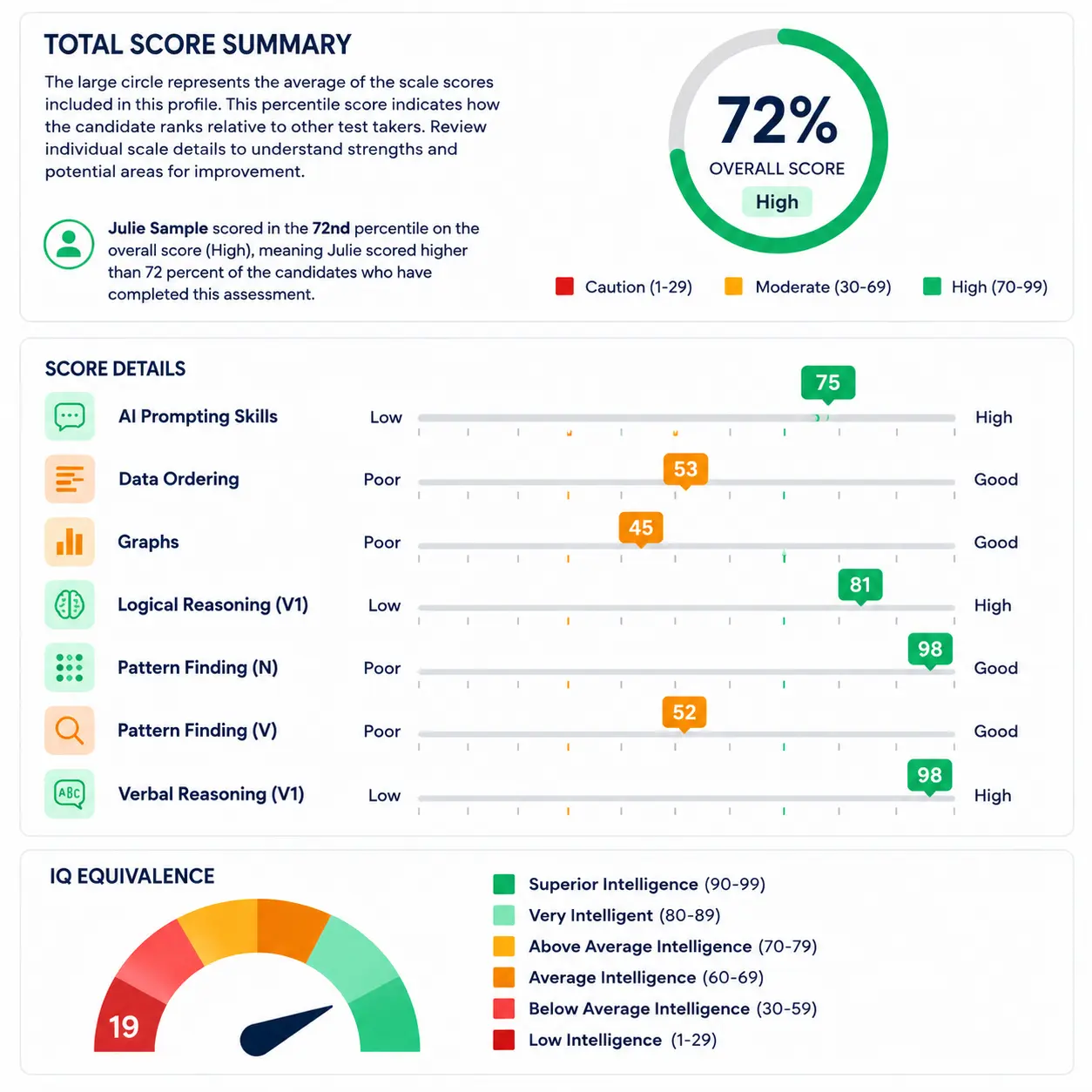
Every completed AI skills assessment for hiring generates a full report the moment your candidate finishes. The report includes:

Overall percentile ranking: How this candidate compares to the full applicant pool

Scale scores for all six skill areas: Each scored with Caution, Moderate, and High performance bands

Question-level detail: Correct and incorrect responses, time spent per question

Expected job behavior descriptions: Plain-language summaries of what the score predicts on the job

Interview Guide: Scored follow-up questions that target specific areas of concern

The Interview Guide is especially useful for structured hiring processes. It tells you exactly where to focus in the candidate conversation, saving prep time and keeping the interview objective.

Who Should Take This Test

This AI literacy test for job candidates fits any role where AI tools, data analysis, or logical thinking are part of regular work. The strongest fits include:

  • Admin and executive assistants using AI productivity tools
  • Marketing and communications professionals using AI tools
  • Finance and accounting staff reviewing AI-generated reports
  • Customer service teams using AI-assisted support platforms
  • Analysts in business intelligence, HR, or operations

This is not a test designed only for technology roles. The World Economic Forum says that more than half of hiring managers say they would not hire someone without AI literacy skills. If AI is mentioned in the job description, it belongs in your screening criteria. 

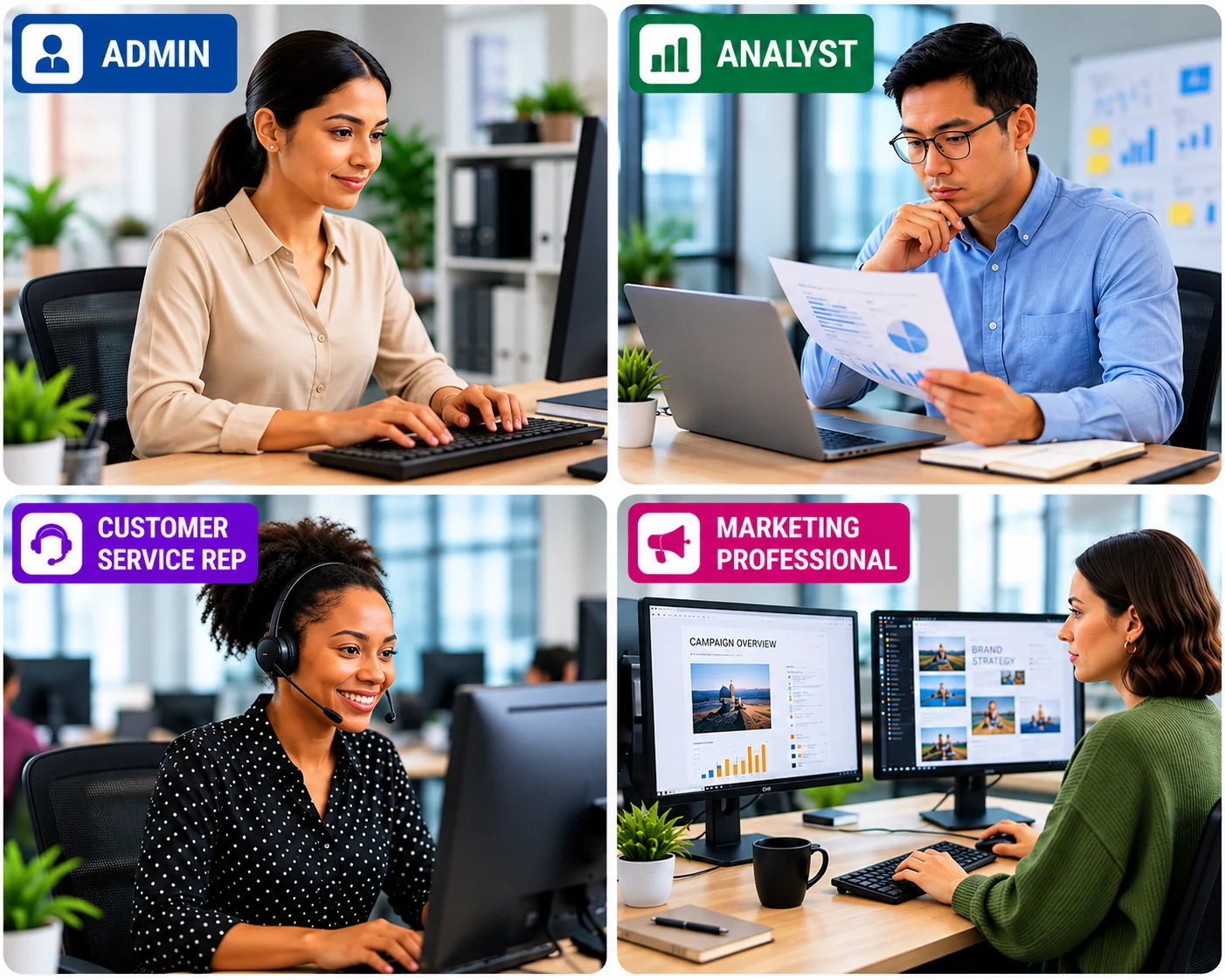
Administrative assistant and operations analyst using AI productivity tools in the workplace

The Cognitive Foundation Behind This Test

This is a cognitive ability test for AI roles at its core. The Artificial Intelligence Test is built on the Elite Cognitive Profile, which means reasoning ability is the foundation, not just AI familiarity.

NACE consistently ranks critical thinking and analytical reasoning among the skills employers value most across industries. SHRM recommends structured, evidence-based assessments as the most effective approach for comparing candidates and reducing bad hire risk.

AI tools change constantly. A candidate with strong reasoning skills will adapt to new platforms, new workflows, and new prompts far faster than one who relies on familiarity alone. For a deeper look at how cognitive testing works in practice, read this guide on the cognitive ability test for employment.

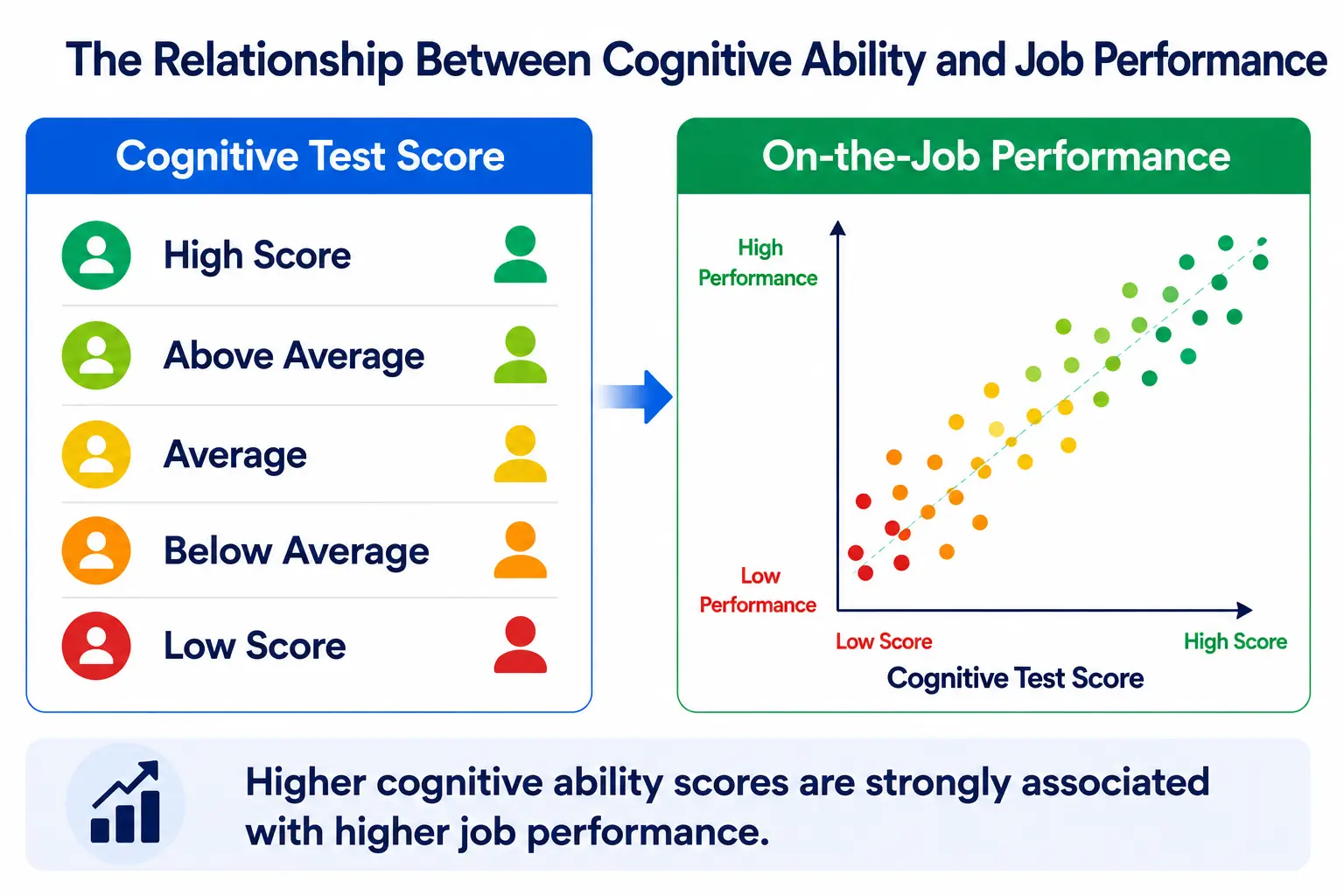
Cognitive ability test score correlation with job performance across roles and industries

How to Add This Pre-Employment AI Test to Your Process

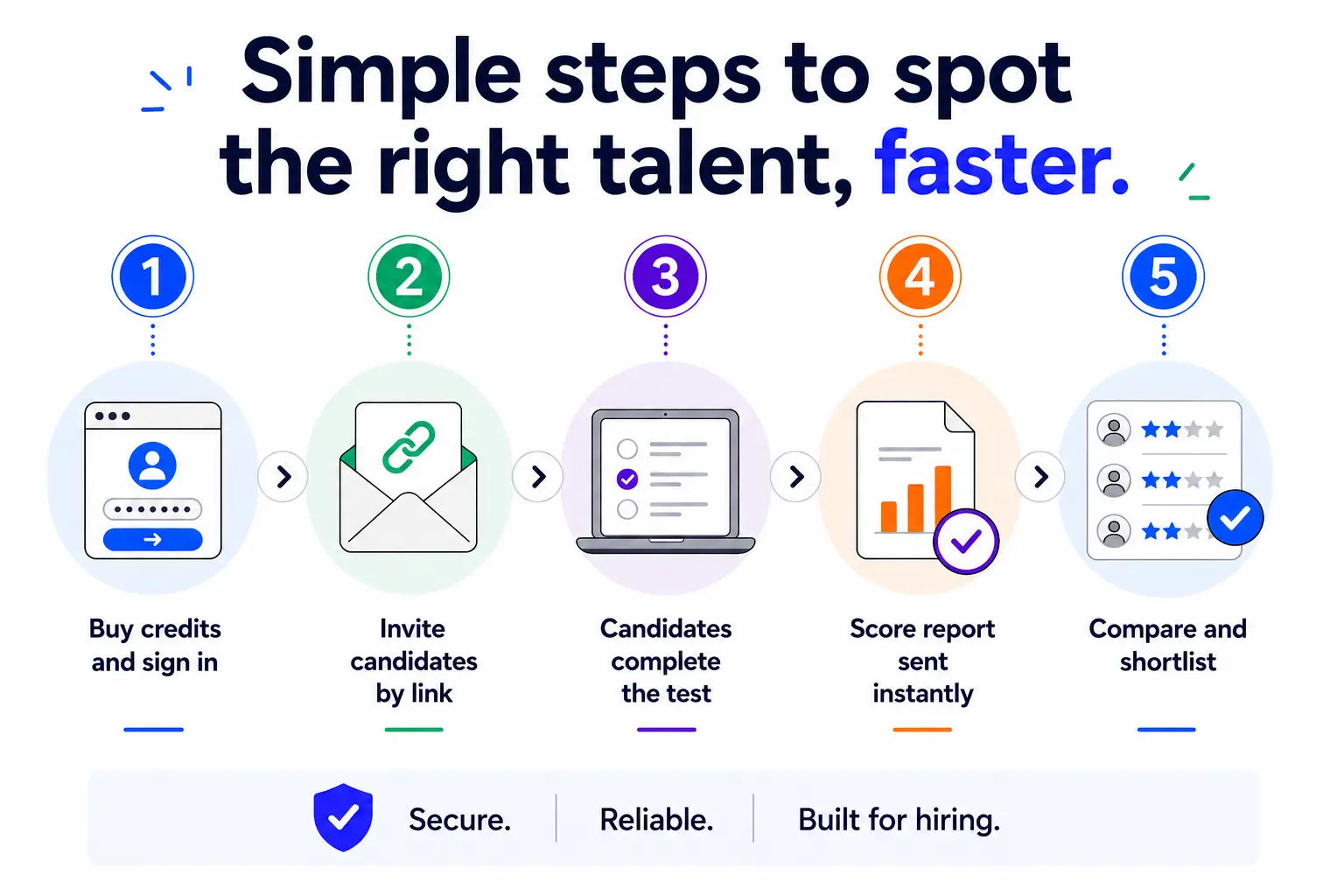
Getting set up takes minutes. Here is how it works:

  1. Purchase test credits and sign in to your account
  2. Select the Artificial Intelligence Test from your dashboard
  3. Email the test link directly to candidates
  4. Candidates complete the timed assessment at their own convenience
  5. Your score report arrives the moment each candidate finishes
  6. Compare candidates using objective percentile data before scheduling interviews

The process is the same whether you are screening two candidates or twenty. No technical knowledge is required to read the results.

Five-step process showing how pre-employment testing for small business works on EmployTest.

Frequently Asked Questions

What does the Artificial Intelligence Test measure?

The Artificial Intelligence Test for Applicants evaluates six skill areas tied directly to working with AI on the job: AI Prompting Skills, Data Ordering, Graphs, Logical Reasoning, Pattern Finding (Numerical and Visual), and Verbal Reasoning.

AI Prompting Skills tests whether a candidate can write clear, effective prompts to get accurate output from AI platforms. This has a direct impact on productivity in any AI-assisted role. Data Ordering tests whether they can organize information logically, which mirrors how AI systems process and present data. Graph interpretation shows whether a candidate can read AI-generated visual outputs like charts and dashboards.

Logical Reasoning tests multi-step thinking, which is what makes someone good at reviewing AI output and catching errors before they cause problems. Pattern Finding measures the ability to spot trends in numerical and visual data, critical in analytics and operations roles. 

Verbal Reasoning tests reading comprehension and the ability to apply written information, which comes into play when interpreting AI-generated summaries or documentation.

Together, these areas reflect the real thinking skills behind effective AI use, not just surface familiarity with tools.

Which job roles is this test designed for?

This test is designed for any role where AI tools, data analysis, or logical thinking are part of regular work. That covers a wide range of positions beyond tech.

Administrative and executive assistants who use AI productivity tools are a strong fit. So are operations coordinators working with AI-assisted scheduling and workflow platforms, marketing professionals using generative AI for content, and finance staff reviewing AI-generated reports and summaries. Customer service teams using AI-supported platforms benefit from this assessment, as do analysts in business intelligence, HR, and operations.

This is not a test designed only for technology roles. If AI shows up in how the job gets done, this assessment gives you a meaningful data point on whether a candidate is ready for it on day one.

What information does the score report include?

The score report is delivered instantly when the candidate finishes. It includes an overall percentile ranking compared to the full applicant pool, plus individual scores for each of the six skill areas. Performance bands (Caution, Moderate, and High) let you interpret results quickly without needing technical knowledge.

The report also includes a question-by-question breakdown showing correct and incorrect responses with time spent per question. Expected job behavior descriptions explain what the candidate’s score predicts on the job in plain language. The Interview Guide section provides scored follow-up questions targeting specific areas of concern, so you go into the conversation knowing exactly where to probe.

This makes the report useful not just for screening but for structuring the next stage of your hiring process.

How is this test different from a standard cognitive ability test?

The Artificial Intelligence Test is built on the Elite Cognitive Profile, so cognitive ability is its foundation. The difference is in the application.

The standard Elite Cognitive Profile measures Logical Reasoning and Verbal Reasoning across 40 questions. The Artificial Intelligence Test keeps both of those and adds four skill areas specific to AI-adjacent work: AI Prompting Skills, Data Ordering, Graphs, and Pattern Finding. This makes it more targeted for roles where AI tools, data interpretation, and prompt writing are part of the daily workflow.

If you are hiring for a general-purpose role where thinking ability is the primary concern, the cognitive ability test is the right tool. For roles where AI is central to how work gets done, this test gives you the additional detail you need to make a confident decision.

How long does the assessment take?

Most candidates finish the Artificial Intelligence Test in approximately 20 minutes. The assessment is timed and delivered online. Candidates receive a direct link and complete it at their own convenience.

Results arrive in your account the moment the candidate submits. You will not need to calculate scores or interpret raw data manually. The report is formatted for fast review by a hiring manager or HR professional, not an assessment specialist. The entire process from sending the test to reading results can happen within a single business day.

How much does this cost?

Pricing is simple and flexible as your needs change. Each test completed uses one test credit. (See pricing for credits)

Can I get a free sample before I purchase?

Yes, just visit Try for Free to provide your information and we’ll send a free sample of the test you request.

How it Works

Wicon 1
BUY TEST CREDITS
Wicon 2
SIGN INTO DASHBOARD
Wicon 3
CHOOSE TESTS
Wicon 4
EMAIL TEST SESSIONS