EmployTest Logo

Canadian Data Entry Test for Hiring

Resumes tell you what candidates claim to do. This test shows you what they can actually do.

The Canadian Data Entry Test for Hiring measures typing speed and accuracy using real Canadian postal formats. Provinces. Postal codes. Address fields exactly like the ones your team works with every day.

You get clear, objective scores the moment a candidate finishes. No guesswork. No waiting.

EmployTest offers flexible pricing for low to medium hiring volumes, with no annual license fees or long-term contracts.

Why Accurate Data Entry Matters From Day One

One wrong digit in a postal code. One transposed province abbreviation. These small errors cause delayed shipments, billing problems, and frustrated customers.

Research from Gartner shows that poor data quality costs organizations an average of $12.9 million per year. For small teams, even a fraction of that hit is significant.

A pre-employment data entry assessment gives you objective proof of accuracy before a hire touches your systems. You see typing speed, error counts, and accuracy rate side by side for every candidate.

Not convinced testing makes a difference? Read why data entry skills matter in hiring for a closer look at what to screen for.

Pre-employment data entry assessment results compared to a resume claim — showing objective typing speed and accuracy scores.

What the Canadian Data Entry Test Covers

This is a timed data entry speed and accuracy test built around Canadian address formats. Candidates are given address records to type into a structured form. Every field reflects what your team uses daily. The test measures three things:

Typing speed: words per minute and keystrokes per hour under time pressure

Accuracy: percentage of correct entries compared to the source data

Error detection: specific character-level mistakes flagged in the score report

Candidates work through real-format fields: names, street addresses, city names, Canadian province abbreviations, and six-character postal codes.

The format is job-relevant, not academic. Your next hire sees fields like the ones in your CRM, not a made-up multiple-choice quiz.

A female employee entering a Canadian address with province and postal code fields.

What Your Score Report Includes

Every completed test sends a full score report to your inbox the moment the candidate finishes. You get four clear data points for every applicant:

Gross Speed — Total words per minute and keystrokes per hour. Use this to filter candidates against your role’s minimum benchmark.

Error Count — Number of incorrect characters entered. Catches candidates who type fast but sacrifice accuracy.

Accuracy Rate — Percentage of correct inputs versus total entries. This is the figure that matters most for billing, order entry, and records roles.

Performance Graph — A visual breakdown showing where each candidate lands on speed versus accuracy. See at a glance who is fast, who is careful, and who is both.

Reports are instant and standardized. Every candidate gets the same task under the same conditions, so your comparisons are fair.

To understand how to use these numbers in your screening process, read the power of typing tests for employment.

Who Should Take This Test

Use this test whenever fast, accurate typing is a real job requirement. It works best for roles where data errors directly affect operations, billing accuracy, or customer satisfaction.

Common roles this test supports:

  • Administrative assistants and office coordinators
  • Billing and invoicing staff
  • Order entry and processing roles
  • Customer service staff who manage account records
  • Back-office operations roles in any Canadian-based office

If the job requires entering data into a CRM, database, or form-based system, this test belongs in your screening process. It gives you a consistent, objective data point that a resume and an interview simply cannot provide.

Pair it with a cognitive ability test for employment for a fuller picture of how candidates think and work under pressure.

Roles suited for the Canadian Data Entry Test — administrative staff, billing coordinators, and records management professionals.

How to Add This Test to Your Hiring Process

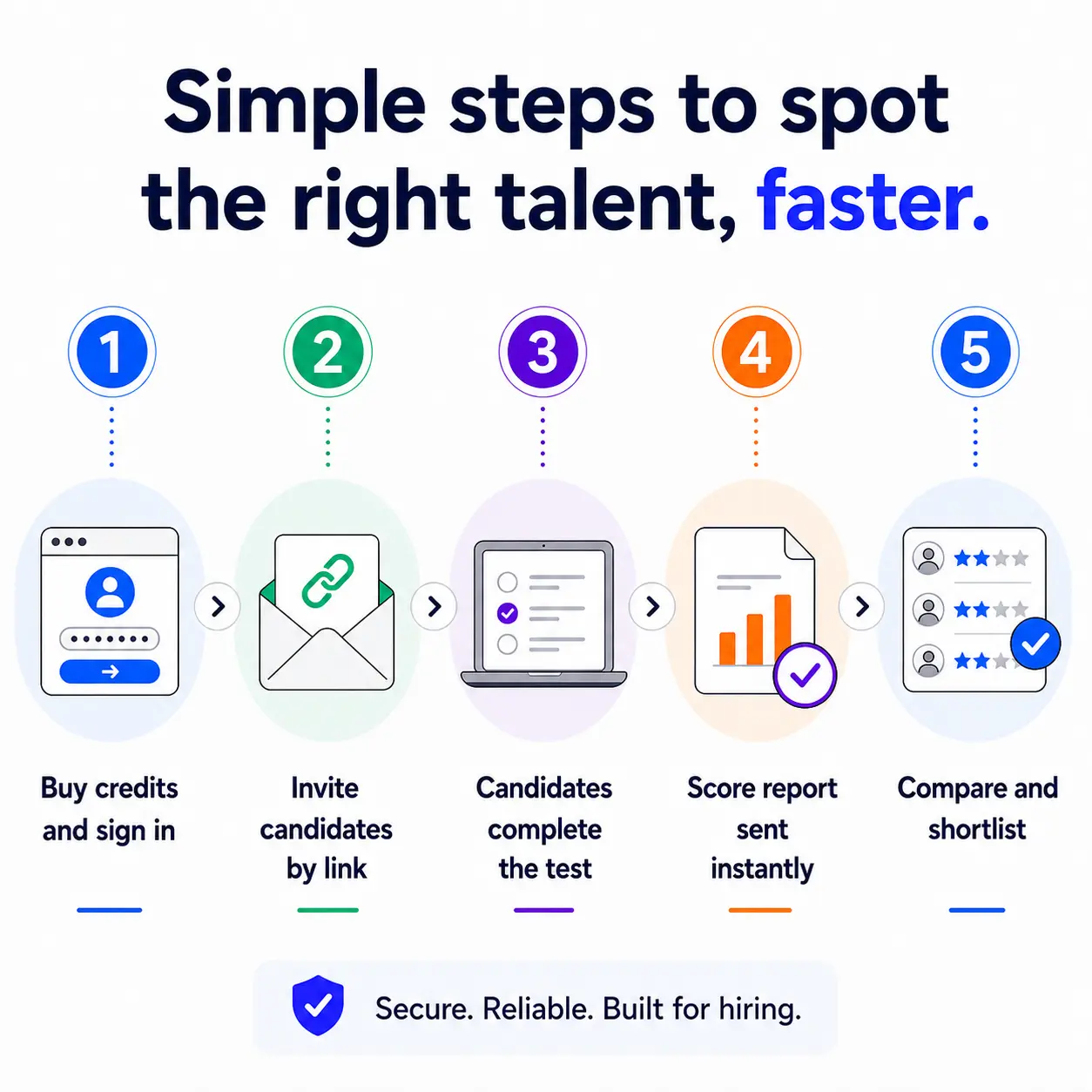
Getting started takes a few minutes. Here is the full process from purchase to results:

  1. Buy test credits and sign in to your EmployTest dashboard.
  2. Select the Canadian Data Entry Test from your test list.
  3. Enter your candidate’s email address to send them a direct test link.
  4. Your candidate completes the timed test at their convenience.
  5. Your full score report lands in your inbox the moment they finish.

Scores are saved in your dashboard so you can compare candidates side by side before interviews. Pricing is pay-per-test in blocks. The starter pack starts at $199. See full pricing details.

Step-by-step flow graphic: 5 icons in sequence showing Buy Credits, Sign In, Choose Test, Email Candidate, then final step is Get Score Report.

Frequently Asked Questions

What does the Canadian Data Entry Test actually measure?

It measures typing speed and accuracy using real Canadian address formats. You get gross speed in words per minute and keystrokes per hour, an error count, and an overall accuracy rate. Every score is delivered to your inbox the moment the candidate finishes.

Why does the test use Canadian address formats instead of generic text?

Canadian postal addresses use a specific structure: six-character postal codes, two-letter province abbreviations, and city names that differ from U.S. formats. Using real Canadian formats ensures the test reflects the actual work your staff will do. Generic typing tests miss those format-specific skills.

What is a good keystrokes per hour score for a data entry role?

Most employers look for candidates who can sustain 45 to 75 words per minute, which translates to roughly 8,000 to 12,000 keystrokes per hour for address-format data entry. The right benchmark depends on your role’s volume. Your score report shows where each candidate lands so you can compare against your internal standards.

Which roles benefit most from this test?

Any role where accurate, fast data entry is a daily task. That includes administrative assistants, billing staff, order entry and processing roles, customer service staff who manage account records, and back-office operations roles in Canadian offices. If a wrong postal code or province abbreviation causes a real problem on the job, this test belongs in your process.

How long does the test take for a candidate to complete?

The Canadian Data Entry Test is designed for quick screening. Most candidates complete it in under 10 minutes. It is timed, so candidates work at their natural pace under the same conditions as everyone else. You receive the score report immediately after they finish.

How much does this cost?

Pricing is simple and flexible as your needs change. Each test completed uses one test credit. (See pricing for credits)

Can I get a free sample before I purchase?

Yes, just visit Try for Free to provide your information and we’ll send a free sample of the test you request.

How it Works

Wicon 1
BUY TEST CREDITS
Wicon 2
SIGN INTO DASHBOARD
Wicon 3
CHOOSE TESTS
Wicon 4
EMAIL TEST SESSIONS