Human resources testing shows you which applicants really know HR, before you hire. Your next HR hire will touch hiring files, benefits questions, and employee issues in week one.
A resume can list an HR degree and still tell you nothing about any of that.
This test gives you one score you can compare across every applicant.
EmployTest offers flexible pay-per-test pack pricing for low to medium hiring volumes, with no annual license fees or long-term contracts.








An HR assessment test checks what a candidate already knows about the daily work of an HR department. The EmployTest HR Generalist test covers six areas:
Those areas match how the U.S. Department of Labor describes the job. O*NET lists personnel and human resources knowledge as recruitment, selection, training, pay and benefits, labor relations, and personnel records.
Every answer is scored, so you see which parts a candidate knows well and which parts will need support.

The HR Generalist test has 49 questions, grouped by topic so the report tells you where someone is strong.
Questions sit at two difficulty levels, Basic and Intermediate. Sample subjects include ADA disability definitions, at-will employment, FMLA leave, COBRA, background checks, and equal pay rules.
You get the topic breakdown on every completed test, so comparing two applicants takes about a minute.

People searching for an HR aptitude test are usually after one of two different things.
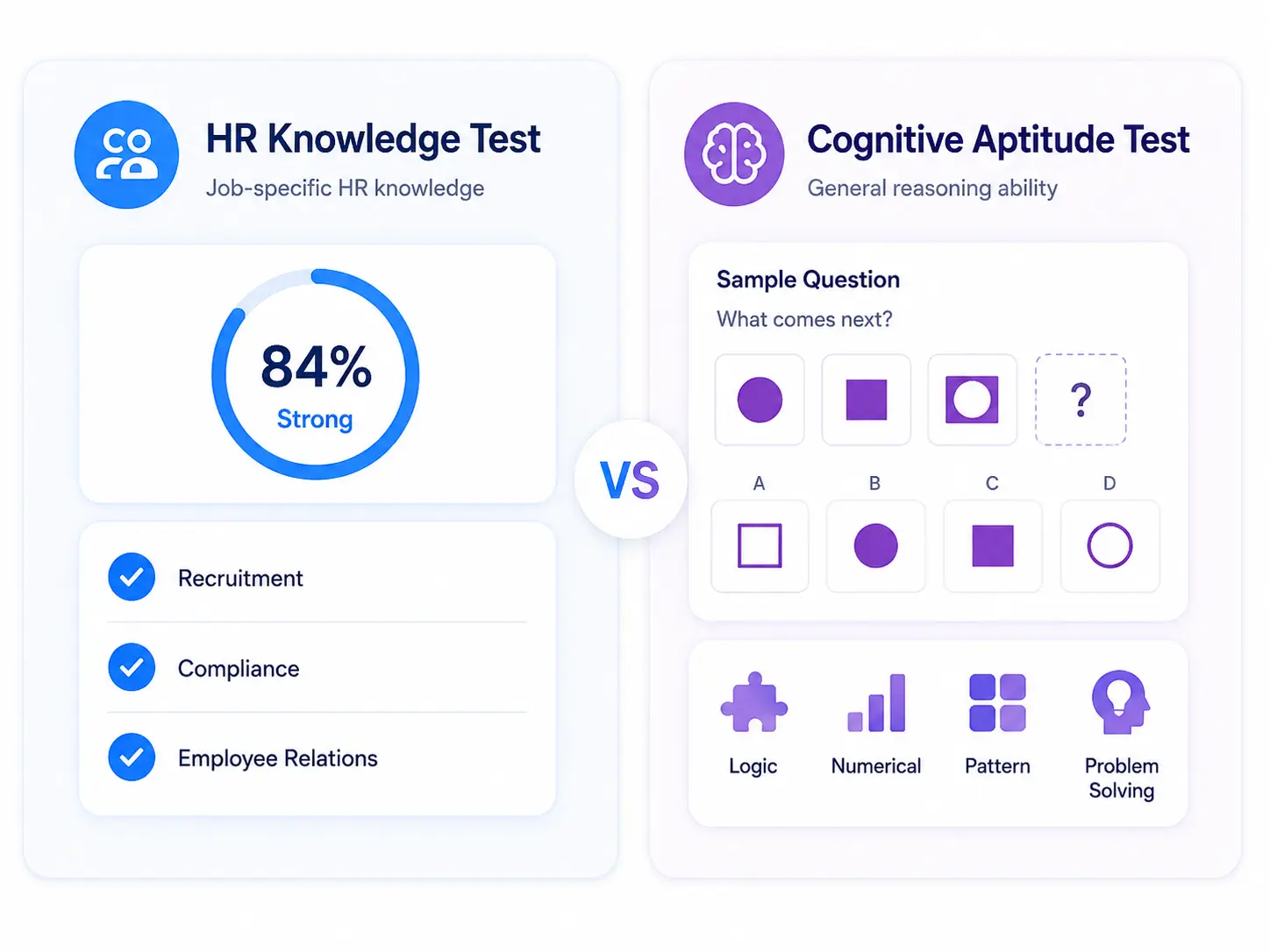
A knowledge test measures what someone learned about HR practice already. The EmployTest HR test works this way, and it suits candidates with HR coursework or prior HR experience.
An aptitude test measures how fast someone picks up new material and works through problems. For that, use the Cognitive Ability Test.
Plenty of hiring teams run both. One confirms HR background, and the other shows how a candidate handles work that is brand new to them
Use this human resources skills test when the job touches HR files, hiring paperwork, or employee questions. Common fits:
HR specialists earn a median of $75,940 a year, according to the Bureau of Labor Statistics. A weak hire in that seat costs real money and months of cleanup.
This HR generalist skills checklist walks through what to look for before you post the job.
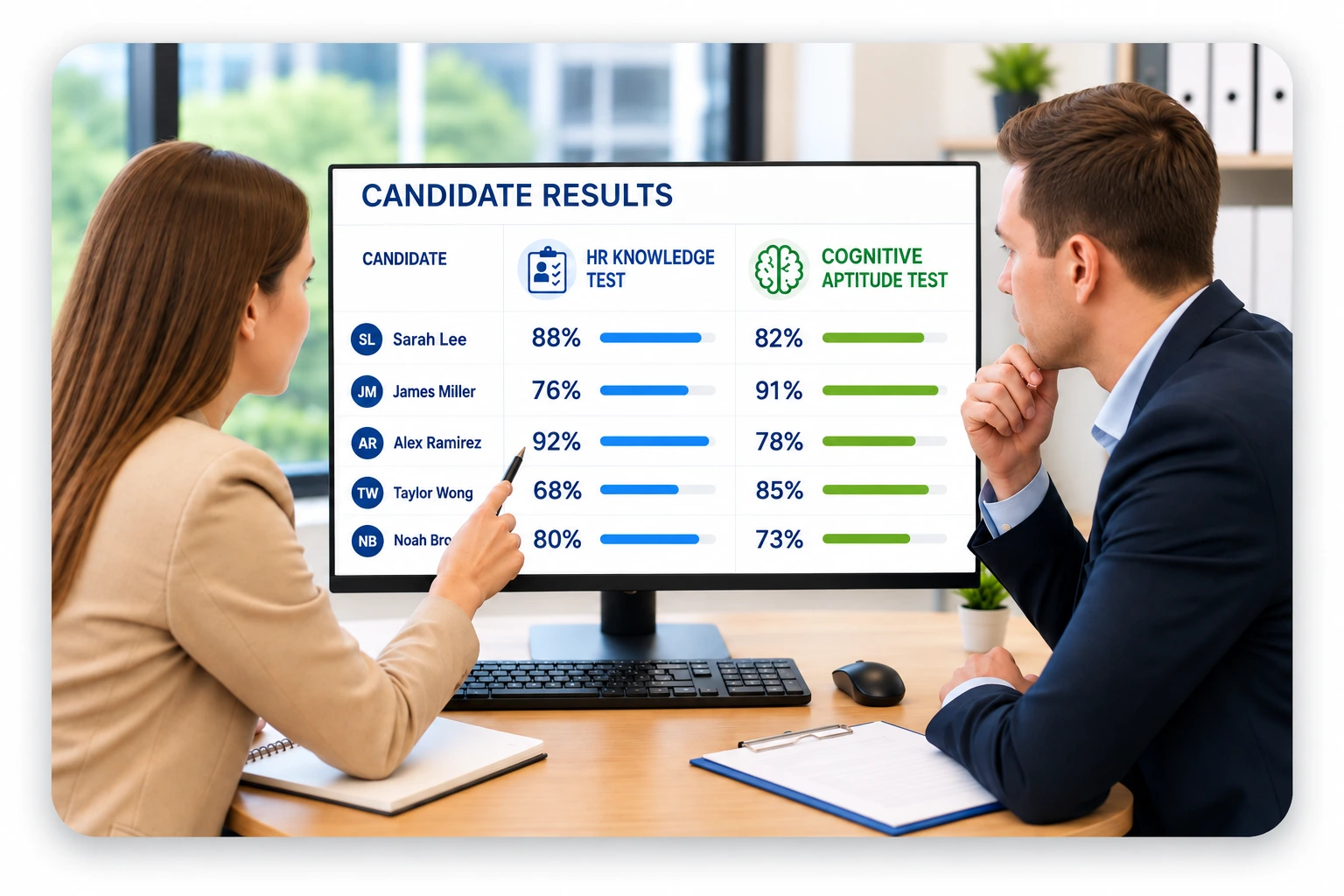
Every completed test creates a report you receive the moment the candidate finishes. It includes:
Across 249 completed HR Generalist tests, the typical applicant score was 59%, based on EmployTest testing data. That figure reflects this applicant pool only.
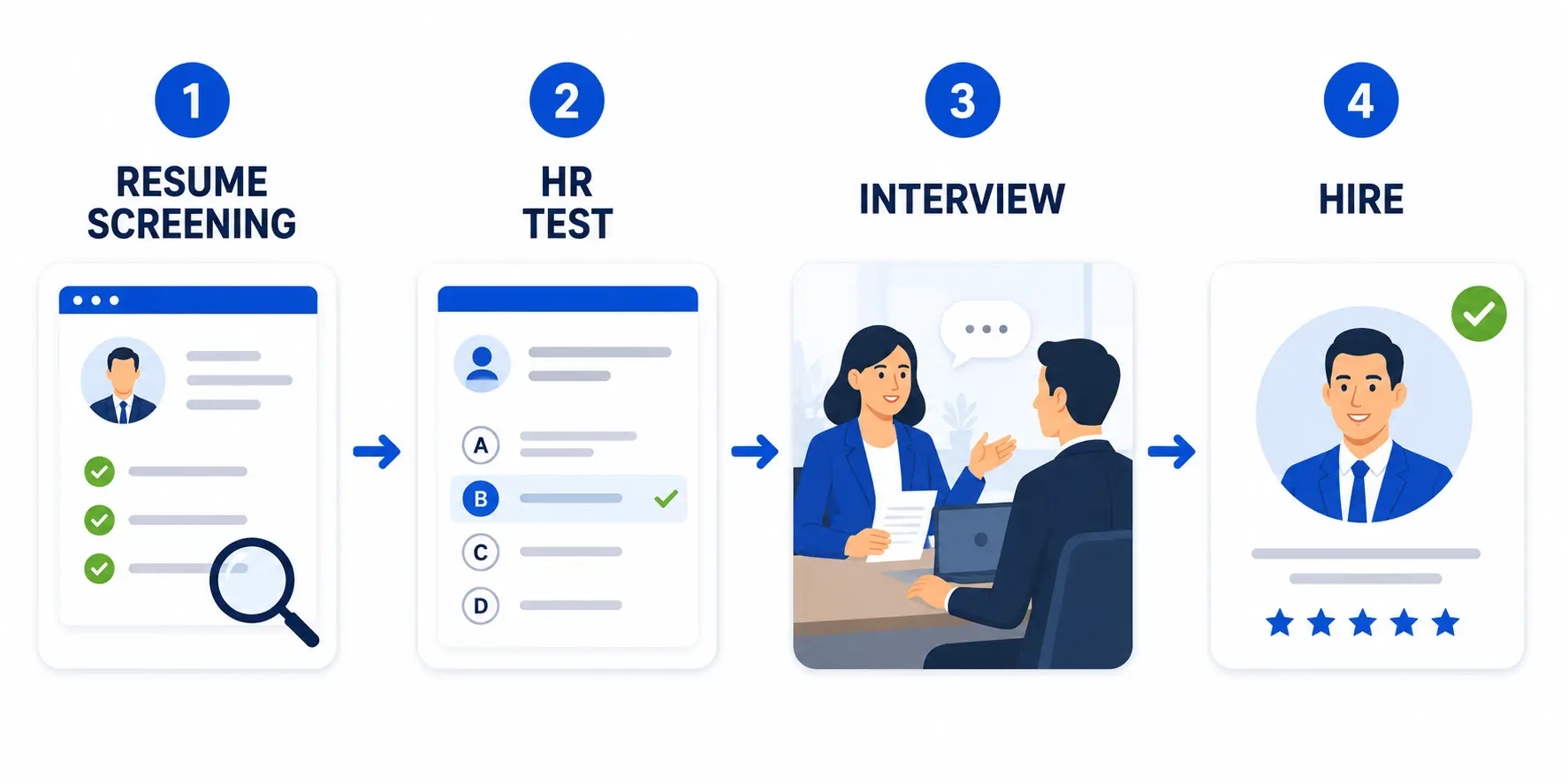
Most hiring teams send HR tests for recruitment right after the resume screen and before the first interview. That order saves your interview time for people who already know the work.
Testing online also gives every applicant the same 49 questions, which is what makes a side-by-side comparison mean anything.
SHRM research found 56% of employers use pre-employment assessments, and 78% of HR professionals said their quality of hire improved after adding them.
The report doubles as interview prep. A low mark in benefit programs turns into a benefits question you can ask that candidate directly.
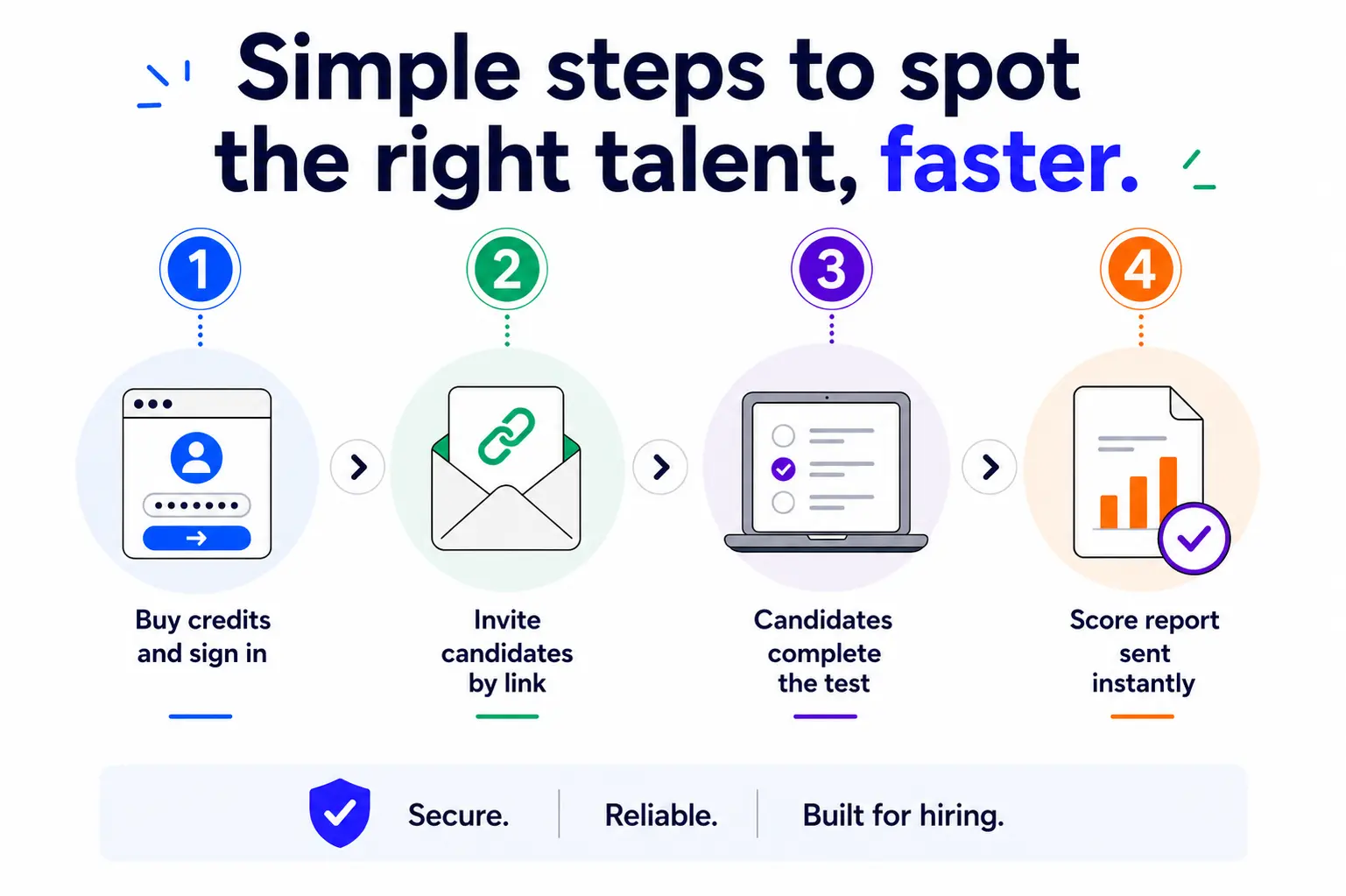
Getting started takes minutes.
Reports are written for busy hiring teams, so you do not need a testing background to read one.
Tests to Pair With Human Resources Testing
HR knowledge covers one part of the job. Add a second test when the position asks for more.
Two tests usually tell you enough. Pick the second one based on what the job asks for most in a normal week.

“Great Pre-Employment Test Options for a Reasonable Price.”
The various tests available and how easy it was to use, with reasonable prices. Results are what I was looking for!



It measures what a candidate knows about the everyday work of an HR department. The HR Generalist test covers discrimination laws, applicant screening, hiring processes, benefit programs, employment relationships, and compensation management. Each topic is scored on its own, so you can see where someone is strong and where they will need support.
The test has 49 multiple choice questions at Basic and Intermediate difficulty. Subjects include ADA disability definitions, at-will employment, FMLA leave, COBRA, background checks, and equal pay rules. Questions describe situations an HR generalist runs into, rather than asking for textbook definitions.
Send it to anyone applying for an HR generalist, HR coordinator, HR assistant, recruiter, or benefits administrator job. It also helps when an office manager or a first HR hire will carry HR duties on top of other work.
Start with the percentile ranking, which shows how this candidate compares to everyone else who has taken the test. Then look at the six topic scores to see where the gaps sit. The report also lists every question with right or wrong status and the time the candidate spent on it.
Most teams send it after the resume screen and before the first interview. That keeps interview time for applicants who already know the work, and it gives you specific topics to ask about once the interview starts.
Pricing is simple and flexible as your needs change. Each test completed uses one test credit. (See pricing for credits)
Yes, just visit Try for Free to provide your information and we’ll send a free sample of the test you request.


