The Remote Work Test for Applicants, officially called the Remote Worker Profile, shows you which applicants bring the work habits that make a home office run well.
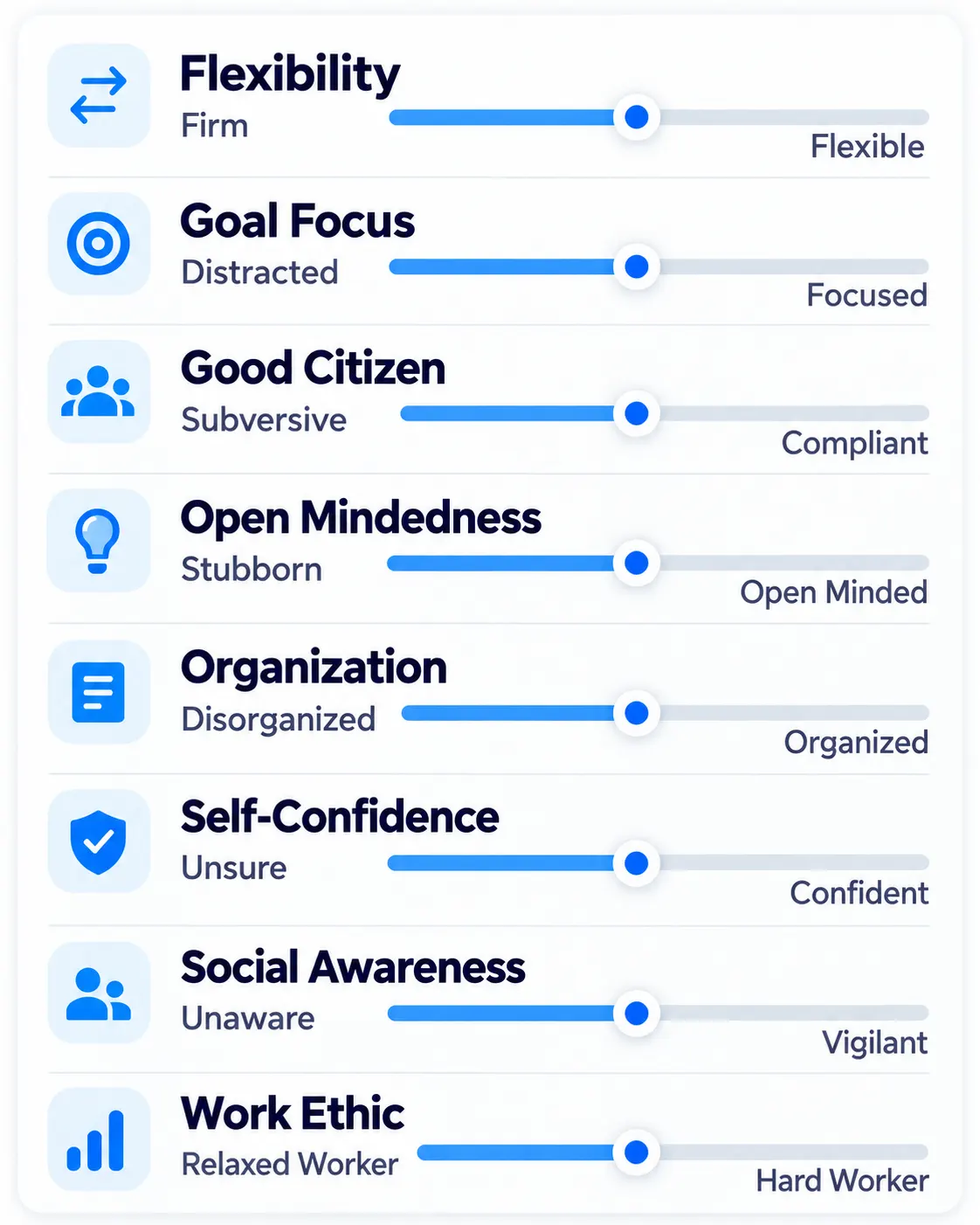
It’s a personality-based remote work assessment that scores eight traits, including Goal Focus, Organization, Work Ethic, and Flexibility.
A video interview tells you how someone talks. This test tells you how they tend to plan a day with no manager down the hall.
You get that read before hiring, while it can still shape your interview.
EmployTest is ideal for occasional or ongoing hiring, with flexible pricing and no long-term contracts.








In 2025, 35 percent of employed people in the U.S. did some or all of their work at home on days they worked, according to the Bureau of Labor Statistics.
That’s a big share of the workforce doing the job out of sight.
An office hands a new hire structure for free. Coworkers nearby, a set start time, a manager who notices a stalled task and a quick answer when someone gets stuck.
At home, the person has to build that structure on their own.
A remote hiring assessment helps you spot who already works that way, so your interview time goes to the job itself.

The Remote Worker Profile scores applicants on 8 behavioral scales. Each scale runs between two ends, so you can see which way a person leans.
For most home-based jobs, Goal Focus and Organization carry the most weight. Social Awareness moves up when the job is customer-facing.
Fair question. You can watch someone type. You can’t watch their habits in a 30-minute call.
Research gives you something to go on. A study in the International Labour Review of more than 1,700 teleworkers found conscientiousness was linked to higher self-reported productivity when working from home.
Conscientiousness is the trait behind planning ahead and following through. Organization and Goal Focus speak to that same habit.
SHRM lists self-motivation and adaptability among the soft skills remote work depends on. Flexibility and Goal Focus line up with both.
Treat the score as one input next to the interview and references.

Every completed test produces a Remote Worker Profile report for that applicant. Here’s what’s inside:
Short on time? Start with any scale rated Caution and read its Expected Behaviors first.
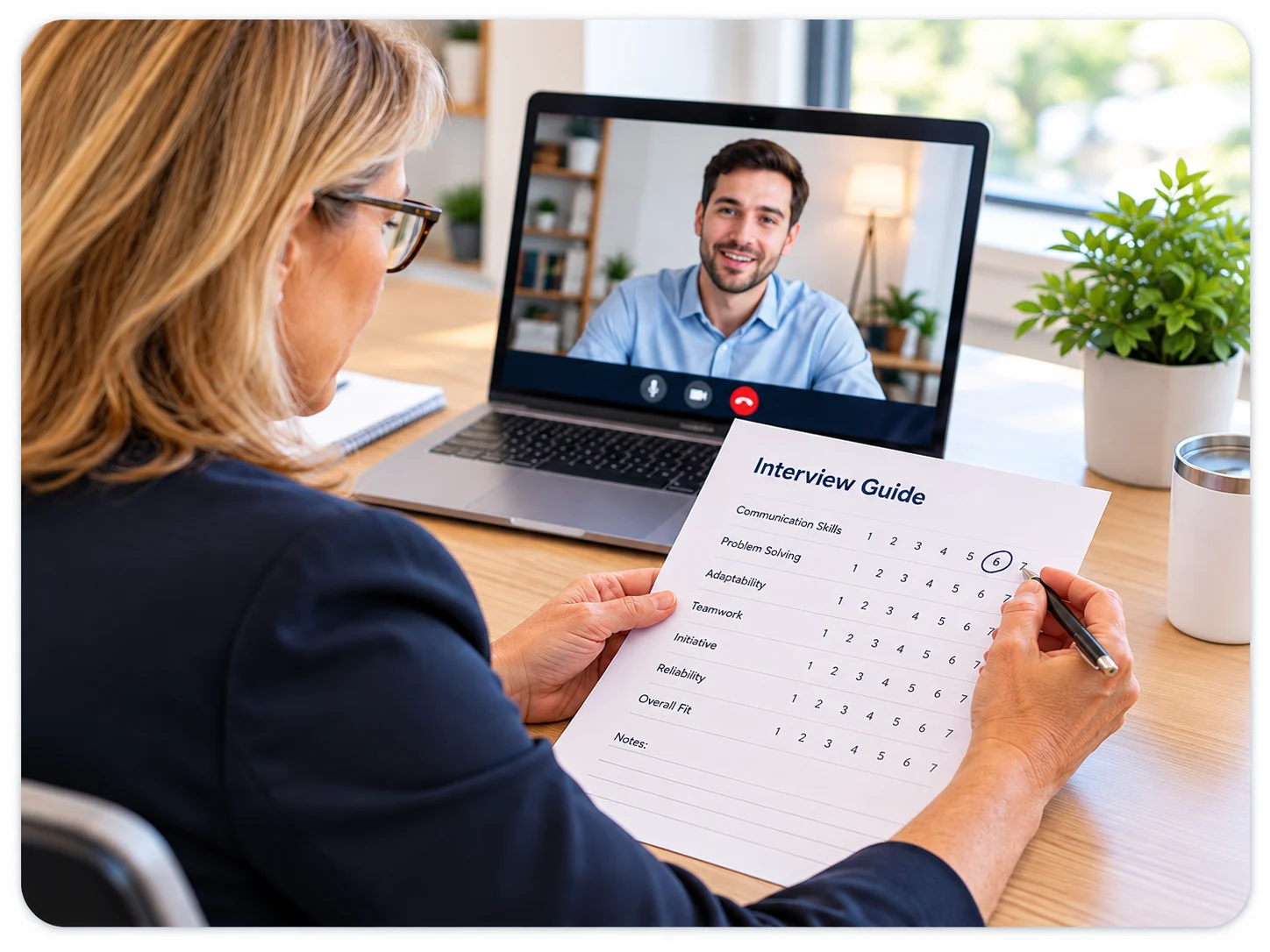
The report also hands you interview questions built around each scale.
Each question has a 1 to 7 rating line. One end marks the response expected of a poor performer. The other marks the response expected of an excellent performer.
Rate each answer as you go. Then add your ratings and divide by the number of questions you rated.
That average gives two interviewers the same yardstick for every applicant.
Say an applicant scores Caution on Open Mindedness. The guide gives you questions about times others tried to change their mind, and what happened next. Your follow-up now has a clear purpose.
Use this remote work suitability test for any job position where most of the work happens away from your office. Good matches include:
It also fits hybrid jobs where someone splits the week between home and the office.
Hiring for people skills on a remote team too? Our guide to emotional intelligence tests for hiring remote workers covers what to look for.

A work from home assessment tells you how an applicant tends to work. Skills and aptitude tests verify what they can do once the laptop opens.
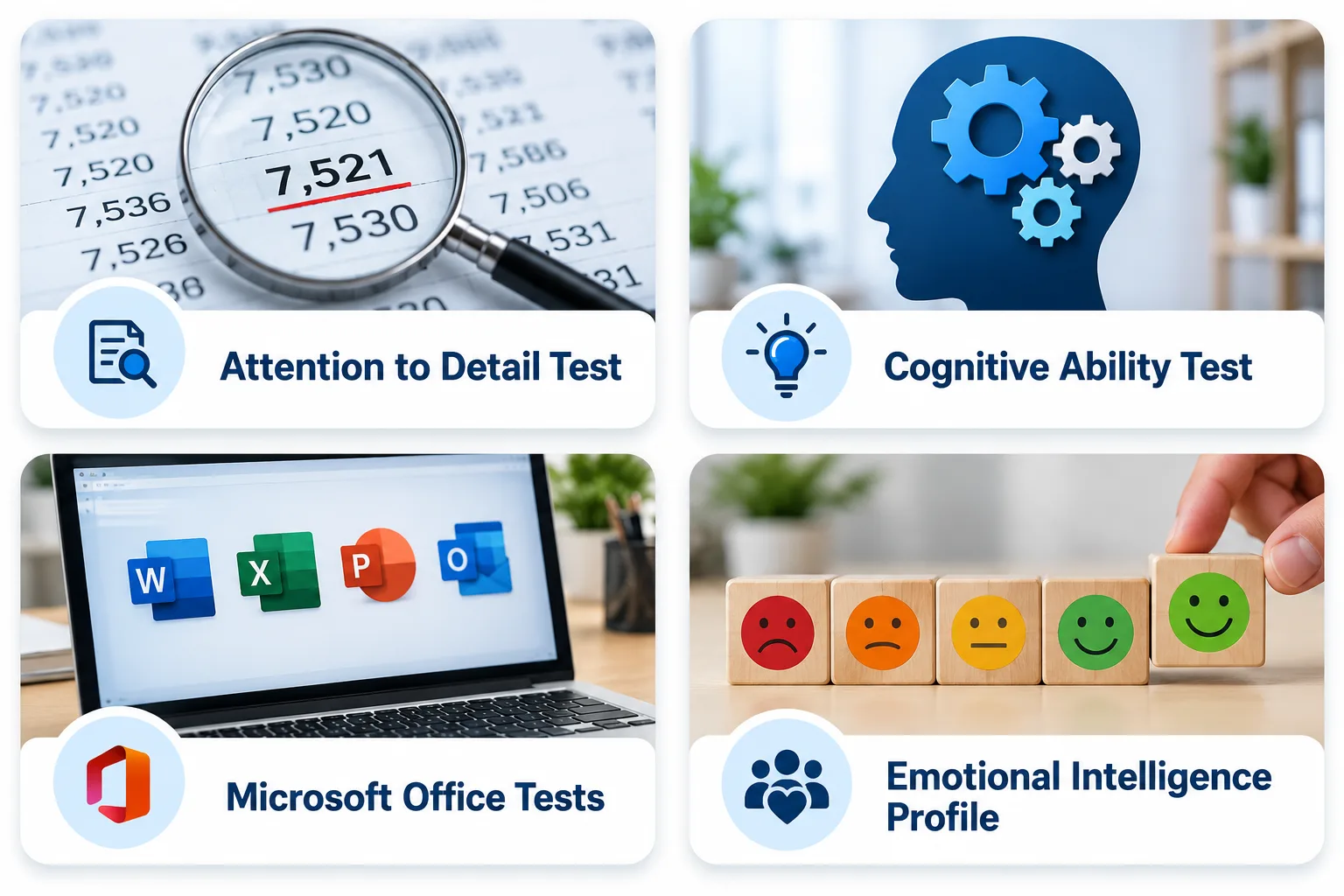
Start with the Attention to Detail Test, since remote work has fewer second sets of eyes on each task. The Cognitive Ability Test adds a read on how fast someone learns new tools alone.
From there, add Microsoft Office Tests for document and spreadsheet work, or the Emotional Intelligence Profile for jobs built on customer contact.
For a wider look at which traits matter across jobs, read our post on key personality traits for success.
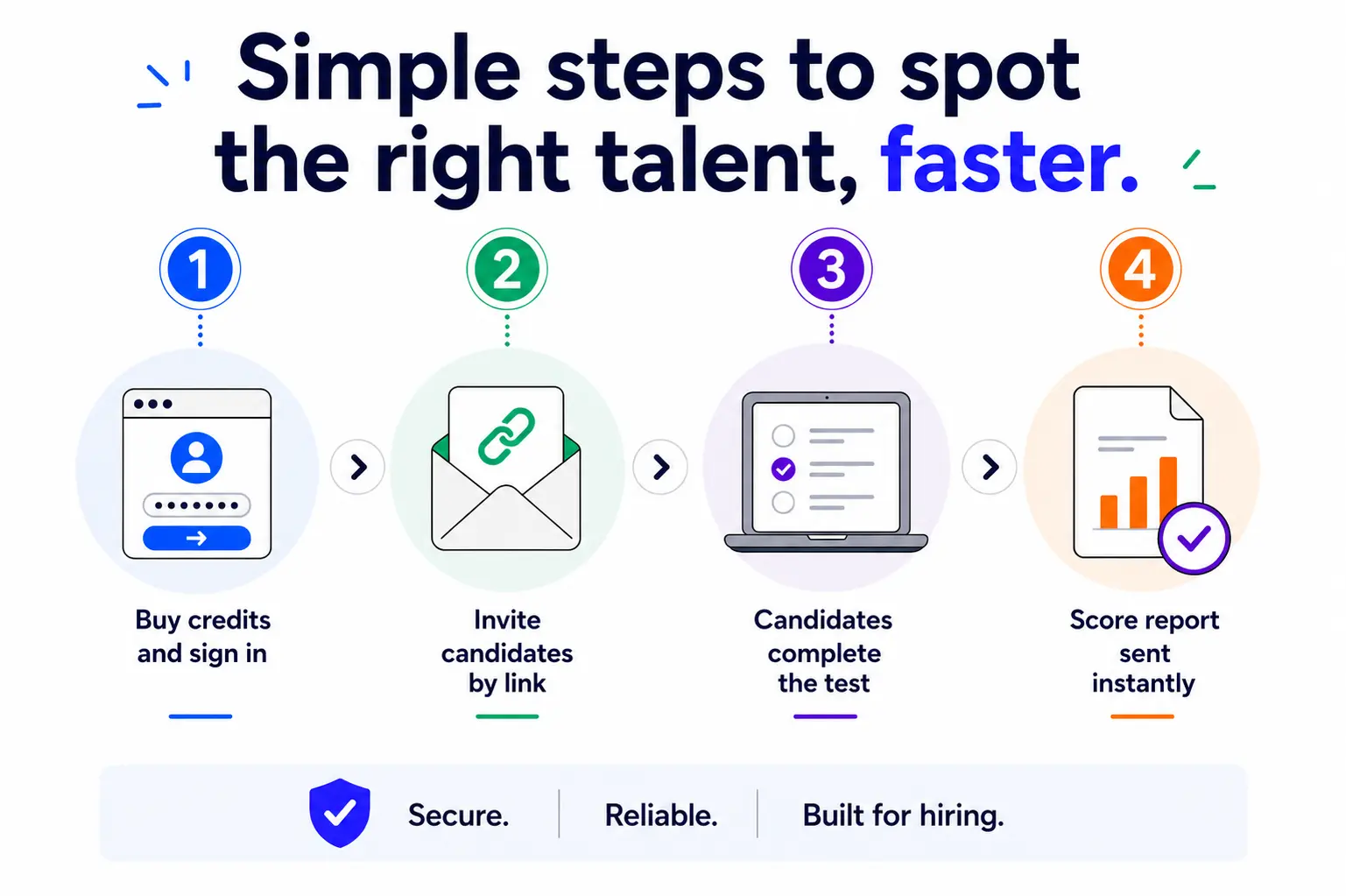
Setting up the Remote Worker Profile takes four steps:

It scores eight traits: Flexibility, Goal Focus, Good Citizen, Open Mindedness, Organization, Self-Confidence, Social Awareness and Work Ethic.
Together they show how an applicant is likely to handle work with little day-to-day supervision.
Applicants for fully remote or hybrid job positions.
It’s most useful when the person will manage their own schedule, such as support reps, assistants and inside sales reps working from home.
Each scale gets one of the three ratings. High means the trait shows up strongly in the applicant’s answers.
Caution points to a trait worth exploring in the interview. The Interview Guide gives you follow-up questions for exactly that.
Yes. Hybrid workers still spend part of the week planning their own time at home.
Goal Focus and Organization scores tell you a lot about how those home days will go.
Treat the score as one input next to a structured interview, references, and work history.
Use the scored follow-up questions to dig into any scale rated Caution, then compare average ratings across applicants.
Pricing is simple and flexible as your needs change. Each test completed uses one test credit. (See pricing for credits)
Yes, just visit Try for Free to provide your information and we’ll send a free sample of the test you request.


