The Light Industrial Skills Test gives you a structured, objective look at each candidate’s attention to detail, basic math, computer literacy, and core employment skills. These are the skills that determine whether a new hire can hit the ground running or slow the operations down.
Anyone can say they are a hard worker. This test shows what they can actually do before day one. One of the best parts? You get results the moment they finish.
EmployTest helps you scale hiring at your own pace with pay-per-test block pricing and no long-term contracts.








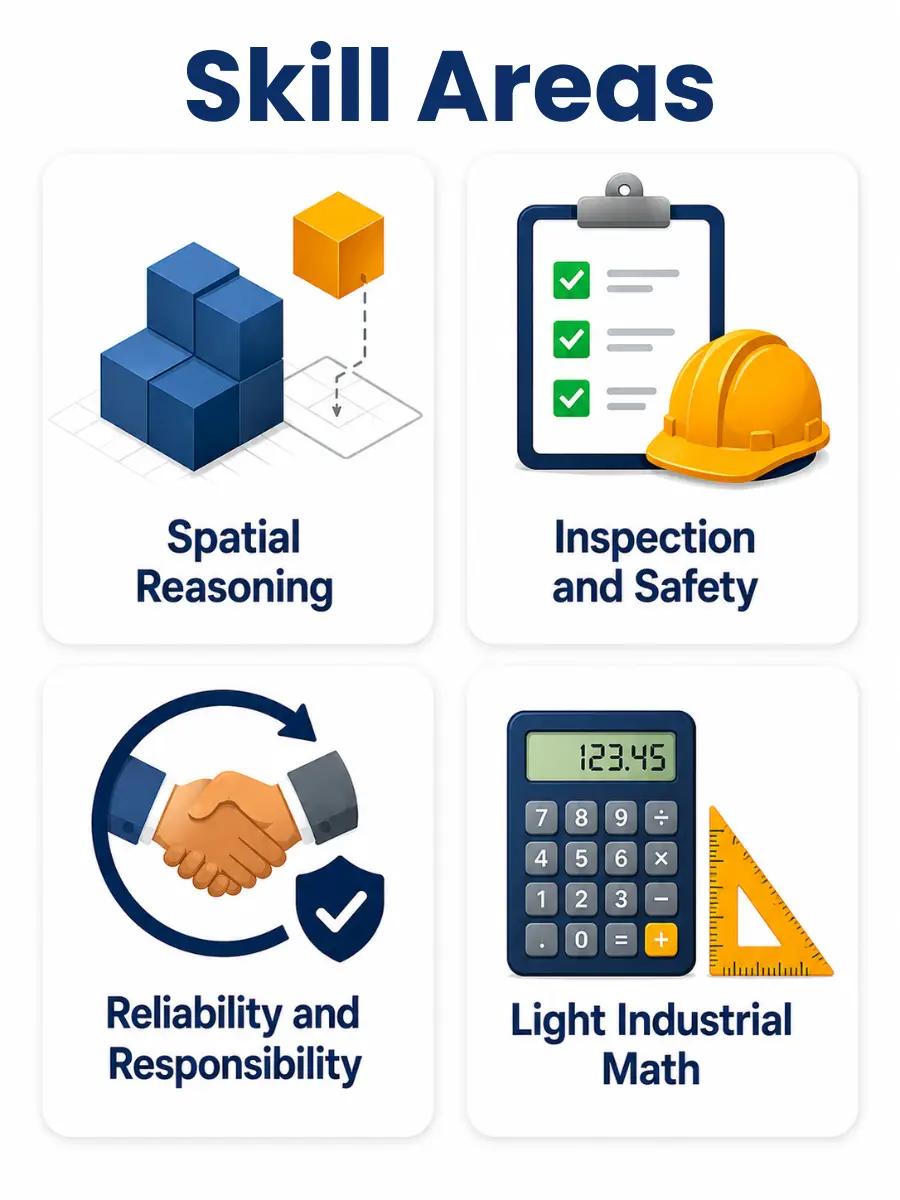
The Light Industrial Skills Test uses the Elite Profiling System (EPS) Industrial profile. It measures six dimensions across two categories: cognitive skills and behavioral traits.
Inspection — How quickly and accurately a candidate can spot errors, defects, or differences when comparing objects. Relevant for quality control, receiving verification, and any task where visual accuracy under pressure matters.
Light Industrial Math — Problem-solving ability and basic math comprehension. Shows whether a candidate can handle number-based tasks and pick up new processes on the floor.
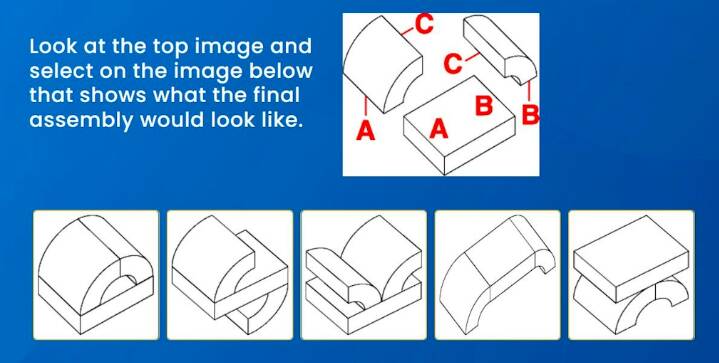
Spatial Reasoning — The ability to mentally manipulate objects and determine how they fit together. Comes up in assembly, loading, and roles where physical orientation and layout judgment are part of the job.
Reliability — How dependable and conscientious a candidate is about the quality of their own work. Predicts whether they will stay on task without close supervision.
Responsibility — How likely someone is to own their actions and maintain consistent attendance. A foundational behavioral trait for any industrial role.
Safety — The likelihood a candidate follows safety rules and avoids workplace accidents. Specifically designed for environments involving tools, forklifts, machinery, warehouse work, and production lines.
Each skill reflects what actually separates a reliable hire from one who needs constant correction on the floor.
The Light Industrial Skills Test delivers a full EPS Industrial profile report to your inbox the moment the candidate finishes. Candidates never see their scores.
Overall Percentile Score — A single number showing how the candidate ranks against all other test takers, with a color-coded band: Caution (1–29), Moderate (30–69), or High (70–99).
Six Individual Scale Scores — Each dimension gets its own percentile and band.
Expected Job Behaviors — For each scale, the report translates the score into plain-language predictions about how that candidate is likely to behave on the job.
Management Strategies — Specific guidance for onboarding, supervising, and developing the candidate based on their individual results across all six dimensions.
Interview Guide with Scored Follow-Up Questions — When a candidate scores in the Caution range on any scale, the report generates targeted interview questions for that dimension.
Warehouse and manufacturing employers are hiring from a tighter talent pool every year.
A 2024 Deloitte and Manufacturing Institute workforce study said that U.S. manufacturers could face up to 3.8 million job openings through 2033, with 1.9 million positions potentially going unfilled. Every hire decision carries more weight when the applicant pool is this competitive.
The Bureau of Labor Statistics projects more than one million annual job openings for hand laborers and material movers through 2034, with a significant share driven by turnover. Screening candidates before you hire is one of the fastest ways to reduce that churn.
For a closer look at how testing applies across specific roles, read our overview of pre-employment testing for manufacturing companies.

This pre-employment test for warehouse workers and light manufacturing candidates works for any entry-level or early-career role where accuracy, basic math, and daily computer use are part of the job. Use it when hiring for:
This test is also a strong fit for temp-to-hire pipelines. Screen applicants before the assignment starts and move the right candidates forward with objective data behind the decision, not just a conversation and a gut feeling.

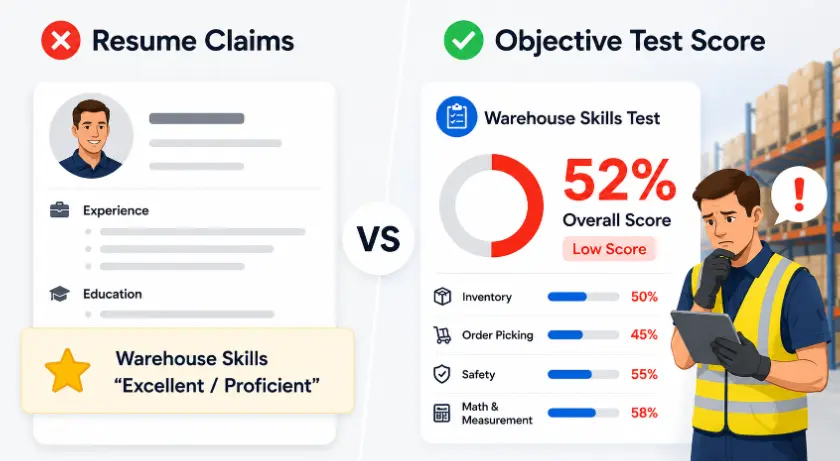
Most applicants describe themselves as detail-oriented and reliable. There is no way to verify that from a resume.
A warehouse worker screening test puts every candidate on equal footing. Same tasks, same conditions, same time. SHRM research found that 79% of HR professionals say skills assessment scores are just as important, or more important, than traditional hiring criteria like resumes and interviews.
A screen that takes minutes can save months of friction after the hire. You know what you are getting before the first day on the floor.
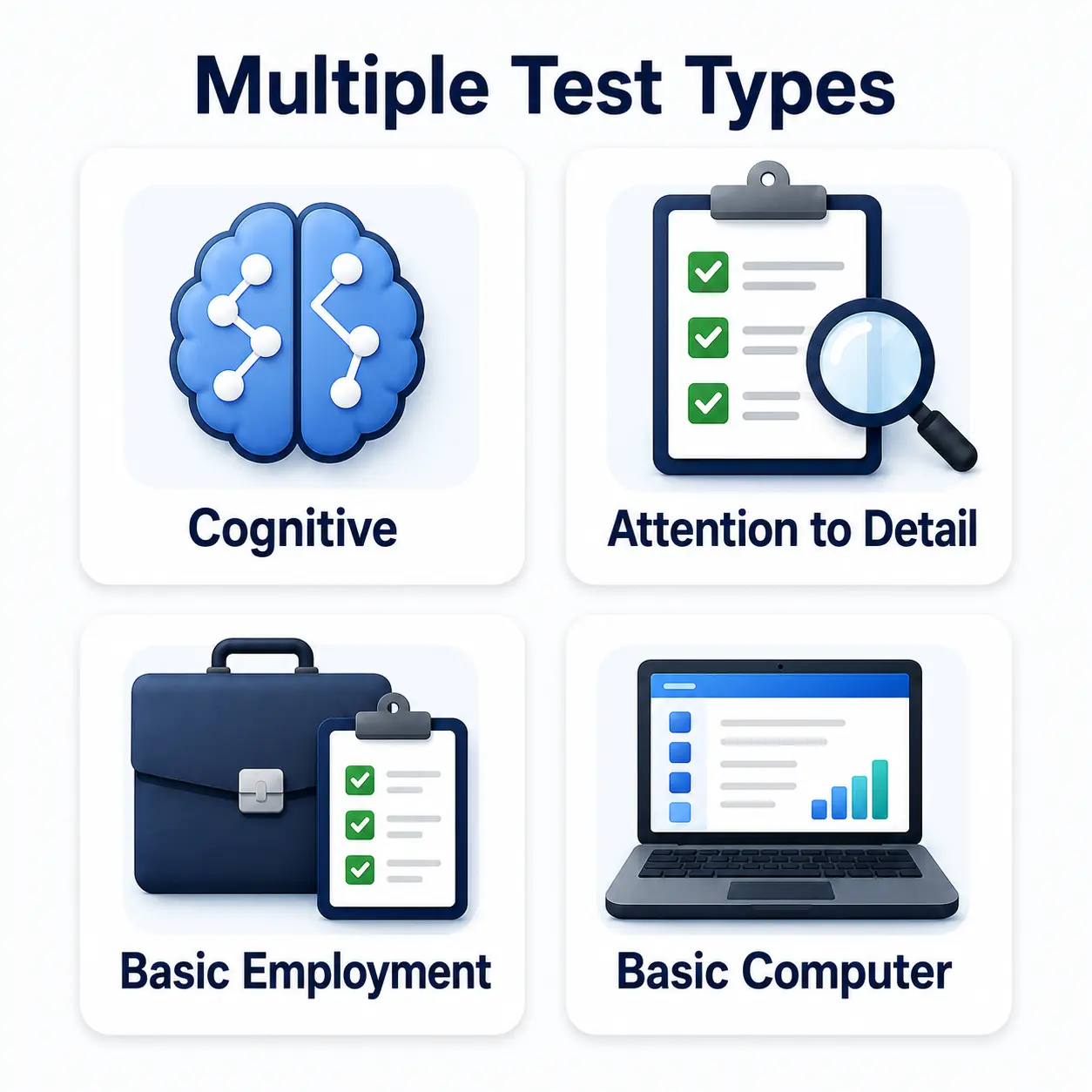
The Light Industrial Skills Test covers core skills. These related assessments help you go deeper based on the role.
Cognitive Ability Test: Measures problem-solving and reasoning speed. Use it for roles where workers adapt to changing tasks or troubleshoot issues without close supervision.
Attention to Detail Test: A timed accuracy check for roles where quality control, inspection, or error-free data processing are the priority. Read more about using attention to detail tests in hiring and how precision screening fits into a complete industrial assessment process.
Basic Employment Skills Test: Covers foundational workplace reading, grammar, and instruction-following. Useful for roles where work orders, safety documentation, or written communication are part of the daily job.
Basic Computer Skills Test: Useful for roles that involve inventory systems, scanning tools, or daily data entry tasks.
Adding the Light Industrial Skills Test to your process takes a few minutes.
Flexible pricing for low to medium hiring volume, with no annual license or expensive contracts required.



The Light Industrial Skills Test covers four areas: attention to detail, light industrial basic math, basic computer literacy, and basic employment skills. These match the tasks that come up in most warehouse, assembly, distribution, and production roles. You get a score on each area so you can see exactly where each candidate performs well and where they may need support before you make an offer.
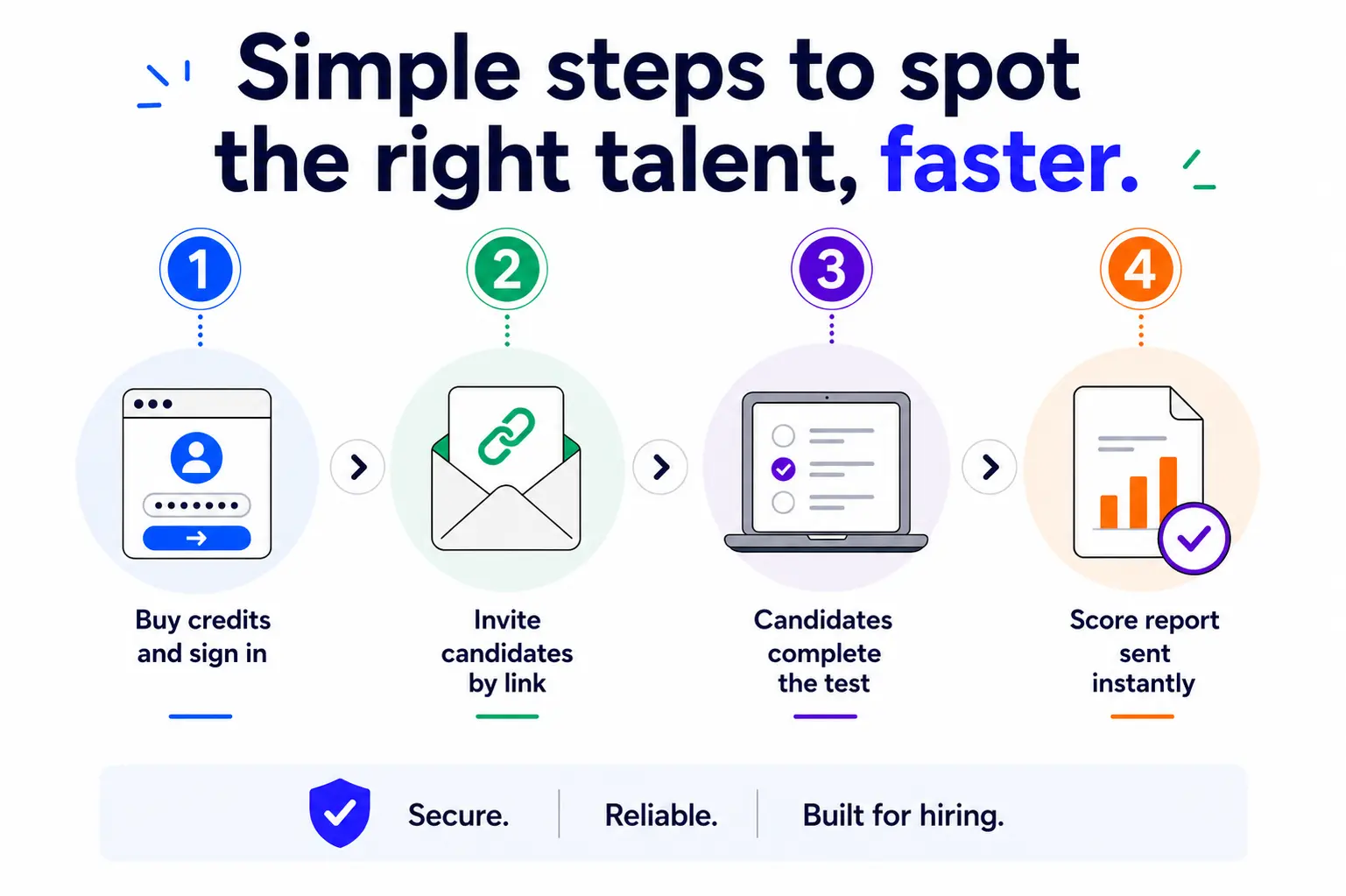
Most candidates finish the full assessment in under 30 minutes. They take it online at their own pace, with no scheduling required on your end. You set up the test from your dashboard, send the link to the candidate’s email, and receive the full score report the moment they finish. There is nothing to install or download.
This test works well for any entry-level or early-career hire in a light industrial or warehouse setting. That includes warehouse associates, material handlers, production operators, stockers, shipping and receiving staff, quality control inspectors, and general labor positions. It is also a strong fit for staffing agencies and companies running temp-to-hire pipelines that need a fast, reliable first screen.
Results go directly to you the moment the candidate finishes. The candidate never sees their own score. Reports are saved in your dashboard for future reference, and you can compare candidates side by side using their score data. If a candidate does not finish the test, partial results are still saved and available for review, which can still be useful when comparing applicants and making a final hiring call.
Yes. Many hiring teams pair the Light Industrial Skills Test with the Cognitive Ability Test for a broader view of problem-solving ability, or with the Attention to Detail Test for roles where accuracy is the top priority. The Behavioral Tests for Industrial Jobs can also be added to assess safety mindset and workplace attitudes. You choose the combination that fits the role and the volume of hiring you are doing.
Pricing is simple and flexible as your needs change. Each test completed uses one test credit. (See pricing for credits)
Yes, just visit Try for Free to provide your information and we’ll send a free sample of the test you request.


