The Workplace Reasoning Test helps you spot job applicants who think clearly, adjust fast, and make sound calls without someone standing over their shoulder.
This pre-employment test measures the mental skills that matter most in fast-paced, detail-heavy work, especially when a decision has to be made under pressure.
If you have hired someone who could not figure things out on the job, this test helps you catch that problem before hiring.
Flexible per-test pricing works for low to medium hiring volume, with no annual license or expensive contract required.







A workplace reasoning test looks past memorized facts. It shows you how a candidate processes information, spots patterns, and applies logic to everyday work.
Can the candidate read a report, spot a trend, or work through basic math problems that show up in invoices and scheduling? Why Employers Should Test Numerical Reasoning walks through why this scale predicts on-the-job performance.
Can they make a sound decision, follow instructions, and think through a problem when the answer is not obvious?
Can they read written information, understand it, and respond to it clearly and professionally?
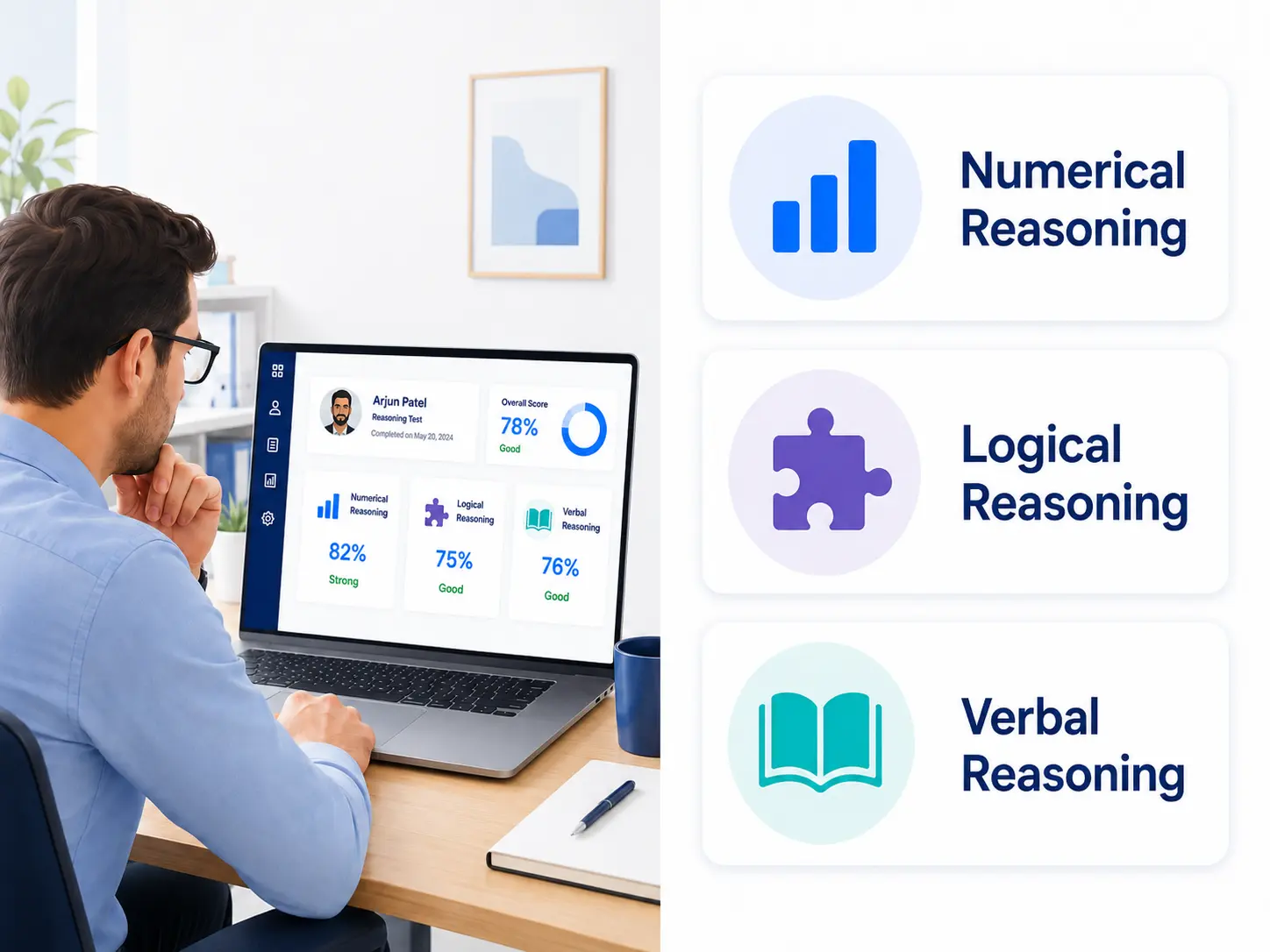
Employers search for this test under a few different names. Occupational reasoning assessment, workplace reasoning test, and cognitive reasoning test for hiring all describe the same idea: measuring how a candidate thinks through work problems.
An occupational reasoning assessment looks at general mental ability tied to job performance rather than a single technical skill. The Workplace Reasoning Test covers this ground with three scored areas: numerical, logical, and verbal reasoning.
Use it whenever you need a consistent way to compare candidates with varied skill sets, since reasoning ability carries across most jobs and industries.
Interviews rarely reveal how someone reasons through a real problem. A candidate can describe a past decision well and still struggle when a new one lands on their desk.
A pre-employment logic test gives you a direct look at reasoning skill instead of a rehearsed answer. Nearly 90% of employers say the ability to solve problems is essential in a new hire.
Analytical thinking now ranks as the most requested skill among employers worldwide, cited as essential by seven in ten companies.
A structured logic and critical thinking test gives you a comparable score instead of a gut read, so a stronger reasoning candidate stands out early in your process.
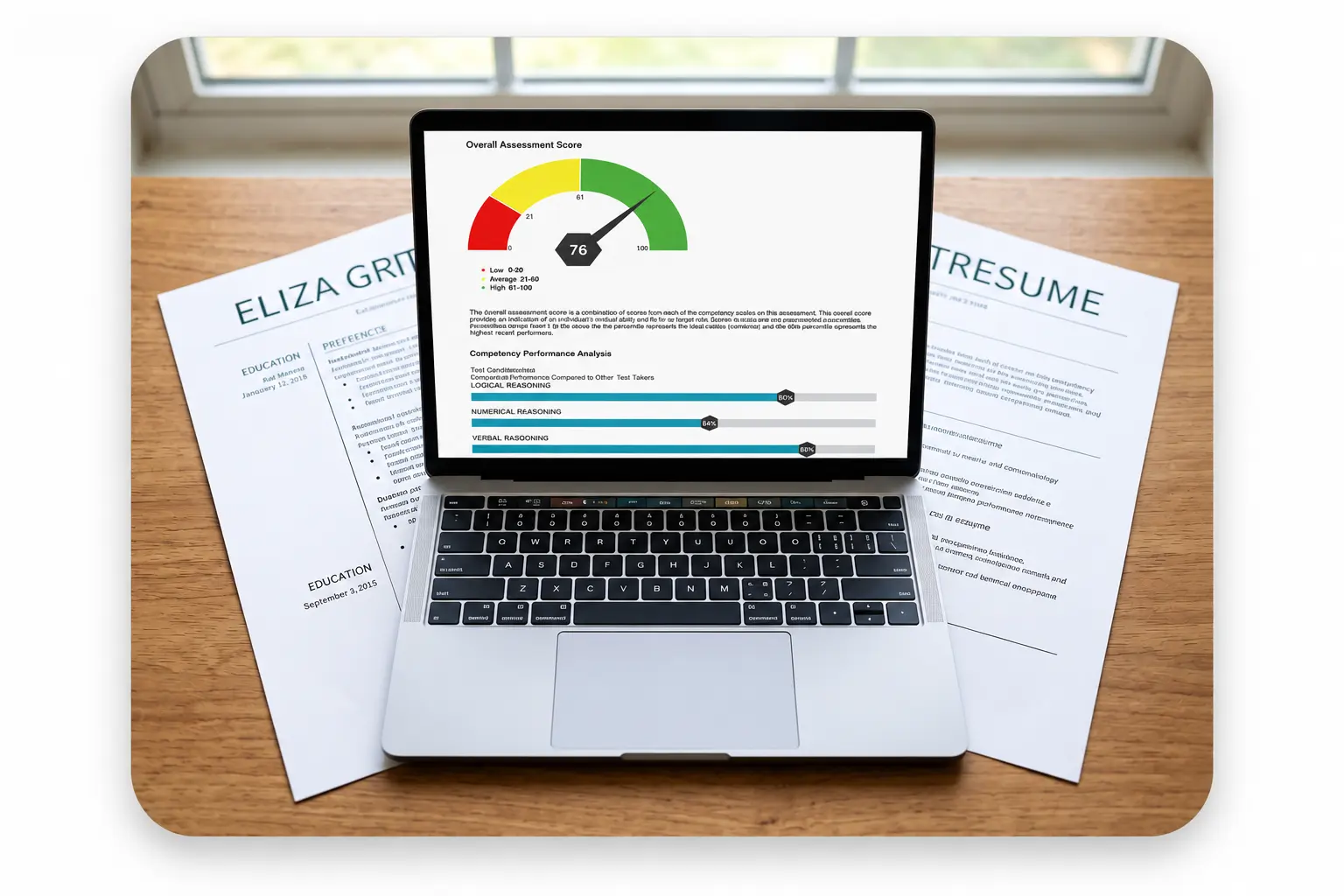
Each completed assessment gives you detailed results across all three reasoning areas.
Overall Assessment Score: A percentile score from 1 to 99 that shows how the candidate compares to other applicants. See Percentile vs Percentage: Key Difference If Hiring Employees for how to read this number correctly.
Competency Breakdown: Logical, numerical, and verbal reasoning each get a separate percentile score, so you can see exactly where a candidate is strong and where they need support.
Score Bands: Results group into three bands: Low (1–20), Average (21–50), and High (51–100), so you can read a result at a glance.
Reasoning ability matters most for work that changes day to day. Consider this test for:
If the job involves reading a report, adjusting a plan, or solving a problem without a script, a reasoning test tells you something a resume cannot.





The Workplace Reasoning Test is a pre-employment assessment that measures a candidate’s numerical, logical, and verbal reasoning through three scored competency areas.
It works well for administrative, operations, customer service, finance, and supervisory positions, or any job where a candidate has to think through a problem without step-by-step instructions.
Logical reasoning covers decision-making and problem-solving. Numerical reasoning covers working with numbers and data. Verbal reasoning covers reading comprehension and written communication. The test scores all three separately.
Each competency receives a percentile score from 1 to 99, grouped into Low, Average, and High bands, so you can compare candidates on a consistent scale.
The two overlap. A cognitive ability test measures general mental ability, while the Workplace Reasoning Test focuses specifically on logical, numerical, and verbal reasoning applied to work situations.
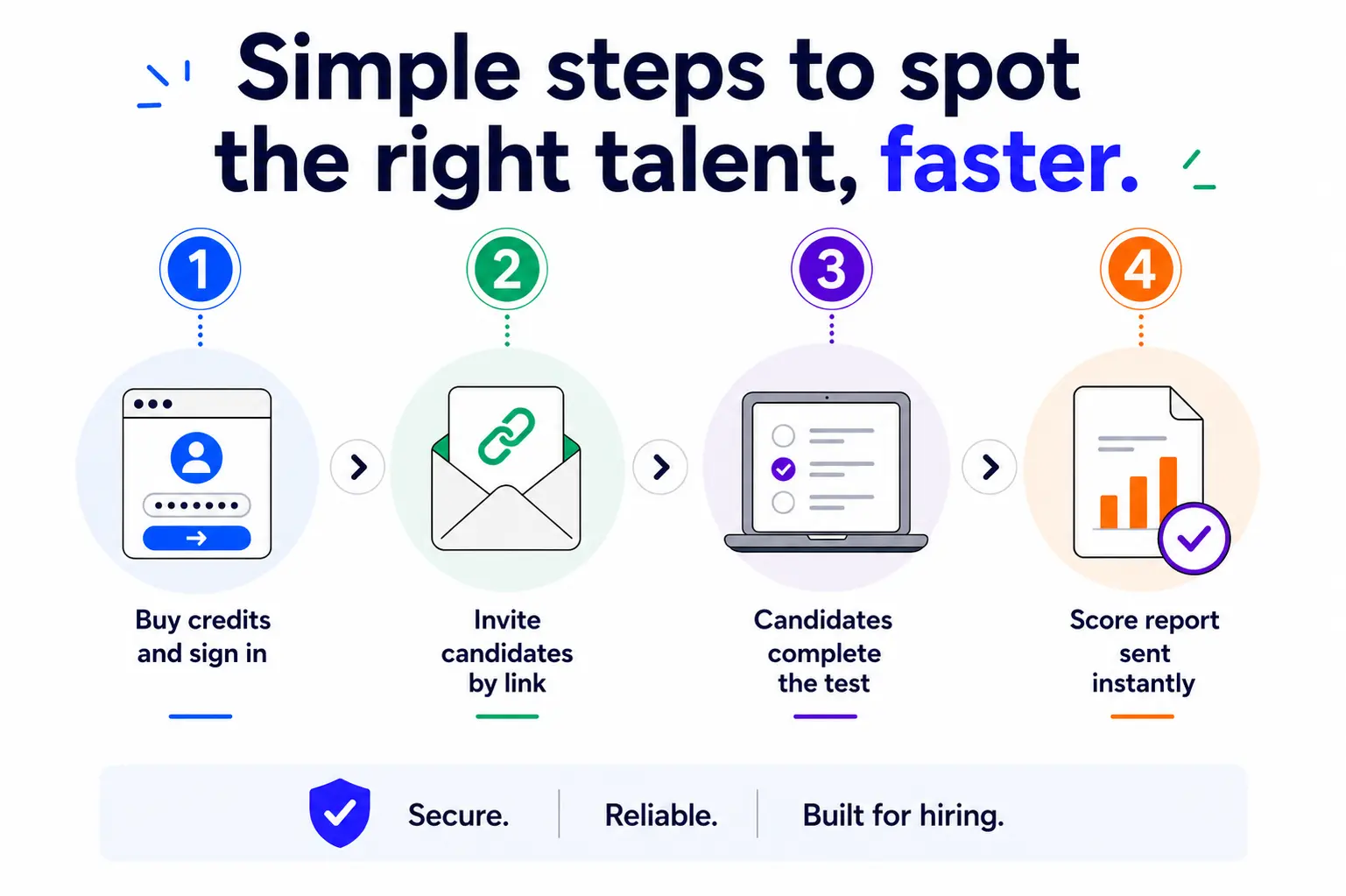
Pricing is simple and flexible as your needs change. Each test completed uses one test credit. (See pricing for credits)
Yes, just visit Try for Free to provide your information and we’ll send a free sample of the test you request.


