
How to Hire Call Center Agents Before They Interact With Customers
TLDR: Hiring call center agents who can actually handle the phones starts with testing for the skills that predict success: clear communication, composure under pressure, sharp problem-solving, and the ability to pick up your systems quickly. This guide covers what to test for, why turnover makes hiring right the first time so important, and how to build pre-hire testing into your process.
Why Should You Hire the Right CSR the First Time?
There’s no redo on a live call or chat. A front desk receptionist is allowed a bad moment here and there. A call center agent gets dozens of them a day, with frustrated customers queued up before the call even starts.
Handle it well, and the customer hangs up feeling heard. Handle it badly, and you get a longer call, a bad review, or worse, a canceled account.
Because so much of your customer relationship runs through this one seat, who you put in it matters more than almost any other entry-level hire you’ll make.
Half Your Team Won’t Be There Next Year
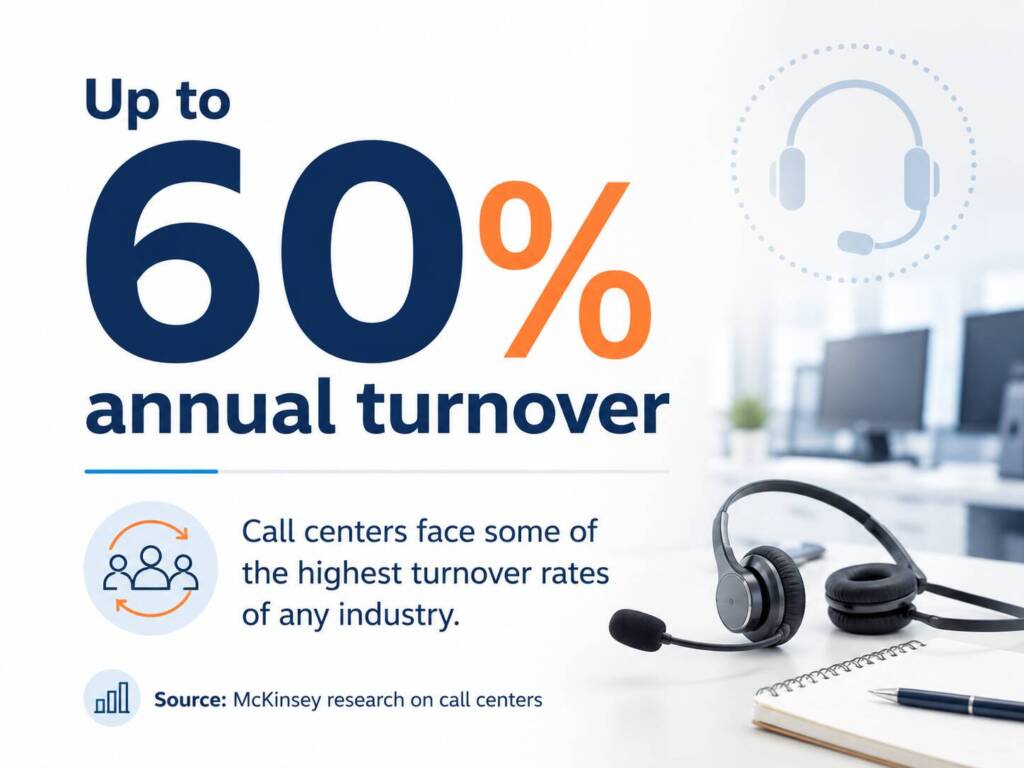
Call centers face some of the highest turnover of any industry.
McKinsey’s research on call centers found that annual turnover runs as high as 60%. Even the best-run teams lose one in five agents a year.
Replacing 1 agent costs between $10,000 and $20,000 if counting recruiting, training, lost productivity, and the coverage gaps left behind. (gut-wrenching stat)
Hire the wrong person, and they burn out or get pushed out, and you’re back to square one with an open seat and a queue of angry customers. It also means you’re constantly training people who were never a good fit to begin with, which keeps the turnover problem going.
Where the Process Usually Breaks
Call centers are always hiring under pressure. An empty seat means lost coverage, so the instinct is to move fast and hope for the best.
Here’s the problem with that.
A resume tells you where someone has worked, not how they handle a customer who’s already yelling. An interview tells you how confidently someone talks about staying calm, which is a completely different skill from actually staying calm.
The only way to know for sure is to test it before hiring, not after the first bad call.
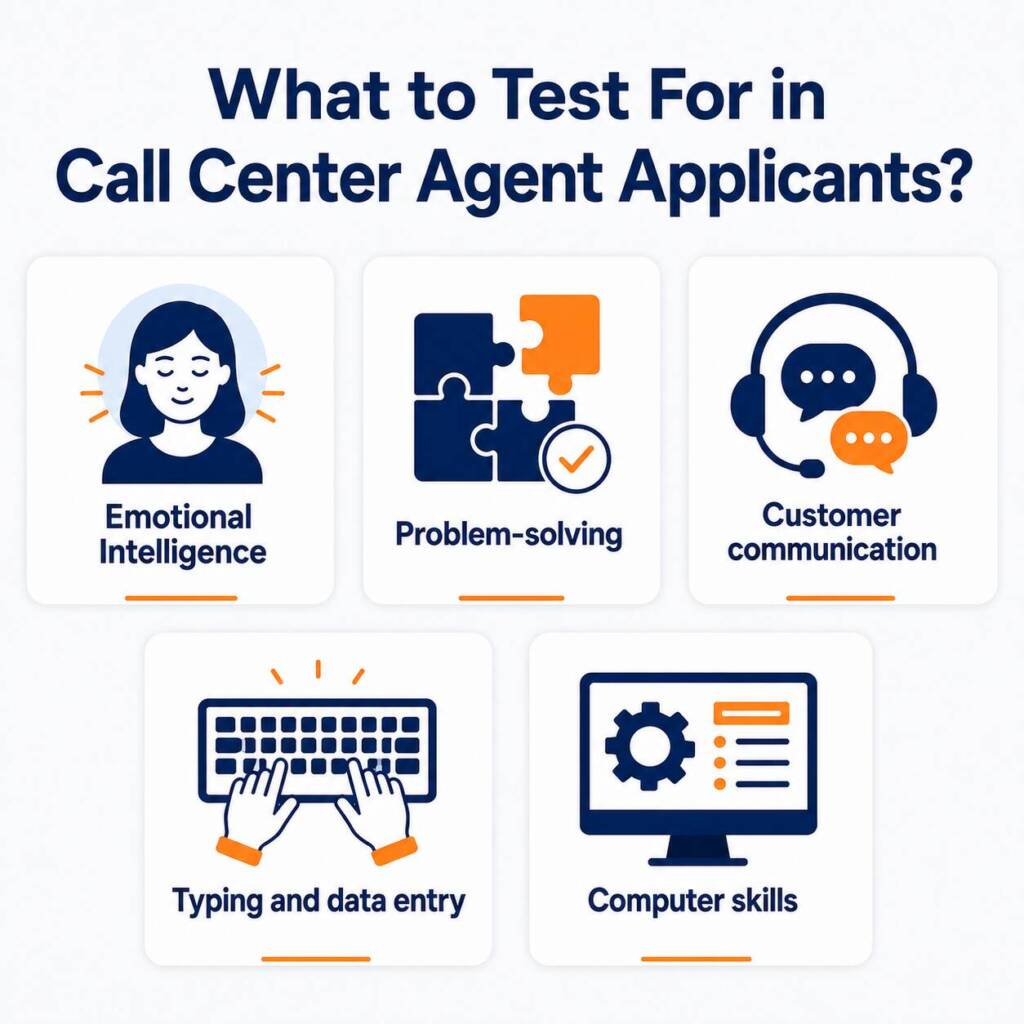
What to Test For In Call Center Agent Applicants?
Composure comes first, because it’s hard to fake and the easy thing to get wrong.
Lots of candidates interview fine and then fall apart the first time a customer raises their voice. The Emotional Intelligence Profile Test shows you how someone actually regulates under pressure, not how they describe themselves under pressure.
A good CSR hears past the complaint to the actual issue and works toward a fix instead of reading from a script. The Cognitive Ability Test measures how fast and how accurately someone reasons through something new.
Agents need to explain a solution clearly, keep their tone steady, adjust for a difficult customer, and still get the notes right while they’re talking. The Customer Service Aptitude Test shows you how a candidate handles a real interaction, not a rehearsed one.
Yes, typing speed still counts for something. Agents are logging notes and pulling up account details mid-call, and someone who can’t keep pace falls behind fast. The Typing Speed and Data Entry Tests catch that early.
Between the CRM, the ticketing system, the knowledge base, and their chat tool, a new hire who picks it up fast needs a fraction of the hand-holding. The Computer Skills Test tells you who that is, before you spend weeks finding out the hard way.
Questions Worth Asking Alongside the Tests
Pre-testing narrows the field. It doesn’t replace the interview, but can be a better use of time, since you’re no longer spending it on candidates who were never going to make it past week 1.
Once a candidate clears the tests, a few questions dig up what the scores alone can’t.
“Tell me about a call that didn’t go the way you planned. What did you do?” gets at real feelings, instead of rehearsed composure.
“How do you keep your notes straight when a call is moving fast?” ties directly back to the note habits the typing test already flagged.
“What’s a tool or system you picked up quickly at a past job?” gives you a plain-language version of what the Computer Skills Test just measured, in the candidate’s own words.
The Bottom Line
Call center agents carry more of your customer relationships than almost anyone else on staff, one call at a time, in a job most people don’t stick around long enough to get good at. Testing before you hire is how you find out who actually can do it, before a customer does.
What does this look like in practice? Try a free sample test and see for yourself.

