The Warehouse Counting Skills Test lets you verify that a candidate can count stacked cartons correctly before hiring.
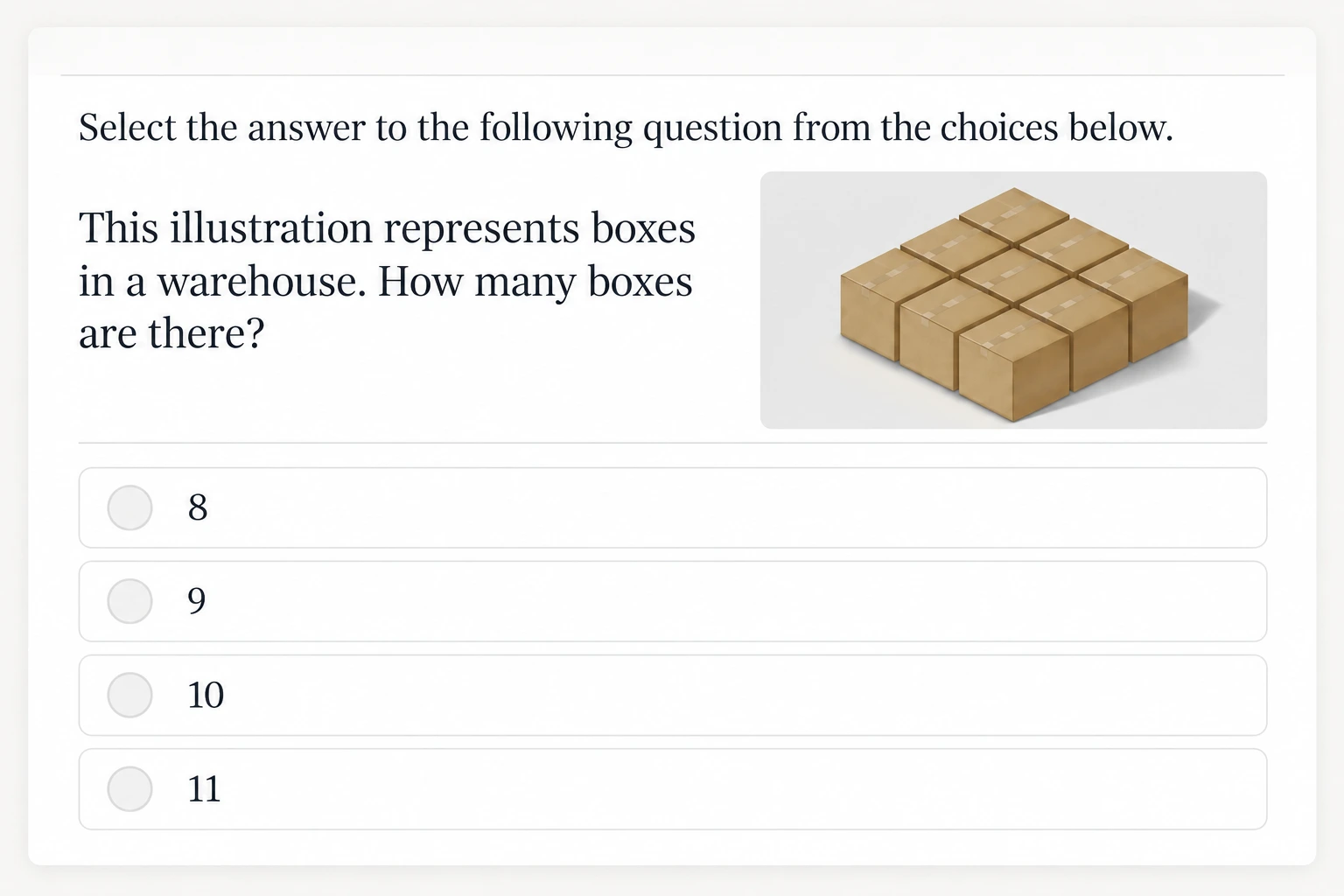
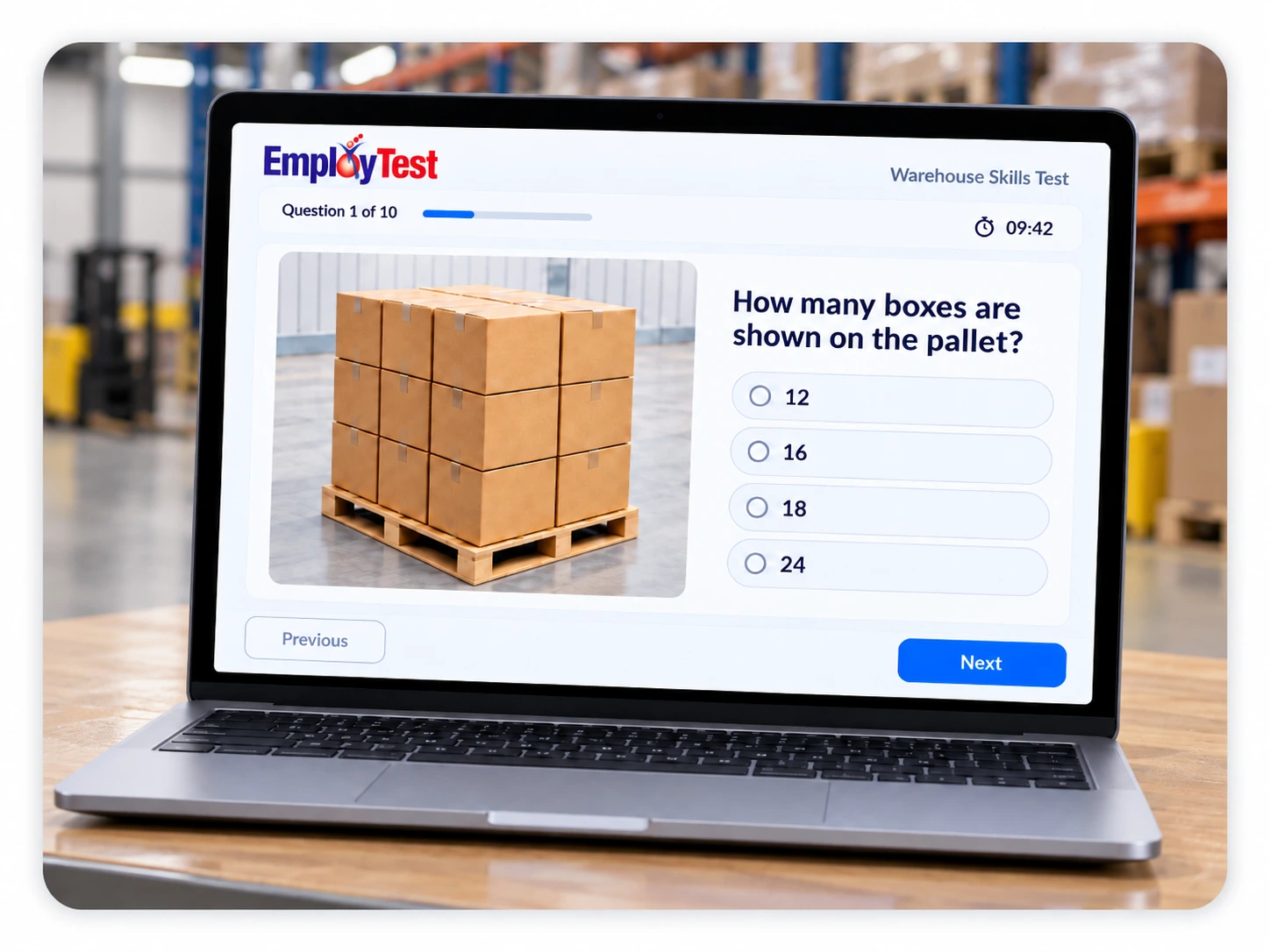
Each question shows a stack of boxes in a diagram or a photo. Some layers are full, and others have boxes missing from the top.
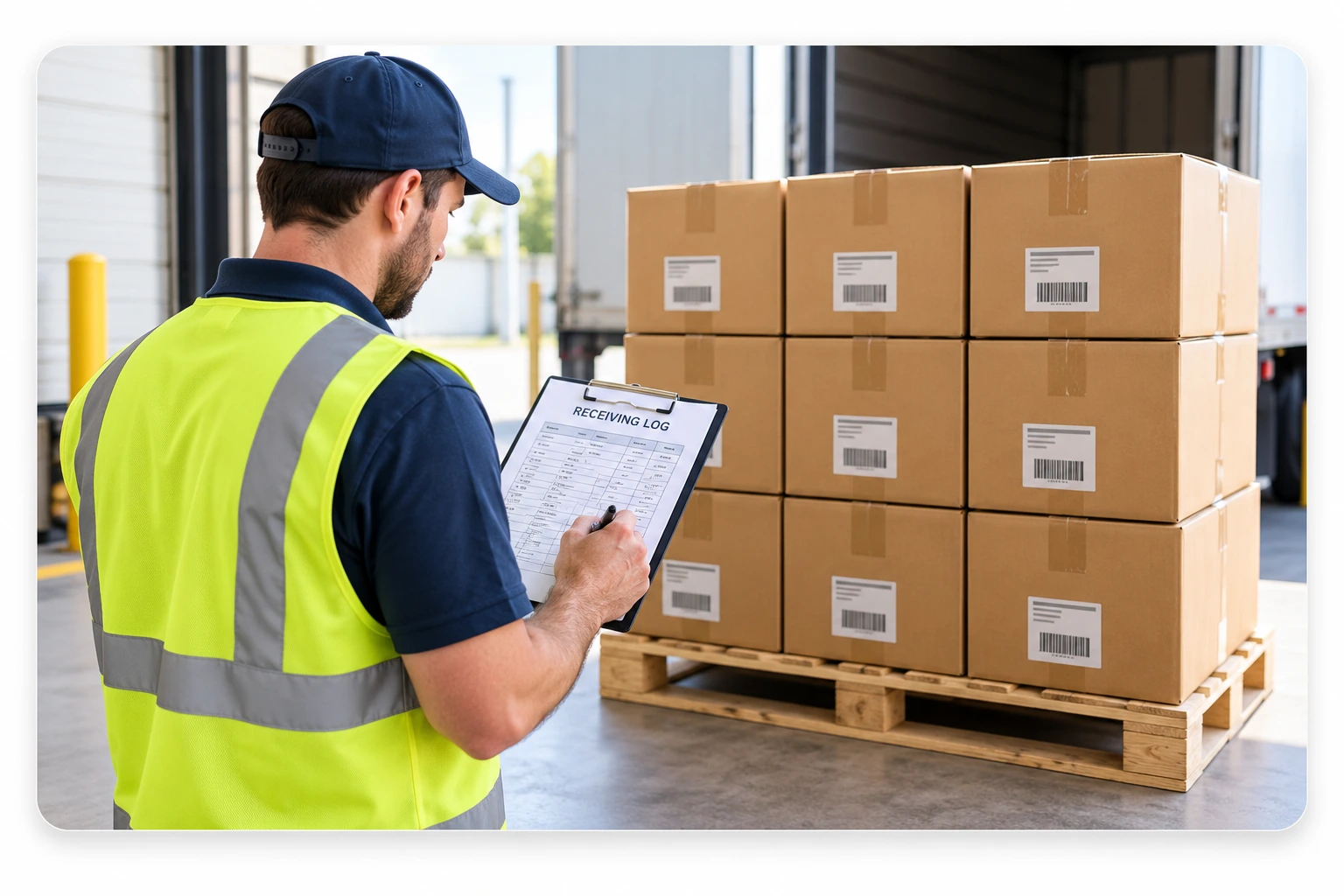
The candidate works out the total. A receiver does the same mental math every time a pallet comes off a truck.
For a small or mid-sized warehouse, one wrong number on a receiving log can throw off stock for weeks. This inventory counting test catches that habit early.
EmployTest helps you scale hiring at your own pace with pay-per-test block pricing and no long-term contracts.








Researchers at Auburn University’s RFID Lab tracked brand-to-retailer shipments for a full year. When item-level RFID was not in use, 69% of orders had data errors and inventory accuracy averaged 63%.
Most small warehouses still count by eye and by hand. That puts a lot of weight on the person holding the clipboard.
O*NET lists recording the number of units handled or moved as a core task for hand laborers and material movers. In the same profile, 58% of workers call being exact or accurate extremely important.
Our guide to pre-employment testing for manufacturing companies covers how skills tests fit floor hiring.
The test has 20 questions built around one job task: counting cartons in a stack.
Questions use box diagrams and real photos. They get harder as stacks grow taller or have more gaps.
Here are the question types candidates work through:
Every answer is scored by topic and by difficulty level.
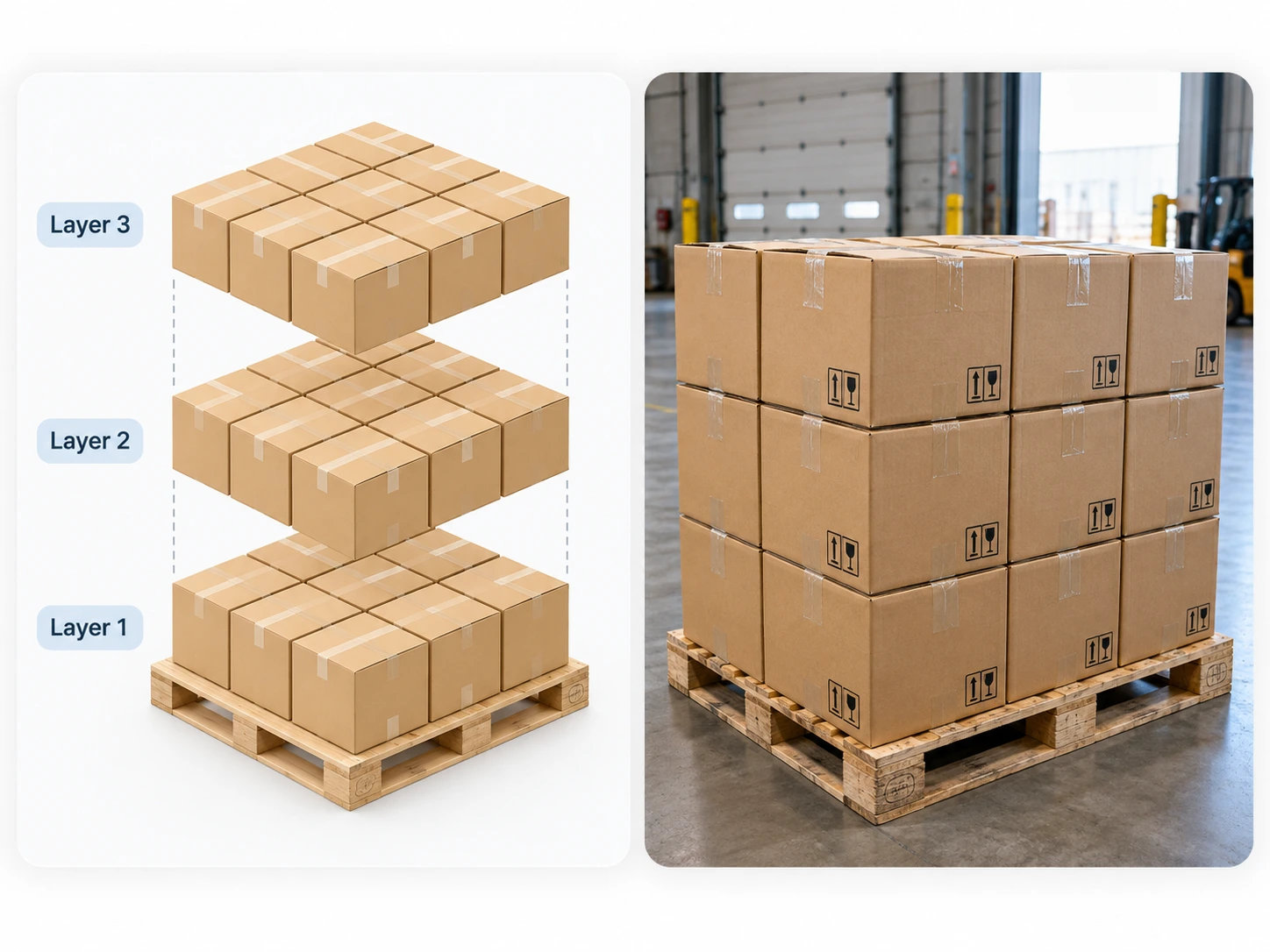
Nobody counts a full pallet box by box. A good receiver counts one layer and multiplies by the number of layers. Then they subtract whatever is missing.
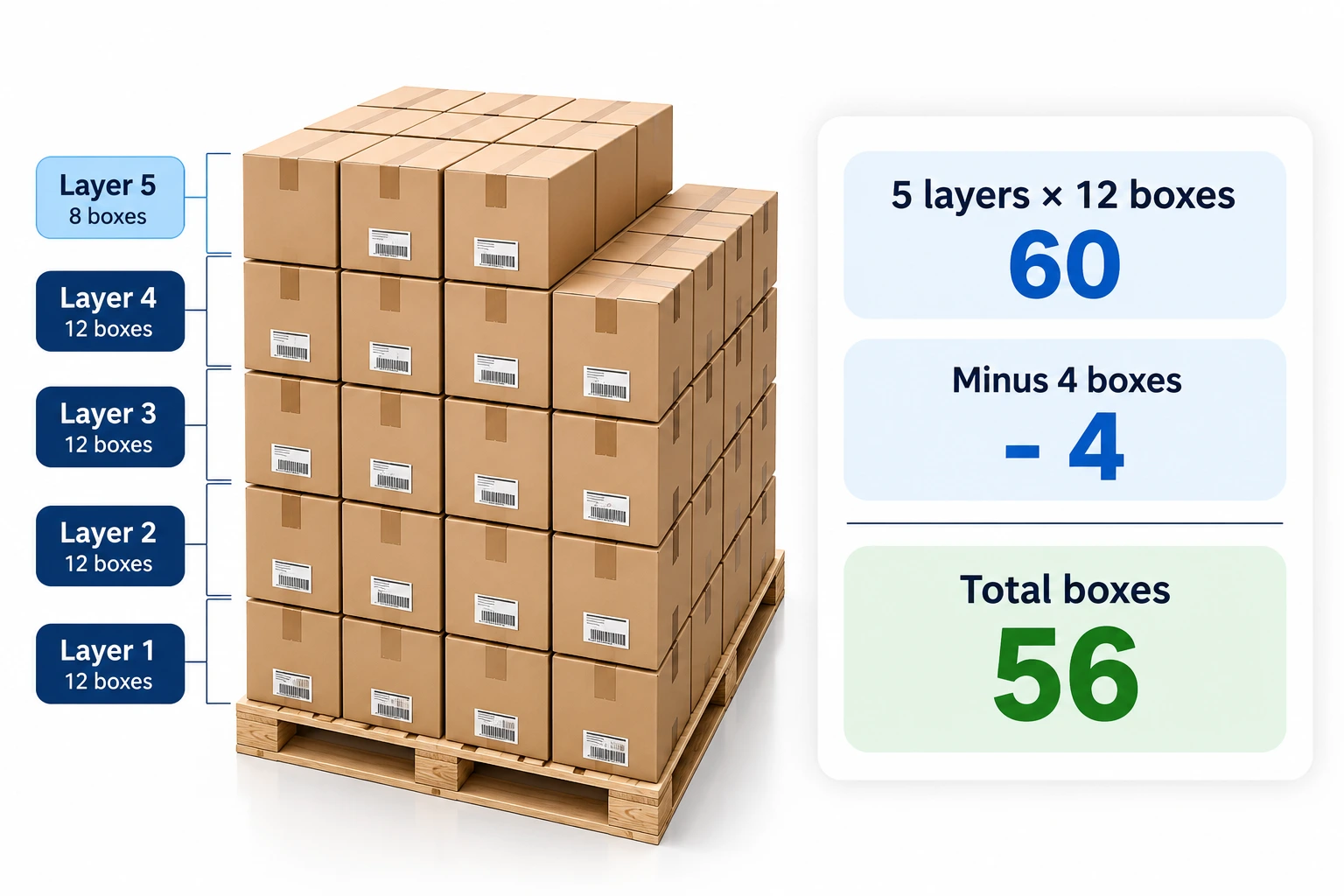
Here is a typical case. A pallet has 5 layers of 12 cartons, and the top layer is short four boxes. The right count is 56.
Someone who counts only the visible boxes will come up short, since the inner cartons are hidden. Multiplying first and then adjusting gets the right answer.
This warehouse math test checks for that habit. A long-running review of hiring research by Schmidt and Hunter found work sample tests among the strongest predictors of job performance, and each question here mirrors a real dock task.
Use this warehouse assessment test for any job position where someone signs off on a count. Common fits include:
O*NET groups titles like loader, material handler, receiving associate, and warehouse worker under the same occupation.
If the job also includes pulling orders, pair this test with the Warehouse Pick Pack Test.

Every question shows a carton stack and asks for the total.
Easier items start with a single layer or a short, full stack. Harder ones combine tall stacks with missing boxes in more than one layer.
Eight questions are Basic. The rest split between Intermediate (7) and Advanced (5).
You can request a free sample to view the questions your candidates will get.
Here is an interview tip. Ask the candidate to talk through an Advanced question they missed. Their explanation tells you whether the miss came from rushing or from a gap in the math.
The score report goes straight to your hiring team once the candidate finishes. It includes:
The time column is worth a close look. Seventy-five seconds on a multi-layer stack with a correct answer usually means care. Quick answers that miss the partial stacks point to guessing.
Start with one open position and the test that matches the work.

Counting is one part of warehouse work. Many hiring managers pair it with tests that cover the rest of the job:
Counting and detail checks go hand in hand on a dock. Here is why an attention to detail skills test belongs in hiring for jobs like these.



It measures how well a candidate counts cartons in a stack. Questions move from single layers to tall stacks where the candidate multiplies full layers and subtracts missing boxes.
Some use diagrams and some use real carton photos, so it works as an inventory counting test for receiving and stock jobs.
The test has 20 questions. Eight are Basic, and the other 12 split into seven Intermediate and five Advanced. The score report breaks results out by each level, so you can tell whether a candidate handles simple counts and still struggles with partial stacks.
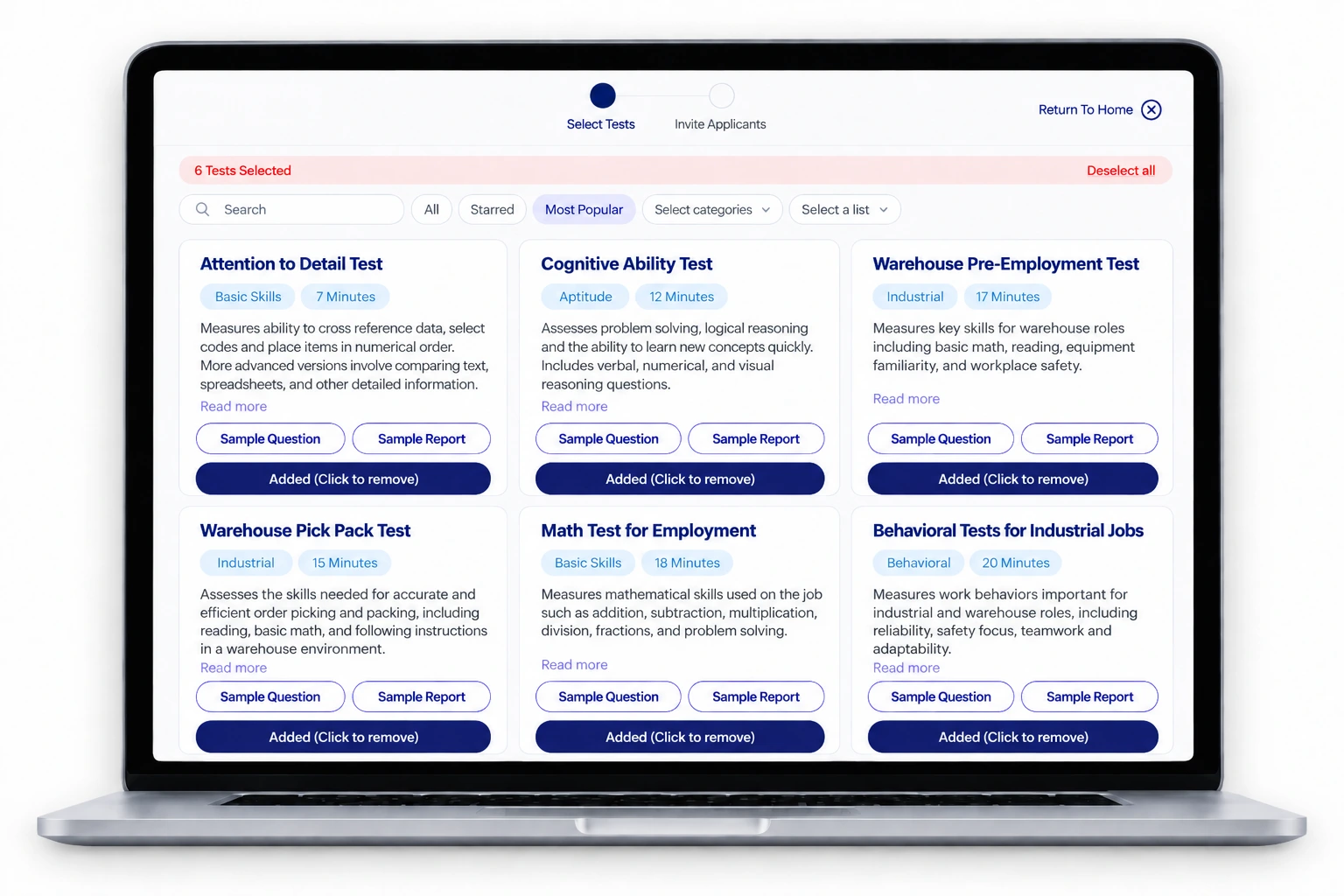
Yes. You can choose more than one test for the same candidate from your dashboard. Many teams pair counting with the Attention to Detail Test or the Warehouse Pick Pack Test to cover more of the job.
Start with the question detail. Find the items the candidate missed and the time spent on each. Then ask them to walk you through one partial stack out loud. Their method tells you more than the final number does.
It fits any job where counts get recorded or checked. That includes receiving and shipping associates, cycle counters, material handlers, loaders, and forklift operators who stage pallets. O*NET lists recording units handled as a core task for this type of work.
Pricing is simple and flexible as your needs change. Each test completed uses one test credit. (See pricing for credits)
Yes, just visit Try for Free to provide your information and we’ll send a free sample of the test you request.


