Some candidates look great on paper. But can they actually work with numbers on the job?
The numerical aptitude test shows you who can read a report, follow a process, and catch an error before it costs you. It’s not just a basic math quiz.
Research says that structured pre-employment testing is one of the most reliable ways to predict whether someone will actually do the job well. This test gives you that kind of signal, specifically for number-based roles.
EmployTest offers flexible pricing for low to medium hiring volume, with no annual license or expensive contracts required.
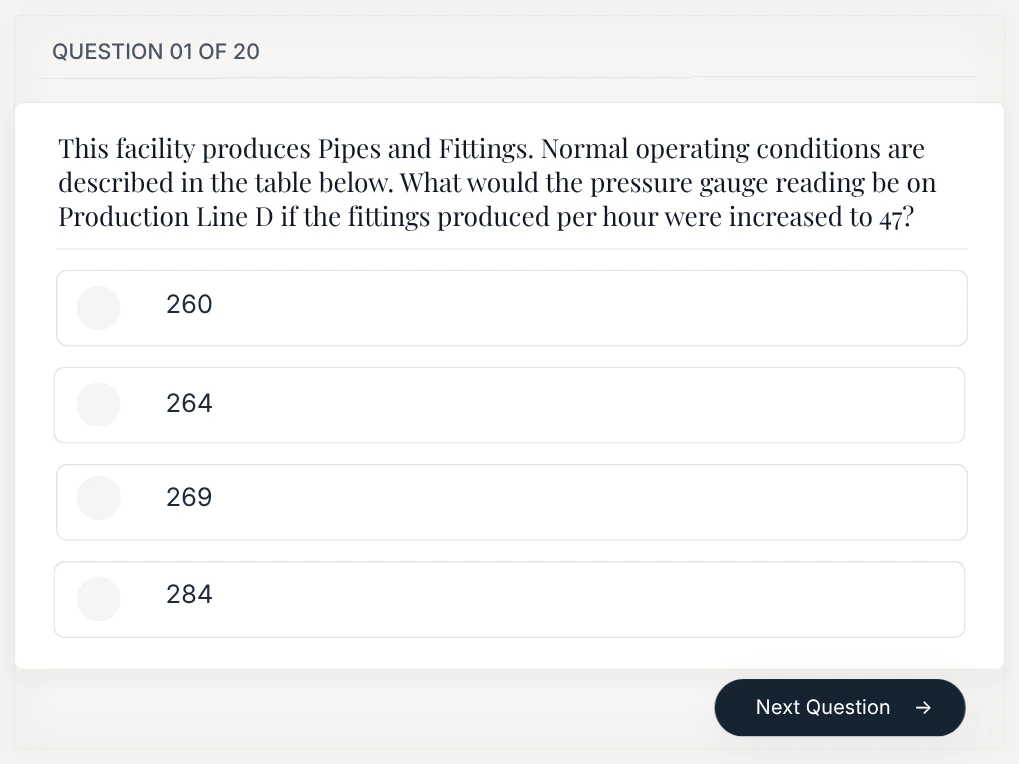








This pre-employment math test looks at three things that show up in real work every day. Here’s what this one measures:
Math in Context
Can they apply numbers to actual tasks? Think totals, estimates, and data-based choices.
Step-by-Step Thinking
Can they follow multi-step processes in the right order, especially when under time pressure?
Reading Data
Can they pull the right numbers from a table or report and use them to get the job done? That’s data interpretation, and it shows up every day in admin, finance, and operations roles.
These aren’t trick questions. They reflect the kind of thinking your next hire needs in week one.

Every completed numerical reasoning assessment gives you a clean report. No guessing what the score means.
Overall Assessment Score — A percentile ranking compared to other test takers.
Each candidate lands in one of three bands:
You also get a breakdown by skill area and plain-language notes on what each score means for the job.
If you want to understand exactly how percentile scores work in hiring, this guide on percentile vs. percentage walks through what the numbers actually mean when you’re comparing candidates.
This data interpretation test works well for any role where numbers come up regularly. That includes:
If your candidate will be reading reports, tracking numbers, or making data-based decisions, this test tells you something a resume can’t.
Pair it with a cognitive ability test for hiring to get a fuller picture of how a candidate thinks. According to Harvard Business Review, hiring assessments that focus on job-relevant skills outperform more generic measures of ability.
That makes numerical reasoning tests especially valuable for roles where decisions depend on numbers, data, and quantitative analysis.




It’s a pre-employment math test that measures how well someone works with numbers in real job situations. Not a classroom quiz. It covers tasks such as reading data from a table, following multi-step processes, and making decisions based on numbers.
Job applicants for any role where numbers come up regularly. We see the best signal for admin, accounting, data entry, operations, logistics, and finance roles. Hiring managers using this test most often pair it with a cognitive ability test for hiring to get a fuller picture of how a candidate thinks beyond just numbers.
A general aptitude test looks at broad thinking skills. This one focuses specifically on numerical reasoning: data tables, calculations, step-by-step procedures. That difference matters. Research shows that role-matched assessments outperform generic ones when predicting on-the-job success. Use this when the role really requires number-based decisions.
Scores come back as percentile rankings, so you can see how your candidate compares to others who took the same test. Each result falls into one of three bands: Not a Strength, Adequate Strength, or Substantial Strength. If you’re new to reading percentile results, this breakdown on percentile vs. percentage explains what the numbers actually mean in a hiring context.
Pricing is simple and flexible as your needs change. Each test completed uses one test credit. (See pricing for credits)
Yes, just visit Try for Free to provide your information and we’ll send a free sample of the test you request.


